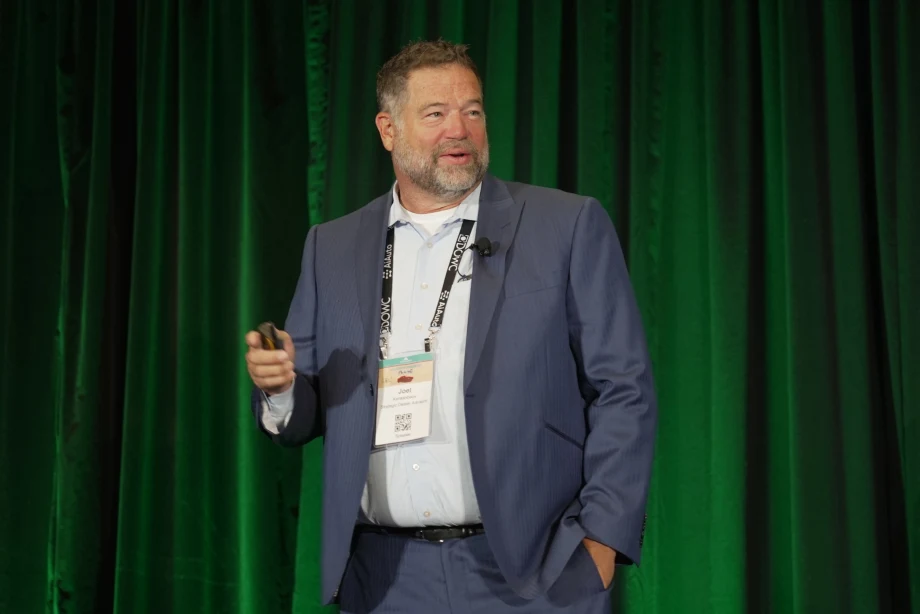
A strong culture, among other things, will be a key differentiator for auto dealerships as the market speeds ahead to new heights, says industry veteran Joel Kansanback.
As auto dealerships’ front-end gross has eroded from the heady heights of the pandemic period, finance-and-insurance sales have cemented themselves as an essential profit driver.
Joel Kansanback should know. He’s seen the evolution of F&I since his entry to automotive retail in 1990 working for F&I pioneer Pat Ryan.
The president of Strategic Dealer Advisory also knows the outsize sales burden today’s F&I office carries in a climate of intense pressure such as it’s never faced. Eroding consumer affordability, ballooning negative equity, and an F&I manager talent shortage are fueling the cooker.
Per-vehicle F&I profit as of December 2025 averaged $1,975 compared to $279 average on the front end of vehicle purchases, Kansanback said, citing StoneEagle data. The auto retail market now also expects ever-increasing returns, leaving little room for error.
“I will tell you jokingly in the early ‘90s a dealer would sometimes refer to F&I as found income,” he said. “Nobody’s thinking of it as found income anymore. It is an absolute priority.”
And as the revenue responsibility has grown, so has regulatory pressure. Kansanback said Federal Trade Commission actions against dealers have tripled since 2022.
Add to all that the dizzying technological changes affecting almost every area of life, let alone business.
“More change will happen in the next five years than probably we’ve had in the past 25 years,” he said.
“If you want to go with the ostrich approach and bury your head in the sand and hope everything stays the way it’s been, it’s not going to end up so good. It’s going to be a bad outcome, as a dealer, as an agent and as an administrator.”
Handling the Pressure
The good news is that Kansanback has a game plan for dealerships – a plan agents and administrators can adapt to their own businesses – to meet the challenges.
The solution for this pressure cooker, as he calls it, boils down to three main ingredients, like the trio mirepoix base in French cooking: culture, compliance and, you guessed it, technology.
The last two won’t work well unless the first is squared away because culture lays the foundation upon which any successful business is built, the industry veteran argued in his Agent Summit address this year.
Kansanback, who also built and sold an agency and an administrator, in addition to working as sales director for Citigroup and as an executive vice president for Brown & Brown, has experience in many sides of the business and has seen enterprises run well and others operated badly. His accumulated lessons inform his advice on culture.
Mission-Driven
He also knows full well that not all dealers will cotton to the idea of establishing a vision for their businesses. Even he gagged at the idea of vision statements when they started to make the industry rounds some 20 years ago.
But Kansanback slowly started to appreciate the value of a vision or mission for doing business as he compared “dark” cultures with harsh leadership, passivity and lack of accountability to cultures of “light” where everybody is clear on their duties and given the resources to conduct them.
“The reason I think it’s so important today in every organization is because that is what we’re going to build. So we’re going to back into becoming what we want to be. If you don’t have crystal-clear vision that everybody’s communicated with, you’re not going to do very well.”
Kansanback’s playbook for crystal-clear cultures of light includes:
- Developing a company vision that’s clearly communicated to all staff
- Writing a road map to change the culture and pursue that mission
- Establishing processes for all major functions, along with controls to ensure adherence – non-negotiables should be clearly defined
- Build in accountability, learning opportunities, hiring to fit the vision, strong onboarding, and removal of obstacles to success.
Dealerships and other businesses in auto retail need clear-cut targets, processes to meet them, and consequences for missing the mark, he said. Otherwise, they’ll languish and fail to keep up with the market. Behavior reinforcements can be positive or negative.
He gave as an example his son used to work for a dealership that requires staff to report on time to Saturday morning meetings.
“If you’re late, you have to stand in the hallway,” Kansanback explained. Offending employees then must meet with their supervisors after the meeting.
“It’s easier for everybody because you know what the rules are.”
Doing the Right Thing
Regulatory compliance must be a pillar of your business, whether dealership, agency or administrator, Kansanback emphasized. Recent federal actions against some high-profile and lower-profile dealerships over accusations of deceptive trade practices are a strong case in point.
“The cost of noncompliance has never been higher,” he said. “And in our roles, if you think about what could be an existential threat to an agency, a major compliance error on your watch could be devastating.”
Among dealership blind spots he’s noted are:
- Inconsistent product menus
- Lack of regular regulatory audits – he recommends third-party ones
- Inconsistent or otherwise inadequate documentation
Checklists should be employed and menus kept compliant, while customers must sign everything, with no reliance on verbal assent, Kansanback advised. He urged documentation of everything and more frequent compliance training, which artificial intelligence tools can help with.
“If you have a dealer group that’s got 40 F&I managers and five are telling customers they have to buy a warranty to get financing, how would you ever find the five, and what’s step one?”
Payment packing is a particular threat and notoriously obvious, he’s observed in the field.
“It’s happening in your stores, and you’re looking the other way. The more we can do a good job on compliance, the better our future looks.”
Getting up to Tech Speed
Of course, AI is at the top of Kansanback’s list of technologies auto retail must come to terms with. That’s ideally done in time with AI itself, though the consensus seems to be that the best people can do is to avoid getting too far behind it.
The AI applications Kansanback sees in the business as of this year are:
- F&I training, or “conversation intelligence”
- Digital retail tools, such as for remote delivery and vehicle data capture
- Predictive deal structuring to maximize front- and back-end profit
- Intelligence that can reduce chargebacks
- On the customer end, menu personalization, better ability to offer car insurance and refinancing, retargeting for F&I product sales, and faster, easier loan preapprovals
“Personalization of the menu and using AI to be more sophisticated with our structure and our offering to consumers is upon us,” he said, adding that more traditional approaches and allowing F&I managers to take their own tacks create compliance risk.
AI training, in particular, can help increase profits, he said.
“We’re doing salespeople and F&I manager coaching with AI. We’ll probably get to managers. … It’s also got value outside our businesses, but even in the administration companies.”