



AI, China and the Next Wave of Auto Retail Innovation
F&I sits at the center of the changes expected to sweep the industry in just the new few years as new players change the game.

The difference now is that Chinese automakers are not behind on technology but ahead, and the cost advantages are staggering.
Pexels – Aditya Agarwal
When I kicked off the Startup Symposium at this year’s Agent Summit, I opened with the statement that this industry, and finance-and-insurance in particular, is going to see more change in the next five years than it has in the last 25.
That is a bold claim. So let me walk through why I think it holds up, and why the people who sell and structure F&I products sit squarely in the middle of it.
Start with the dealer business model, because it is one of the most resilient in American business. If you chart net profit as a percentage of sales for the average U.S. dealership going back almost 50 years, the line is eerily stable, sitting between 2% and 2½%, decade after decade.
Here is the part worth sitting with: Not once in 50 years has the average U.S. dealer lost money before tax. Not in recessions, not in the financial crisis. The model works.
It works because dealers keep reinventing it. Fifty years ago, a dealer sold new cars and not much else. Today a single rooftop runs eight distinct profit centers: new, used, F&I, service, parts, collision, fleet and accessories.
Importantly, F&I is one of the critical cylinders in the store’s engine. The numbers make the point. Before Covid, front-end gross was roughly $400 a vehicle. It spiked near $2,700 during the inventory shortage, and it has since fallen back to around $650.
Back-end gross went the other way. F&I gross was about $1,247 per vehicle in 2019 and is running closer to $1,800 today.
At the NADA Show this year I heard someone proclaim that F&I is “the foundation that kept the house standing.” When you look at where the margin actually lives now, that is hard to argue with.
Outside Influence
Now the part that tends to surprise people: China
In 1999, China produced about 1% of the world’s automobiles. Today it is at approximately 39%. In 25 years, it went from a rounding error to the single largest auto-producing nation on earth.
There are roughly 95 million new cars sold globally each year, and that number is not changing much, so as China climbs, it squeezes the oxygen out of the room for everyone else. Europe, Japan and the U.S. are all trending down as China trends up. If you have traveled abroad recently, you have already seen it on the streets.
We consistently hear from folks in the industry that Chinese cars will not work here. We have heard that before. Toyota arrived in 1957, and people laughed. Honda showed up in 1969, Hyundai in 1986. Every time a new entrant from Asia came to the U.S., the industry said it would not work, and every time, within a decade or two, they had real market share.
The difference now is that Chinese automakers are not behind on technology but ahead, and the cost advantages are staggering. A UBS Tech teardown of a BYD Seal sedan against a comparable Volkswagen found the battery 29% cheaper, the body and chassis 38% cheaper, and labor 77% cheaper.
China builds roughly 30% cheaper and goes from design to production in about 16 months, against four years for legacy automakers. Tariffs may slow it down but will not stop it.
Pressure flows downhill. Automakers feel it first, then franchise dealers as front-end gross compresses, and then it reaches you, the agent. If the front of the deal keeps shrinking, the back end has to carry more, which makes your work more important, not less. And it is not all defense.
Unfamiliar brands and new-vehicle architectures mean new warranty, service contract, and gap products must be built, and consumers buying a brand they do not yet trust are more receptive to protection, not less. Some providers in our world are already working with Chinese brands in Europe and Asia, and that experience will be a real head start when those brands land here.
Did Anybody Say AI?
The force multiplier on all of this is artificial intelligence. Generative AI reached 40% U.S. adoption in under two years. The internet took more than five, PCs over a decade. This is the fastest technology adoption in history, and it is still speeding up.
Look at the average dealership: about $62 million in sales and $2½ million in net before tax. Of the roughly $9 million in expense, almost half is labor, around $4.3 million in personnel. That is the bucket AI can attack.
A conservative 10% efficiency gain adds more than $2 million of blue-sky value at a five-times multiple. Push toward the 50% range, where we think the leaders will be in five to seven years, and you nearly double the store’s value. You may spend more in the short term on tools, but over time the productivity more than offsets the cost.
AI is not only a cost story. It is a revenue and market share story. The dealer who answers an internet lead in 30 seconds with a personalized response beats the one who takes four hours. And it is coming for the F&I conversation directly.
Customers are already uploading their deal jackets into ChatGPT and asking whether they are overpaying for gap. That is happening today. We are heading toward a world with AI on both sides of the table.
The right response is to also put AI to work for the dealer so best practices get followed every single time: the right menu, the right products for that customer, built-in compliance guardrails.
The dealers who embrace that will see higher attach rates and higher per-vehicle retailed. The ones who do not will get outmaneuvered, sometimes by the dealer down the street and sometimes by the customer across the desk.
The Upshot
So what do you do with all of this? Three things:
- First, position for the Chinese OEMs now. New architectures mean new products, and unfamiliar brands mean customers who want more protection. If you already understand those products and customers, you will have a real advantage when those brands arrive.
- Second, treat AI adoption as a land grab. Use it in your own products and operations to cut cost and lift quality; build where it makes sense; and partner with purpose-built startups where it does not make sense, helping your dealer clients lean in early. The early adopters will take share from the ones who sit on their hands, and the window will not stay open forever.
- Third, watch the new revenue pools. Advanced driver-assistance system calibration is becoming a real line item since the average new car will have dozens of sensors and a windshield replacement now means recalibration. Connected-car services create ongoing touchpoints. EVs, especially the cheap and compelling ones China will bring, open battery and high-voltage coverage. Those are new F&I categories, and whomever earns dealer trust in them first will own them.
The message I left the room at Agent Summit with is the one I will leave here. You are the trusted adviser. Your dealers rely on you for financial guidance, product strategy and increasingly for navigating this wave of change.
Where there is this much change, there is enormous opportunity. Lean into it.
Justin Charbonneau isa venture principal at Automotive Ventures.
EDITOR’S NOTE: This article was authored and edited according to Agent Entrepreneur editorial standards and style. Opinions expressed may not reflect that of the publication.
More Product & Technology
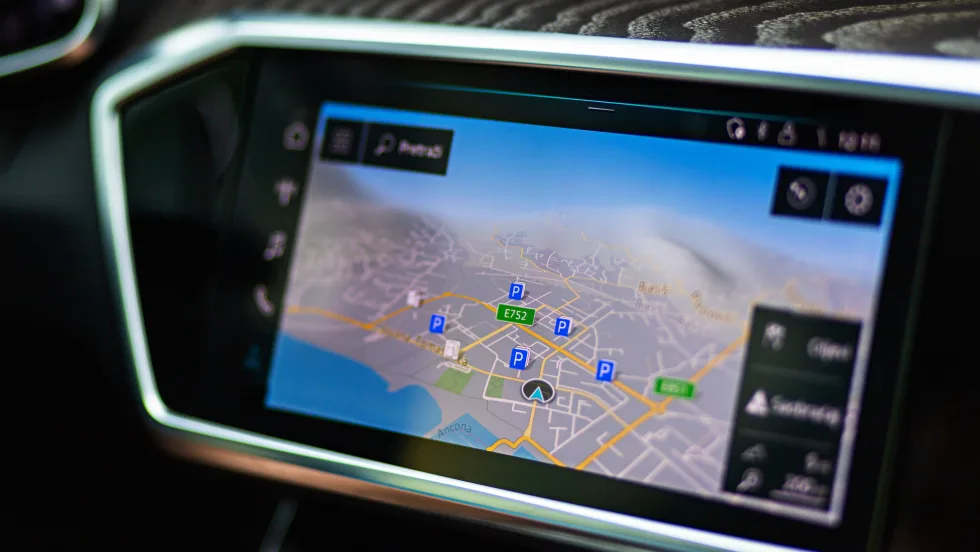
Computer Headaches on the Road
Consumers keep complaining about new cars’ infotainment tech, but are automakers listening? A recent survey shows regression except for mapping and speakers.
Read More →
Another Death Tied to Imported Air Bags
The Texas traffic fatality is the 11th federal regulators have connected to defective inflators imported from China. They urge that a certain population of used vehicles be inspected.
Read More →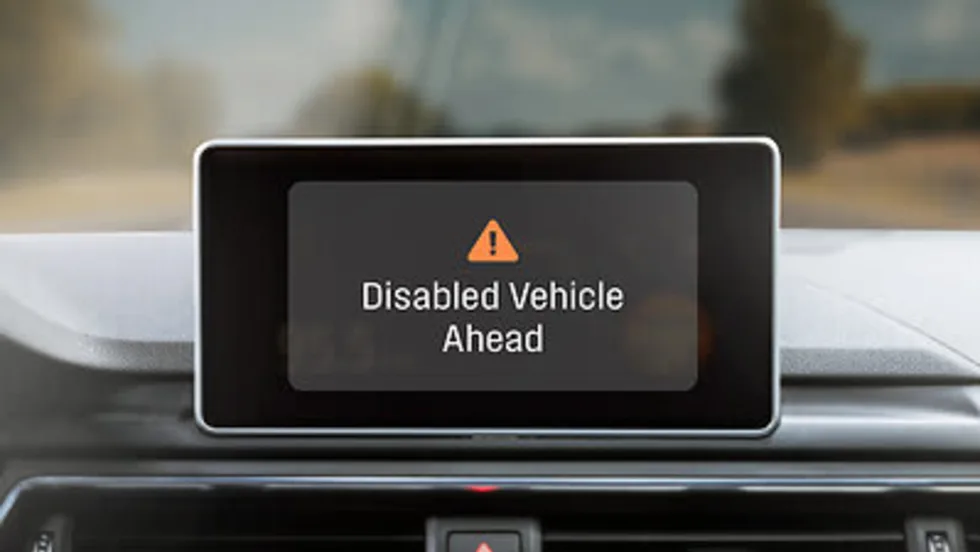
Roadside Warnings Debut
Mazda works with AAA and a technology company to alert passersby to stranded vehicles from its lineup, for both parties’ safety.
Read More →
AI As Trainer?
This month, Agent Entrepreneur Editor Hannah Mitchell shares an artificial-intelligence development that could upend traditional dealership training.
Read More →
A Lingering Auto Tech Divide
Automakers still struggle to hit consumers’ sweet spot, hanging onto the despised touchscreen and adding other complex systems while simple, effective details hit the mark.
Read More →
That Bot Can Do a Lot
Artificial intelligence was all the buzz at the 2026 Agent Summit. A panel of tech specialists broke through the noise to give agents guidance on steering dealer clients.
Read More →
Cyber F&I
Your dealer clients could only benefit from showcasing products on their websites along with vehicle inventory. Modern consumers expect to be informed and are more likely to buy products when they are.
Read More →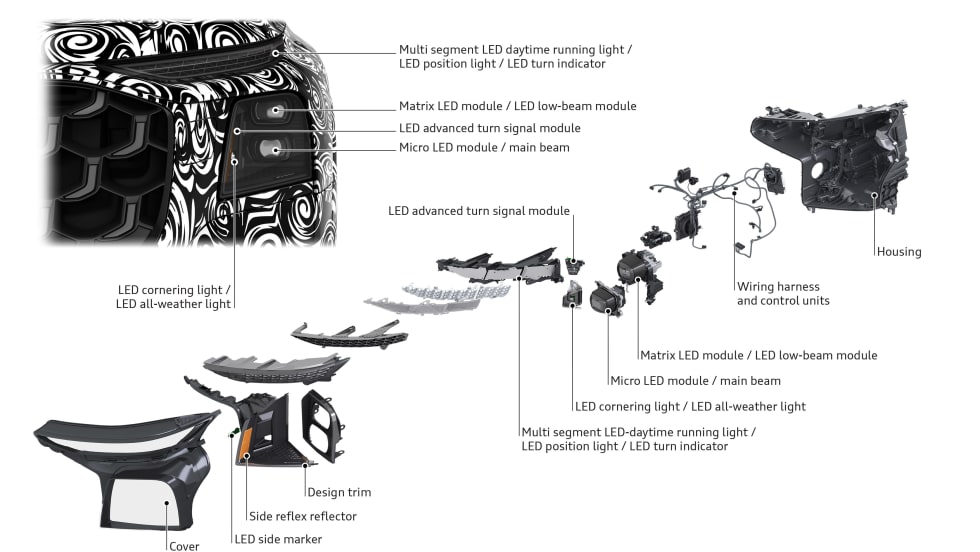
Road Glare to Drop a Notch?
Audi is preparing two SUV models for the American market with the automaker’s adaptive LED headlights. Its technology is designed to reduce brightness for other drivers, a growing complaint among U.S. motorists.
Read More →
AppOne Partners With RouteOne for E-Contracting Solution
By digitizing the entire contracting and funding process, the company says auto dealers can eliminate frustrating and disorganized manual processes.
Read More →
Senators Propose Chinese Connected Car Ban
Just weeks before President Trump is set to meet with the Chinese president, two U.S. senators proposed a bill with the aim of protecting Americans’ data.
Read More →