



Are There Hidden Dangers at Your Store?
The documents that dealers use every day can be a danger that can be triggered by various contingencies.


The documents that dealers use every day can be a danger that can be triggered by various contingencies.
IMAGE: Photitos2016 via GettyImages.com
A few years ago, after midnight, there was an explosion in Limburg, Germany, thought by the local population to be a meteorite. It was a violent explosion that left a large crater. After examination, it was determined to be a World War II aerial bomb, which was buried at a depth of 16 feet, weighing 550 pounds with a chemical detonator. Authorities confirmed that the bomb had exploded by itself, without any external trigger. Evidently, the materials of the detonator decompose over a long period of time that will cause the ignition leading to an explosion, a powerful one.
Documents are similar to currency. Societies will always need documents whether they appear in paper or electronic form.
The documents that dealers use every day to sell vehicles are the same: they can be hidden dangers that can be triggered by various contingencies. Some dealers have little regard for the seemingly trifling “paperwork,” but they are shortchanging themselves. The paperwork is the direct evidence of the transaction and identifies the liabilities of the dealer and the customer.
Documents can lie dormant for many years, only to be called upon years later to prosecute dealers for a multitude of violations of the law. For example, many states require certain disclosures to appear in buyers’ orders and other contracts and forms. Failure to include them can trigger a legal penalty per transaction by state authorities. They can also be the basis of class actions as they are perfect fodder for such legal actions. For example, I prosecuted a leasing company for its failure to include a lease disclosure in its lease contracts. Each of the leasing company’s contracts was subjected to a $10,000 per contract legal statutory penalty.
Why Are Documents Necessary at All?
The need for contractual documentation began in 1677 with the Act for Prevention of Frauds and Perjuries that was passed in the British Parliament. The Statute of Frauds was thus born and has been enacted throughout the U.S., typically requiring a signed writing for a number of circumstances including, contracts for the sale of goods totaling $500 or more. For vehicle transactions, states have enacted other legislation mandating other disclosures and signed documents.
Documents are similar to currency. Societies will always need documents whether they appear in paper or electronic form.
Basic Document Concerns
I have reviewed thousands of dealer documents over my 30-year career in both policing and championing the automotive industry. It is apparent that some dealers are quite lax in their document maintenance policies. Depending upon the transaction, there may be as many as 20 or more documents used in a single transaction. Dealer documents, in their various configurations, contain mandated government disclosures. Examples of these documents are test drive agreements, agreements to furnish insurance, notices to cosigner, payoff authorizations, buyer’s and lease orders, GAP agreements, title transfers, and more. For some more careless dealers, these documents are inconsistent with one another in their terms and conditions. Other dealer documents may have internal inconsistencies and terms, as more than one dealer employee may have contributed to them, but no one at the dealership coordinates and oversees them. In some dealer forms, it is unclear who the parties are to the transaction, as these forms are poorly drafted. A basic rule of law is that if there is an ambiguity in a document, the benefit of the doubt accrues against the maker. The dealer is the maker, which means that any ambiguity benefits the consumer. Dealers need to draft their documents carefully.
In addition, franchise and lender agreements generally impose an obligation on the dealer that he must be compliant with the law. Correct and compliant documents can be part of this obligation.
How Long Do Documents Really Matter?
Documents are relevant for the entire lifespan of the dealer-customer relationship. There is a concept in the law called a statute of limitation. This means that violations cannot be prosecuted after a certain date in the future, as there is a temporal limitation on liability. There are various statutes of limitation, depending upon the state, but common ones are five or seven years in length. In other words, long after the documents are filed away, they remain current for liability purposes.
Mandated Disclosures
Federal and state regulators dictate language that must be included in various consumer-facing documents. Pursuant to federal law, for example, the buyer’s guide language must be included in buyer’s orders. English and Spanish versions are recommended.
There are great disparities from state to state as to what disclosures must be made. For example, in Illinois, a notice regarding public liability insurance must be included. The statement must be in bold type and not less than one-half inch in height. In Louisiana, dealers are required to disclose that they may be participating in finance charges in the buyer’s order or any other document. In Maryland, a contract for the sale of a vehicle shall contain a statement, in 12-point type or larger, identifying the dealer processing charge. In Michigan, a dealer cannot enforce a retail vehicle sale unless the agreement contains a place for acknowledgment by the consumer of the receipt of a copy of the agreement or actual delivery of the vehicle. In Minnesota, if the dealer charges an electronic title transfer fee, the sales agreement must separately state and identify the fee as an "optional electronic transfer fee." There are a great number of other examples. Failure to properly provide these disclosures in the manner, indicated in the statute or regulation, can incur serious financial penalties.
Finally, documents are dynamic, as they may have to change due to legislative or regulatory updates, court decisions, or a compelling business reason. Most state legislatures meet annually and may revise statutes that relate to dealers’ businesses. Failure to include this updated language may incur statutory penalties. Dealers need to stay abreast of these ongoing changes.
Recommended Inclusions
Language and forms in the transaction should be included to protect the dealer against as many contingencies as may be anticipated. As mentioned above, forms are operative for many years after the customer departs the store with his vehicle.
For example, in addition to what is required by law, dealers should include language in the buyer’s order, or provide stand-alone forms, to address issues such as spot deliveries, liability and insurance shifting, electronic communications, and arbitration.
Dealers never know when certain documents or added language will become helpful in defending against lawsuits. These added terms and conditions may never become operative, but they should provide dealers some solace.
Recommendations to Defuse the Danger
Dealers need to have a document protocol to mitigate against any dangers:
First of all, someone must be responsible for overseeing all the documents used at the store. This person should be the compliance officer.
No changes to the documents, using additional documents, or discontinuing the use of any documents, should be permitted unless the compliance officer provides their approval.
A comprehensive review of what is mandated to be included in the documentation should be undertaken.
Documents should address as many contingencies as possible, in the present and in the future.
Be certain that your dealership attorney is knowledgeable about dealer law and documents. If he is not, a dealer may wish to hire an attorney who is a member of the National Association of Dealer Counsel (NADC), an organization of attorneys who practice car law.
Rely upon state automobile dealer associations and the NADC for assistance.
All documents should be reviewed quarterly for compliance purposes.
Rely upon a reputable vendor for document assistance.
A careful document protocol will go a long way to defuse these hazardous hidden dangers in dealer documents.
GOVERN YOURSELVES ACCORDINGLY.
Terrence J. O’Loughlin, J.D., M.B.A., is director of compliance for The Reynolds and Reynolds Company.
READ: When The Federal Trade Commission Speaks, Dealers Should Listen
Originally posted on Auto Dealer Today
More Industry

War Toll a Damper on Used Auto Prices
Cox Automotive found wholesale depreciation to be elevated in September amid high fuel prices and this year's unusual hurricane season.
Read More →
Bridge the Maintenance Gap
With many drivers missing recommended maintenance, service departments offering transparency and efficiency have a better chance of reaching financially strained consumers.
Read More →
California Store Has New Owner
The longtime dealership in the northern part of the state is known for robust fleet sales and has served the state capital for 115 years.
Read More →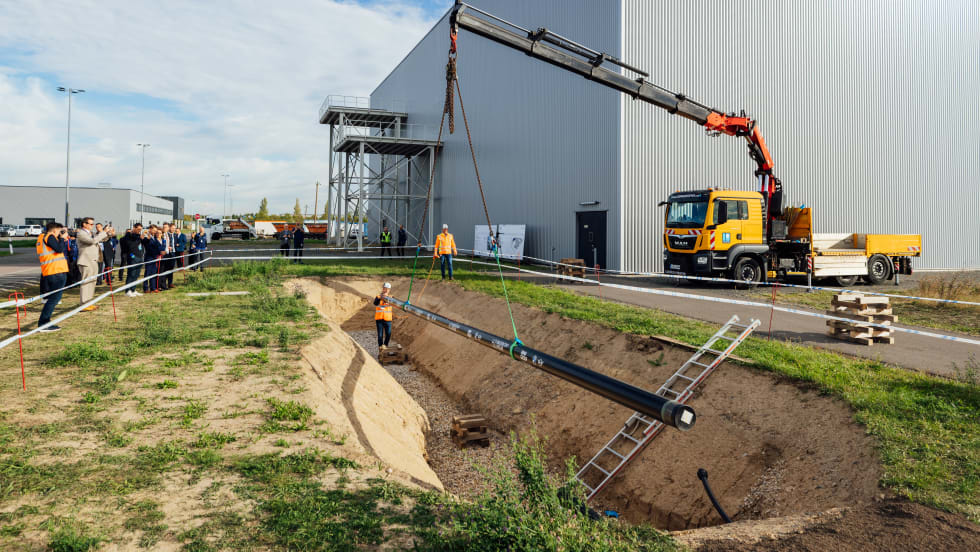
BMW Plant Pursues Cleaner Energy
BMW Group Plant Leipzig has utilized hydrogen to help power its production since 2013, but a new pipeline is planned to take it to another level.
Read More →
Auto Affordability Inches Up
The latest Cox Automotive and Moody’s Analytics index shows a slight increase in new-vehicle affordability despite high prices.
Read More →
Ohio Auto Group Under New Ownership
After 79 years with the Schluter family, Mansfield Auto Group has been acquired by Missouri-based Clement Auto Group.
Read More →
RV Group Expands Carolina Footprint
Blue Compass RV Columbia Northeast is the 13th RV dealership owned by Blue Compass in the Carolinas.
Read More →
Agent Acumen
An Agent Summit panel of people who’ve been supporting auto dealers for years gave both timely and timeless advice for those starting out or mulling the prospect.
Read More →
Missed Maintenance Creates Opportunity
As families get back on the road and into daily school routines, service drives have an opportunity to capture customers who are behind on recommended vehicle maintenance.
Read More →
Mitsubishi Unveils U.S. Plan
The automaker announced a strategy that includes an expanded lineup and dealership presence, along with more ‘rugged’ and electric models.
Read More →