



Ford May Cut Lineup to as Few as 20 Nameplates, Mulally Says

LONDON - Ford Motor Co. may reduce its product lineup to as few as 20 nameplates, CEO Alan Mulally said today as reported by Bloomberg.
“There will be less than 30, on our way to 20 to 25,” Mulally said in response to questions on the future lineup of nameplates after addressing the Confederation of British Industry in London. “Fewer brands means you can put more focus into improving the quality of engineering.”
Ford offered 97 nameplates when Mulally became CEO of the company in 2006. The lineup has since been reduced by terminating some products and selling luxury brands Volvo, Jaguar, Land Rover and Aston Martin.
“It was absolutely clear that we had to simplify Ford dramatically,” said the CEO, who is in Europe prior to visiting the Paris auto show later this week.
Ford also has simplified component specifications for each product, so that the Fiesta model, which has about 10 variants worldwide, now has about 65 percent of its parts as standard.
“It helps all of our distribution, Ford store owners, suppliers, employees and consumers to know exactly what they're getting,” Mulally said.
As part of his push to cut the number of brands and nameplates, Mulally has dismantled the luxury Premier Automotive Group formed by CEO Jacques Nasser in 1999 and embraced by Bill Ford after he took over the top post.
Mulally, who joined Ford from planemaker Boeing Co., completed the sale of Sweden's Volvo Cars to Zhejiang Geely Holding Group Co. of China for $1.3 billion last month, having sold the Jaguar Land Rover unit to Mumbai-based Tata Motors Ltd. in 2008 and disposed of Aston Martin a year earlier.
Ford is also discontinuing the mid-level Mercury line in North America and intends to put more resources into its upscale Lincoln brand.
Mulally said Ford's sales prospects depend largely on economic recovery following the termination of government cash-for-clunkers programs that spurred demand last year.
“The key thing now is to keep the economy going,” said Mulally, who turned 65 last month. “All the fundamentals say that we are moving in the right direction.”
Prospects for expansion are bolstered by the Asian market, which is “just a phenomenal growth engine right now,” he said.
More Industry
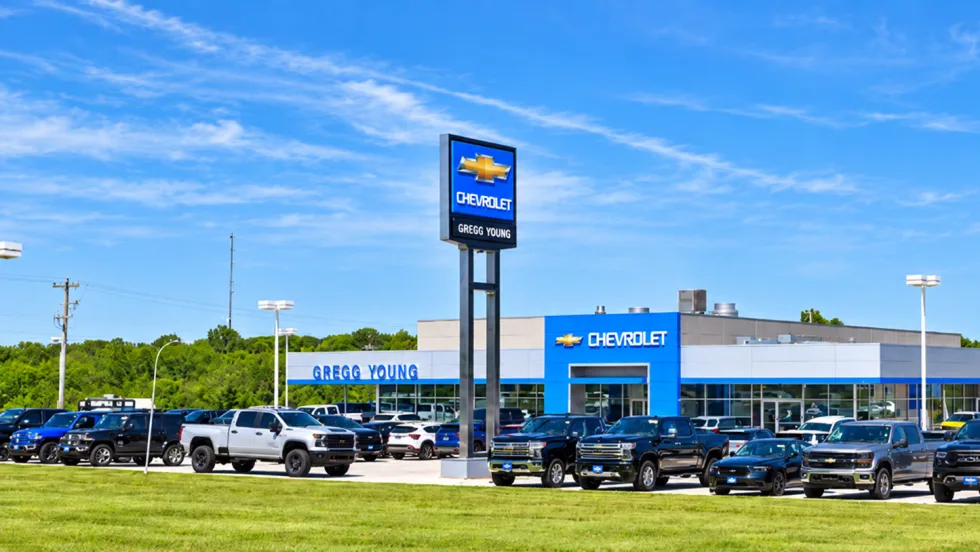
Nebraska Rooftop Changes Hands
The Gregg Young Automotive Group has sold its second dealership to Janssen Auto Group, both in Plattsmouth, Neb.
Read More →
Penske Auto Group Deal a Record
The deal to take the dealership and transportation services company private sets a new pace for industry buy-sell transactions.
Read More →
War Toll a Damper on Used Auto Prices
Cox Automotive found wholesale depreciation to be elevated in September amid high fuel prices and this year's unusual hurricane season.
Read More →
Bridge the Maintenance Gap
With many drivers missing recommended maintenance, service departments offering transparency and efficiency have a better chance of reaching financially strained consumers.
Read More →
California Store Has New Owner
The longtime dealership in the northern part of the state is known for robust fleet sales and has served the state capital for 115 years.
Read More →
BMW Plant Pursues Cleaner Energy
BMW Group Plant Leipzig has utilized hydrogen to help power its production since 2013, but a new pipeline is planned to take it to another level.
Read More →
Auto Affordability Inches Up
The latest Cox Automotive and Moody’s Analytics index shows a slight increase in new-vehicle affordability despite high prices.
Read More →
Ohio Auto Group Under New Ownership
After 79 years with the Schluter family, Mansfield Auto Group has been acquired by Missouri-based Clement Auto Group.
Read More →
RV Group Expands Carolina Footprint
Blue Compass RV Columbia Northeast is the 13th RV dealership owned by Blue Compass in the Carolinas.
Read More →
Agent Acumen
An Agent Summit panel of people who’ve been supporting auto dealers for years gave both timely and timeless advice for those starting out or mulling the prospect.
Read More →