



Automakers Urge Congress to Lift EV Tax Credit Cap
Automakers have urged Congress to lift a cap on the $7,500 electric vehicle tax credit.

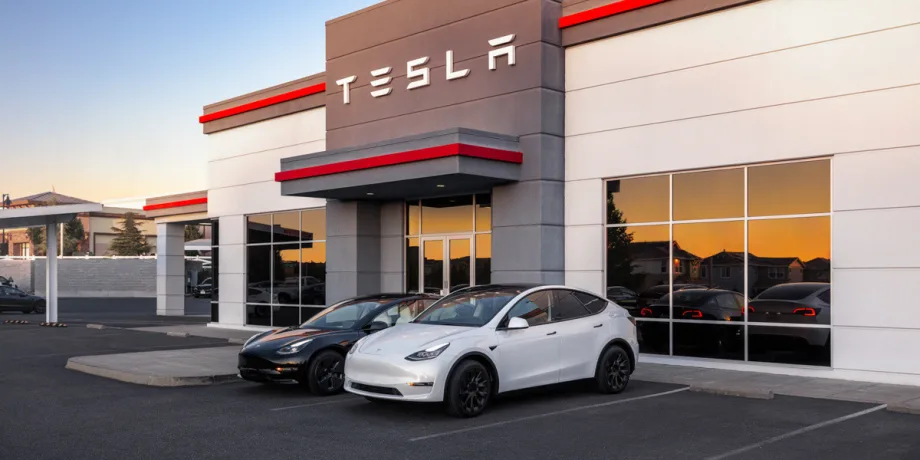
Tesla EVs are no longer eligible for the consumer tax credits.
Tesla
General Motors Co, Ford Motor Co, Chrysler-parent Stellantis NV and Toyota Motor North America have urged Congress to lift a cap on the $7,500 electric vehicle tax credit, citing higher costs to produce zero-emission vehicles in a letter.
The joint letter from the automakers’ CEOs stressed they have pledged to invest over $170 billion through 2030 to aid in EV development, production and sale.
But the current $7,500 tax credit phases out after a manufacturer hits 200,000 vehicles sold. GM and Tesla are no longer eligible for the consumer tax credits. Toyota reported its credits will expire by the end of 2022 after it hits the cap. Ford also will hit the cap
this year.
"We ask that the per-(automaker) cap be removed, with a sunset date set for a time when the EV market is more mature," the automakers said in the letter. "Recent economic pressures and supply chain constraints are increasing the cost of manufacturing electrified vehicles which, in turn, puts pressure on the price to consumers."
Automakers fear the window of opportunity for the U.S. Congress to extend EV tax credits will close if Republicans take over the Senate and the House in mid-term elections.
Not everyone agrees with the need to extend the cap. In April, Sen. Joe Manchin questioned the need to extend electric vehicle tax credits, citing strong consumer demand and Chinese production of battery components.
"There's a waiting list for EVs right now with the fuel price at $4. But they still want us to throw $5,000 or $7,000 or $12,000 credit to buy electric vehicles. It makes no sense to me whatsoever," Manchin said. "When we can't produce enough product for the people that want it and we're still going to pay them to take it -- it's absolutely ludicrous in my mind."
In 2021, the Biden Administration proposed hoisting EV tax credits to $12,500 -- including a $4,500 incentive for union-made, U.S. assembled vehicles.
Manchin also opposed the union-only incentive, as did Toyota.
President Biden also backed a 30% credit for commercial electric vehicles, a $4,000 used EV tax credit, and phasing out credits for EVs manufactured outside the United States.
Originally posted on Auto Dealer Today
More Industry

Penske Auto Group Deal a Record
The deal to take the dealership and transportation services company private sets a new pace for industry buy-sell transactions.
Read More →
War Toll a Damper on Used Auto Prices
Cox Automotive found wholesale depreciation to be elevated in September amid high fuel prices and this year's unusual hurricane season.
Read More →
Bridge the Maintenance Gap
With many drivers missing recommended maintenance, service departments offering transparency and efficiency have a better chance of reaching financially strained consumers.
Read More →
California Store Has New Owner
The longtime dealership in the northern part of the state is known for robust fleet sales and has served the state capital for 115 years.
Read More →
BMW Plant Pursues Cleaner Energy
BMW Group Plant Leipzig has utilized hydrogen to help power its production since 2013, but a new pipeline is planned to take it to another level.
Read More →
Auto Affordability Inches Up
The latest Cox Automotive and Moody’s Analytics index shows a slight increase in new-vehicle affordability despite high prices.
Read More →
Ohio Auto Group Under New Ownership
After 79 years with the Schluter family, Mansfield Auto Group has been acquired by Missouri-based Clement Auto Group.
Read More →
RV Group Expands Carolina Footprint
Blue Compass RV Columbia Northeast is the 13th RV dealership owned by Blue Compass in the Carolinas.
Read More →
Agent Acumen
An Agent Summit panel of people who’ve been supporting auto dealers for years gave both timely and timeless advice for those starting out or mulling the prospect.
Read More →
Missed Maintenance Creates Opportunity
As families get back on the road and into daily school routines, service drives have an opportunity to capture customers who are behind on recommended vehicle maintenance.
Read More →