



Captives are Monitoring Disparate Impact
There are at least three reasons you need data when confronted with allegations of disparate impact.


There are at least three reasons you need data when confronted with allegations of disparate impact.
“Gil, my sales rep from (insert name of captive) just left my office and …”.
I’ve received three phone calls from dealer principals over the last month that started the same way. Three different captives, same message.
The captive had completed an analysis of the dealer’s originations during the last quarter and are alleging that the dealer has a higher than acceptable spread between buy rate and sell rate for a protected class of consumers. One dealer was told that Hispanics paid 18 basis points higher in dealer reserve than the control group. Another dealer had a 21 basis points differential for Black consumers versus the control group.
These captives have not taken the Nissan and Infiniti approach. Yet, as you may know, Nissan and Infiniti dealers recently elected to either a flat rate compensation structure or to adapt the NADA Fair Lending Program for retail transactions through the captive.
This monitoring is likely due to the Consumer Financial Protection Bureau (CFPB) signaling it will be looking at the finance sources portfolio for instances of disparate impact. As a refresher, disparate impact occurs when a protected class under the Equal Credit Opportunity Act is unintentionally discriminated against. The dealer does not intend to discriminate, it is just that the result of the originations delivers a contrary result.
Since our finance sources do not have definitive access to consumers’ demographic data, it must use a proxy approach to conduct its analysis. The CFPB uses the Bayesian Improved Surname Geocoding (BISG) as a proxy and the finance sources who are regulated by this agency use the same methodology to monitor a dealer’s portfolio. This approach uses census data and relies on surnames (from the 2000 Census) and geographic information (from the 2010 Census).
For example, you may know a Caucasian woman who married a Hispanic and now has a Hispanic surname. She should be part of the control group yet would likely be counted as a part of the protected class group based on her married surname.
One of the dealers voluntarily monitors every retail transaction using the NADA Fair Lending Program. It set a standard mark up of 1.00%. Every retail deal has a Dealer Participation Certification Form which documents the legitimate business reason for coming off the standard mark up. The sales rep was not impressed.
The sales rep did share, off the record, that the problem would probably go away if the dealer were to close a couple of deals to white guys at a higher rate!
So, the sales rep is recommending that the dealer engage in intentional discrimination to cure a potentially flawed finding of unintentional discrimination. Classic.
Further, this sales rep was not permitted to share any of the data to support the captive’s claim. The dealer rightfully asked for the list of deals that were identified as Hispanic. He reminded the sales rep of the NADA Fair Lending Policy and his voluntary use of the program to be able to defend against claims of disparate impact. The sales rep wouldn’t budge.
There are at least three reasons you need the data when confronted with allegations of disparate impact.
First, you need the names of the deals to reverse engineer the deals. If you are not completing the Dealer Participation Certification form on every retail deal, you will need to do so when you start reverse engineering. Look at all the deals that were contracted at less than your standard markup and determine the business reason for coming off the standard markup. Hopefully it will support a lack of discriminatory pricing.
Another reason for having the list of deals is to review the customer’s identity documents to verify (to the best of your ability) that the consumer is truly part of the protected class.
Finally, knowing the sample size and number of deals that are included to reach the captive’s conclusion is important. For example, if the captive looked at 100 deals during the review period and there were three deals it identified as the protected class group, a legitimate argument is that the sample size was too small to deliver a valid result.
Buckle up and be ready for your visit.
Continued Good Health, Good Luck, and Good Selling.
Gil Van Over is the Executive Director of Automotive Compliance Education (ACE), the Founder and President of gvo3 & Associates, and the author of Automotive Compliance in a Digital World.
Originally posted on F&I and Showroom
More F&I
To Include Products in the First Pencil or Not
In this month's Under the Hood, Editor Hannah Mitchell examines a question many auto dealers have been asking since Federal Trade Commission enforcement intensified this year.
Read More →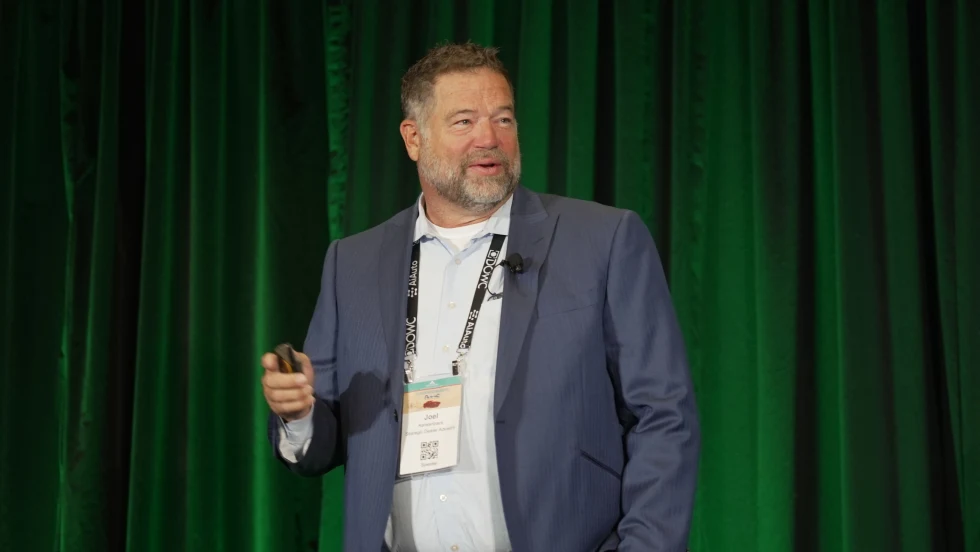
Get Ahead of the Change
A strong culture, among other things, will be a key differentiator for auto dealerships as the market speeds ahead to new heights, says industry veteran Joel Kansanback.
Read More →
F&I Without the Handoff
Get more familiar with what your dealer clients are really buying when they entrust you with finance-and-insurance.
Read More →
Affordability Shapes Auto Demand
Auto originations increased 1% in the first quarter, and electric vehicles are rebounding, according to TransUnion's latest credit report.
Read More →
The Evolution of Agency Development in Modern F&I
General agents have a different roadmap for success than their predecessors. It will pay for them to follow it in order to be true dealer partners.
Read More →
Four-Figure Loan Payments on the Rise
A LendingTree analysis found that location, age and credit score play a role in the rising amount of auto loan borrowers who make monthly payments of $1,000 or more.
Read More →
APCO Holdings Acquires Fidelity Dealer Services
The finance-and-insurance product provider says the addition strengthens EasyCare’s reach across key markets.
Read More →
Tariffs Could Raise Insurance Premiums
As U.S. import tariffs affect repair costs, consumers might find it more affordable to replace a damaged vehicle, according to recent Insurify tariff analysis.
Read More →
Smaller Loans, Longer Terms
The youngest generation of car buyers is more likely to finance less expensive vehicles, more than half of generation Z consumers borrowing less than $25,000.
Read More →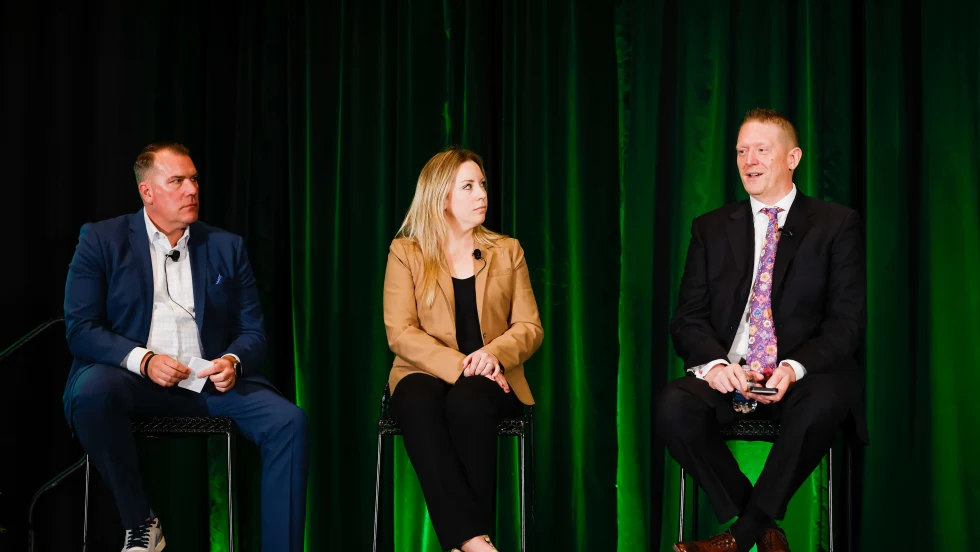
Ensure Your Clients Are Sure About Reinsurance
Industry experts recently broke down the complicated profit center at Agent Summit. Learn what’s relevant and what’s new to share with your dealers.
Read More →