



Analysts Weigh Tariffs' Impact on Auto Market
Vehicle price increases expected, potentially pushing out lower-income consumers, making big dent in EV adoption.


A Cox Automotive analyst expects the tariffs to increase the average new-vehicle price by $5,300.
Pexels/Mikhail Nilov
The 25% tariffs on vehicle and vehicle parts imports President Donald Trump announced Wednesday will have broad repercussions in the industry, market analysts said.
The duties, set to take effect April 3 for vehicles and May 3 for certain vehicle parts, will increase the already inflated prices of new and used cars by 10% or more, Cox Automotive predicts, and industry analysts broadly agree that they will lead to significant price increases.
The trade move is likely to also put a damper on EV sales. The U.S. imported nearly 40% of the EVs sold here last year, according to London-based EV research provider Rho Motion, which lists Mexico, Japan, South Korea, Germany and Sweden as the biggest sources of U.S.-bought EVs.
The Trump administration has already cut funding for states' EV charger production and has vowed to end federal tax breaks for EV purchases and leases.
Trump says the tariffs, which Cox says end “more than 30 years of free trade across North America,” will strengthen national security and boost American industry.
Realistically, though, the dramatic push to increase U.S. auto production “will be slow and difficult,” Cox said. “… increasing domestic production is an admirable goal, but the current state of the global automotive market has been more than six decades in the making.”
U.S. automakers, though they make significant numbers of vehicles in the U.S., heavily rely on foreign-made parts that in some cases cross international borders multiple times.
New-vehicle sales are forecast to rise this month as consumers move to get ahead of tariffs’ effect on prices, which already are challenging those on a budget.
But the tariffs are expected to now dampen consumer demand, which had been recovering from the pandemic.
“It is not immediately clear when the tariff will be imposed on vehicles and inflating the cost of vehicles in inventory, but consumers likely have a narrow window to buy new or used vehicles before prices increase by 10% or more,” said Cox Auto’s chief economist, Jonathan Smoke, in a statement on the tariffs.
“After a near-term surge in buying, we expect sales to fall, new and used prices to increase, and some models to be eliminated. The tighter supply and higher prices we expect will be reminiscent of 2021.”
In addition to vehicle prices, the tariffs would also raise prices on parts, vehicle service and insurance if Trump follows through on the duty on parts.
The tariffs will also further limit a small number of new-vehicle models retailing for less than $30,000, pointed out Cox Executive Analyst Erin Keating, who said many of the least expensive models are imported from Mexico, Japan and South Korea and comprised 13% of vehicles sold in the U.S. last year.
Keating expects the tariffs to raise average vehicle prices by $5,300. She likened the impact to Covid-caused price inflation but said the double impact could be the breaking point for consumers on tight budgets.
“While the increase in prices this time may be for completely different reasons, it still stands to reason that the market will not bear another significant increase, at least not for those in need of affordable transportation, especially those households earning less than $100,000. We saw 10% of these buyers exit the new-vehicle market over the same period.”
More Industry

Penske Auto Group Deal a Record
The deal to take the dealership and transportation services company private sets a new pace for industry buy-sell transactions.
Read More →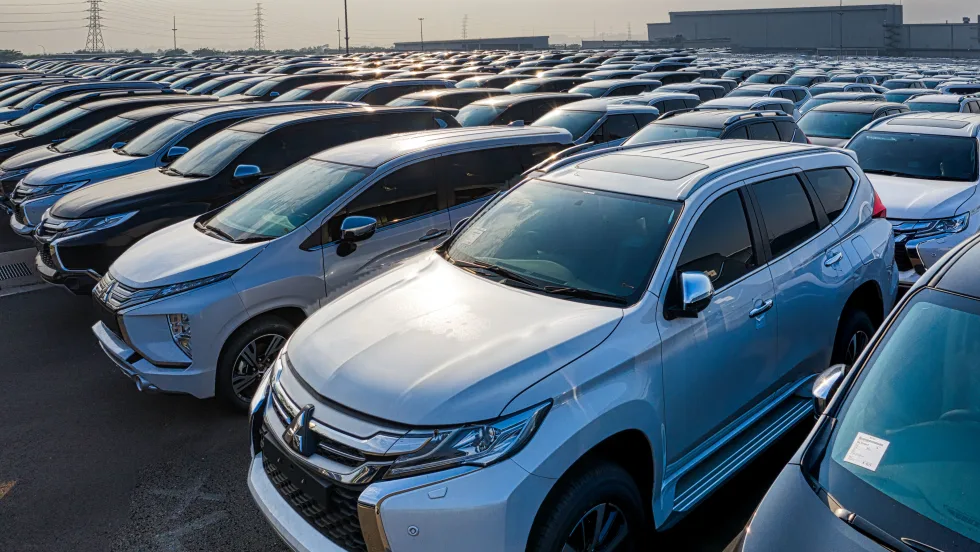
War Toll a Damper on Used Auto Prices
Cox Automotive found wholesale depreciation to be elevated in September amid high fuel prices and this year's unusual hurricane season.
Read More →
Bridge the Maintenance Gap
With many drivers missing recommended maintenance, service departments offering transparency and efficiency have a better chance of reaching financially strained consumers.
Read More →
California Store Has New Owner
The longtime dealership in the northern part of the state is known for robust fleet sales and has served the state capital for 115 years.
Read More →
BMW Plant Pursues Cleaner Energy
BMW Group Plant Leipzig has utilized hydrogen to help power its production since 2013, but a new pipeline is planned to take it to another level.
Read More →
Auto Affordability Inches Up
The latest Cox Automotive and Moody’s Analytics index shows a slight increase in new-vehicle affordability despite high prices.
Read More →
Ohio Auto Group Under New Ownership
After 79 years with the Schluter family, Mansfield Auto Group has been acquired by Missouri-based Clement Auto Group.
Read More →
RV Group Expands Carolina Footprint
Blue Compass RV Columbia Northeast is the 13th RV dealership owned by Blue Compass in the Carolinas.
Read More →
Agent Acumen
An Agent Summit panel of people who’ve been supporting auto dealers for years gave both timely and timeless advice for those starting out or mulling the prospect.
Read More →
Missed Maintenance Creates Opportunity
As families get back on the road and into daily school routines, service drives have an opportunity to capture customers who are behind on recommended vehicle maintenance.
Read More →