



Industry Could See Solid First Quarter 2011, Says CNW

BANDON, Ore. — In his state of the industry report, CNW Research’s Art Spinella said several indicators point to a solid first quarter 2011. What his data doesn’t point to, however, is the industry cracking the 13 million-unit mark next year.
In October, according to CNW, the industry realized its third month-over-month increase in retail sales. Both average transaction prices and MSRP also climbed, which could indicate the likelihood of positive profit reports from automakers and dealer groups in the year-end quarter.
Early returns in November, Spinella added, also point to more positive in the near future. “In the first week of November, floor traffic was up 2.4 percent,” he wrote. “Since dealership visits typically presage sales to four months ahead of actual purchases, the indication is a fairly solid first quarter 2011.”
So far in November, closing ratios of existing floor traffic were up 1.6 percent on an industry average basis, with Ford, Honda and General Motors dealers registering the largest gains. Additionally, same-store sales during November’s opening week indicate a strong start to the month, with deliveries up more than 12 percent.
Banks and other lending institutions are also showing an increasing willingness to lend. In the first week of November vs. the first 10 days of November 2009, approvals are up nearly 10 percent.
“Banks and other lending institutions are cracking open the vault even more and approving auto loans in greater numbers,” Spinella noted.
October also saw a pick up in leasing, which represented 27.6 percent of all acquisitions that month. In September, leasing represented 26.9 percent of all acquisitions, according to CNW.
“As a means of enticing consumers to a dealership, leasing continues to add some muscle,” wrote Spinella. “Those who say they entered the new-car market because of a lease deal climbed to 16 percent in October, clearly indicating a pivotal role this form of financing has had on sales increases.”
What’s fueling the rise in leasing, said Spinella, is that consumers are looking for shorter loan terms. The preference is for 42-month terms. “If anyone is looking for another reason many consumers are turning to leasing, here it is: The average lease term is now 41 months and dropping, while payments are virtually the same as longer term finance contracts,” he wrote.
Cash sales, according to CNW, slipped to 6.6 percent from 6.8 percent in September. Financing represented 65.81 percent of all transactions in October, down from 66.3 percent in September. However, Spinella said finance data revealed some positive signs for the future.
Subprime auto loan approvals, for instance, increased for the fourth straight month, rising from 6.9 percent in September and 5.7 percent in October 2009 to 7.6 percent last month. That’s still a far cry from 2008, when 27 percent of subprime auto loans were approved, but the needle is pointing in the right direction.
Spinella also highlighted some positive trends on the used financing side. In the opening week of November, used financing continued to rise after realizing slight increases in September and October.
“After the spring economic uptick sputtered during the summer, the fall data is beginning to suggest fairly strong potential for used financing through the first quarter of 2011,” wrote Spinella. “Much of that will depend on monetary policies and actions taken by the new Congress, but the market dynamics are seemingly positive.”
Looking at his consumer Wish List study, Spinella noted that buying a new vehicle remained in the 11th spot — a 5 percent increase from a year ago. Used vehicles climbed from 10th on the list to 9th. While both positions serve as positive indicators for next year, Spinella said the industry will be hard-pressed to realize some of the sales predictions currently floating around the industry.
“At this point in time, talk about the industry cracking the 13 million-unit mark in 2011 is dodgy at best,” wrote Spinella. “Based on non-automotive consumer attitudes — including personal and home-centric economic issues, as well as general lack of equity in existing homes — the industry is going to be hard pressed to reach 12.5 million.”
More Industry
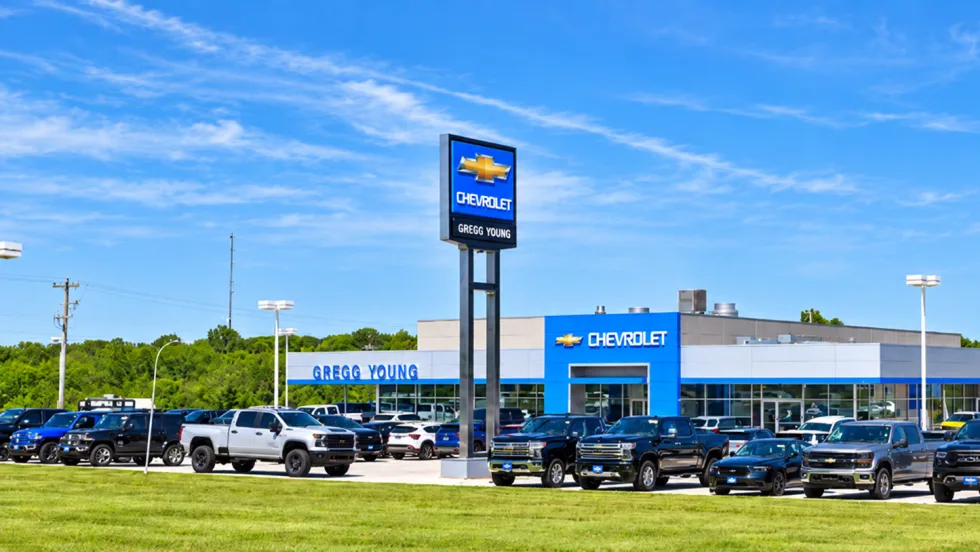
Nebraska Rooftop Changes Hands
The Gregg Young Automotive Group has sold its second dealership to Janssen Auto Group, both in Plattsmouth, Neb.
Read More →
Penske Auto Group Deal a Record
The deal to take the dealership and transportation services company private sets a new pace for industry buy-sell transactions.
Read More →
War Toll a Damper on Used Auto Prices
Cox Automotive found wholesale depreciation to be elevated in September amid high fuel prices and this year's unusual hurricane season.
Read More →
Bridge the Maintenance Gap
With many drivers missing recommended maintenance, service departments offering transparency and efficiency have a better chance of reaching financially strained consumers.
Read More →
California Store Has New Owner
The longtime dealership in the northern part of the state is known for robust fleet sales and has served the state capital for 115 years.
Read More →
BMW Plant Pursues Cleaner Energy
BMW Group Plant Leipzig has utilized hydrogen to help power its production since 2013, but a new pipeline is planned to take it to another level.
Read More →
Auto Affordability Inches Up
The latest Cox Automotive and Moody’s Analytics index shows a slight increase in new-vehicle affordability despite high prices.
Read More →
Ohio Auto Group Under New Ownership
After 79 years with the Schluter family, Mansfield Auto Group has been acquired by Missouri-based Clement Auto Group.
Read More →
RV Group Expands Carolina Footprint
Blue Compass RV Columbia Northeast is the 13th RV dealership owned by Blue Compass in the Carolinas.
Read More →
Agent Acumen
An Agent Summit panel of people who’ve been supporting auto dealers for years gave both timely and timeless advice for those starting out or mulling the prospect.
Read More →