



EVs Getting More Attractive
A growing percentage of U.S. consumers are open to switching and fewer are adverse to the idea, according to a recently completed survey. That’s despite the end of a tax break.

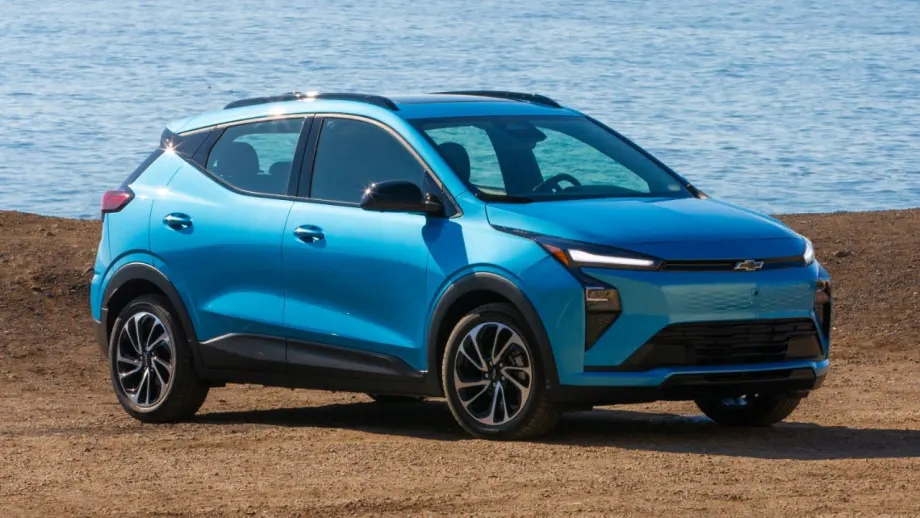
Prices of new EVs are the second-leading deterrent to adoption, according to the recent JD Power consumer survey. Other obstacles have become less daunting.
General Motors
Despite a drop in U.S. electric-vehicle sales following a pullback of federal incentives, more Americans are open to going electric amid this year’s spike in gas prices.
JD Power’s annual survey of new-vehicle shoppers found an uptick in those saying they’d very likely consider buying an electric model, a one percentage-point increase to a significant 25% of respondents. In addition, those very unlikely to go electric fell two percentage points to 20%.
In addition to pain at the gas pump, obstacles to EV adoption are gradually eroding, though EV prices make for a thorny snag, according to survey results.
Purchase price was the second most-cited reason consumers gave for resisting adoption after public charger availability, JD Power reported. The federal government, led by the Trump administration, ended an EV tax credit in October, bumping up EV transaction prices, which had already been higher than comparable gas-engine models.
Spotty charging infrastructure, though it’s still the top reason for opting out of EVs, is less of an issue for prospective EV buyers than it was last year, falling six percentage points to 46%, JD Power found. Charging times also improved in respondents minds, that deterrent falling two percentage points to 44%.
Consumers strongly resisting EV adoption have high thresholds for changing their minds, the report says. More than half aren’t willing to pay more for electric models, nearly three-quarters would want to see 500 miles of range between charges, and 43% said they’d expect comparable charger availability to gas pumps.
JD Power said public EV chargers are more plentiful than non-EV owners may think.
“Across much of the country, fast chargers are often available within about 50 miles, but for those not driving an EV, they can be easy to overlook. This points to a gap in visibility and awareness rather than infrastructure,” said Brent Gruber, JD Power’s executive director of OEM and EV solutions.
GLOBAL PICTURE: EV Sales Drop in April Following Surge
More Industry

Penske Auto Group Deal a Record
The deal to take the dealership and transportation services company private sets a new pace for industry buy-sell transactions.
Read More →
War Toll a Damper on Used Auto Prices
Cox Automotive found wholesale depreciation to be elevated in September amid high fuel prices and this year's unusual hurricane season.
Read More →
Bridge the Maintenance Gap
With many drivers missing recommended maintenance, service departments offering transparency and efficiency have a better chance of reaching financially strained consumers.
Read More →
California Store Has New Owner
The longtime dealership in the northern part of the state is known for robust fleet sales and has served the state capital for 115 years.
Read More →
BMW Plant Pursues Cleaner Energy
BMW Group Plant Leipzig has utilized hydrogen to help power its production since 2013, but a new pipeline is planned to take it to another level.
Read More →
Auto Affordability Inches Up
The latest Cox Automotive and Moody’s Analytics index shows a slight increase in new-vehicle affordability despite high prices.
Read More →
Ohio Auto Group Under New Ownership
After 79 years with the Schluter family, Mansfield Auto Group has been acquired by Missouri-based Clement Auto Group.
Read More →
RV Group Expands Carolina Footprint
Blue Compass RV Columbia Northeast is the 13th RV dealership owned by Blue Compass in the Carolinas.
Read More →
Agent Acumen
An Agent Summit panel of people who’ve been supporting auto dealers for years gave both timely and timeless advice for those starting out or mulling the prospect.
Read More →
Missed Maintenance Creates Opportunity
As families get back on the road and into daily school routines, service drives have an opportunity to capture customers who are behind on recommended vehicle maintenance.
Read More →