
Industry
Agent Acumen
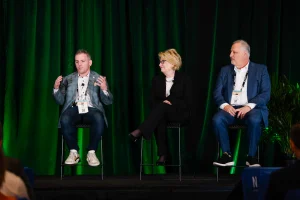
An Agent Summit panel of people who’ve been supporting auto dealers for years gave both timely and timeless advice for those starting out or mulling the prospect.


 MENU
MENU SEARCH
Reflections from the 2026 Agent Summit: gratitude, gut decisions, and the power of the first contact

With artificial intelligence, scale in prospecting is no longer reserved for organizations with large teams and deep budgets.
Pexels/Vitaly Gariev
Standing on stage at the 2026 Bobit Business Media Agent Summit was an honor, but more than that, it was grounding. It reminded me why this industry still challenges me, still sharpens me, and still matters.
To the organizers, partners, fellow presenters and every agent who chose to spend part of their summit experience in that room, thank you. Being trusted with your attention is no small thing.
Agent Summit has never been just another event on the calendar. It is a gathering of people who understand the real work of this business. The rejection that never really gets easier. The persistence it demands and the pressure to keep adapting while remaining authentic.+++
Being invited into that shared experience was a privilege, and I am genuinely grateful for the chance to contribute.
My session, “The Hidden Edge: Prospecting Success in 2026,” wasn’t built around scripts, buzzwords or the tactic of the month. It focused on something much quieter–and much more decisive: what happens in those first moments of contact, long before logic ever joins the conversation.

Within the first four seconds of engagement, a dealer has already decided whether you are a partner or a predator.
Pexels/Volker Thimm
We began with a reality that makes some people uncomfortable. Within the first four seconds of engagement, a dealer has already decided whether you are a partner or a predator. That decision doesn’t involve spreadsheets or credentials. It’s fast, emotional and largely unconscious.
Most agents don’t come up short because their solutions lack value. They come up short because they never earn the opportunity to explain them. The door closes early, often without either party realizing why.
That is why we focused on a single objective throughout the session: getting the meeting on the first contact. Not closing. Not persuading. Just earning the right to continue the conversation.
I deliberately avoided a traditional introduction. I passed on a formal bio, not as a gimmick but as a demonstration. When pressure fades, curiosity emerges. When selling stops, listening begins.
Nearly everyone in the room recognized the scenario we walked through.
You finally reach the decision-maker. You are granted a minute. You deliver a pitch that is clean, logical and thoroughly thought out. You reference performance. You talk upside. You tie it all to profit.
And then you hear it.
“Thanks, but we’re happy with what we have.”
“Not the right time.”
“We already use someone.”
What typically follows is instinctive. We explain more. We push a little harder, and we clarify what they are overlooking. That instinct is usually what ends the conversation.
When you imply that a dealer is leaving money on the table, logic may hear opportunity. Instinct hears something else entirely: a threat to competence, a challenge to control, a disruption to routine. Once that threat is perceived, the outcome is already decided.
To explain why logic fails so often, we reframed the way decisions are made.
Think of the brain as an exclusive nightclub. At the front door stands the bouncer. His job is quick and unforgiving. Do I recognize this person? Do they feel different? Are they worth attention, or are they just noise?
If you get past the bouncer, you face security. Security does not evaluate upside. It evaluates safety. Are you a threat to time, ego, rhythm or reputation? If yes, you are out.
Only after both are satisfied do you ever reach the boss. That is where numbers live. Logic, ROI, justification.
Here is the part most people miss. The boss does not make the decision. The gut does.
Logic exists to defend what has already been decided emotionally. That’s why someone can fully understand an offer and still say, “I get it, but it doesn’t feel right.” The feeling came first.
Most prospecting tools are effective when used well. Familiarity, reciprocity. Scarcity, technology. The issue is not the tools themselves. It is where they are aimed.
When logical arguments are fired at a guarded nervous system, they bounce off.
The first objective is not persuasion. It is de-escalation. Remove pressure and threat, and hand back control.
Instead of pitching, we explored a more intentional path, one designed to calm the gut before addressing the head.
It starts with connection. Saying openly that what you offer may not even be relevant can immediately shift the tone. It signals honesty. It creates space and lowers defenses.
From there, the dialogue moves through questions about current reality, persistent challenges, and past attempts. No diagnosing, no correcting. Just understanding.
The most important shift comes with consequence. Not fear-based urgency but quiet reflection. If nothing changes, what does that actually mean over the next year?
At that point, the meeting is not something you are pushing for. It becomes something they want.

With artificial intelligence, scale in prospecting is no longer reserved for organizations with large teams and deep budgets.
Pexels/Tara Winstead
One of the most energizing portions of the discussion involved artificial intelligence and its growing role in prospecting, especially for independent agents. For the first time, scale is no longer reserved for organizations with large teams and deep budgets.
AI can now serve as research support, analyst, planning partner and sounding board. It can surface patterns, identify opportunity gaps, refine outreach, and help you prepare before the first contact happens.
But we were careful to draw a line. AI does not replace human connection. It strengthens preparation. Trust is still built face to face. AI does not read the room or sense hesitation. What it does is eliminate guesswork. It allows you to show up informed rather than generic, curious rather than assumptive.
The real advantage lies in asking better questions, both of prospects and of the tools themselves. Prompting has become a modern professional skill. The agents who succeed with AI are not adding volume. They are gaining clarity.
Used well, AI does not make you louder. It makes you steadier, more intentional and better prepared for those critical first seconds when everything is decided.
As the session ended, I asked the room to think back to the opening moments.
The goofy “did-you-know?” moments. A shared frustration, questions about consequence, a promise of a roadmap.
Without realizing it, the audience had experienced the very framework we spent time breaking down. No pitch or pressure, just engagement.
The fact that the room was still full, attentive and leaning in spoke louder than any slide ever could.
To everyone who attended, participated, nodded along, challenged ideas, or shared a quiet realization, thank you. Your openness is what made the session meaningful.
To the Agent Summit team, thank you for creating an environment where real conversations are valued and for trusting me with your audience.
To every agent reading this, the edge you are looking for is not a sharper close or a louder message. It is understanding what happens in those first four seconds and learning how to earn the next conversation before you ever try to win the deal.
This wasn’t an ending but an open invitation to learn more.
Expo Ease
Loading data...
Industry
An Agent Summit panel of people who’ve been supporting auto dealers for years gave both timely and timeless advice for those starting out or mulling the prospect.






F&I
General agents have a different roadmap for success than their predecessors. It will pay for them to follow it in order to be true dealer partners.
Industry
Rob Mancuso, who comes from a long line of auto dealers, values general agents’ place in the industry and makes a case for them taking an even bigger seat at the table.
Industry
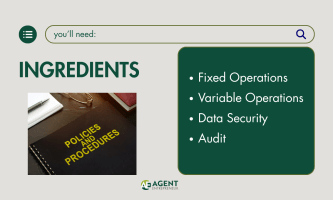
The secret to both amazing barbecue and compliance is the same: understanding the basics and committing to a process.
Sales
Reflections from the 2026 Agent Summit: gratitude, gut decisions, and the power of the first contact
Industry
Auto dealers don’t have to settle for high employee turnover. Despite historical patterns of rotating dealership doors, they can tweak their processes to find and keep the right people on staff.
F&I
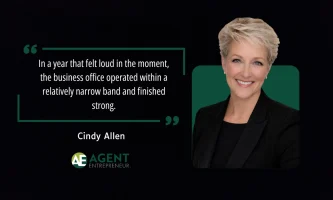
A StoneEagle 2025 industry report reads like a stress test. In a noisy year, F&I became the foundation that kept the house standing when the front end thinned.
Industry
Several automotive industry experts offer their advice on establishing an agency and building it to your highest potential.
Industry
As America turns 250, explore how the automotive industry shaped jobs, culture, innovation, and mobility from Detroit assembly lines to today’s EV era.