In addition to hustle, secrets include doing your homework and prep work, tapping your and others’ energy, standing out, and being unafraid to tell the hard truths no one else at the dealership will.
Credit:
Pexels/Lukas
10 min to read
As auto industry consolidation has shrunk the opportunity for agents over the past couple of decades, starting one’s own agency today presents more challenges than ever.
But when entrepreneurial spirit drives one to plunge in despite formidable barriers to entry, one can not only make a go of it but even rise above established competitors, say industry veterans who offered guidance on making it happen.
Ad Loading...
Along with a lot of hustle, especially in the beginning, secrets of success revolve around doing your homework and prep work, tapping your and others’ energy, standing out, and being unafraid to tell the hard truths no one else at the dealership will.
Pumping Up Products
Before anything else, a new agent must obviously have products and services to offer to dealer prospects. But how to make a fledgling product line attract dealers with established agent relationships?
One approach is to undercut competitors’ prices, says Joel Perez, director of dealer development, training, and compliance at Vanguard Dealer Services.
“We had to look for providers that would give us competitive pricing so we could compete,” he says of Vanguard’s early days, when he and the founder of the then-tiny agency did a lot of door-knocking. “In many cases, we could offer dealers a better deal in order to give an opportunity to prove ourselves.”
Good prices go hand in hand with better performance, says Perez and Gerry Gould of Tampa-based F&I training provider Gerry Gould & Associates.
“What is the difference between you and the current agent? First establish that,” Gould says. “You’ve got to learn something about the agent that’s in the store and their reputation.”
In doing that research, a new agent can exploit rivals’ weaknesses by demonstrating their own strengths.
As Gould explains, an agent may have a solid reputation with certain dealer-clients but not-so-good credentials in other dealers’ eyes. That’s because agents tend to concentrate their efforts on clients that carry all or most of their products, he says, pointing out that dealers who carry minimal products from that same agent can be fertile ground for new agents’ inroads.
Offering things few other competitors do can also make a new agent stand out from the crowd. Fast-burgeoning artificial intelligence technologies are just such a differentiator, Perez says.
“In today’s world, there’s a lot left to be desired on AI. If you’re a new agent who has fully embraced AI, you can use it as training material to stand out in the marketplace,” he says. “It’s the little things that stand out, and AI is going to be a huge one.”
In addition to hustle, secrets include doing your homework and prep work, tapping your and others’ energy, standing out, and being unafraid to tell the hard truths no one else at the dealership will.
Credit:
Pexels/Lukas
Lay of the Land
Nuances like that illustrate the importance of detective work on the front end to learn as much as possible about prospects and their current agents, even down to seemingly mundane aspects of stores’ cultures.
“Take a couple of days to go around the dealership and kind of lurk, see how the salespeople interact with each other and customers,” Perez says. “You want to become familiar with how they move, speak, think – it will make it easier for you to interact with them.”
That especially applies to the dealer principal. He or she remains the main object for the new agent, who should ensure the correct person is in his or her sights. Don’t rely on store websites or even LinkedIn – an otherwise invaluable business-development tool, this article will dig into a little later. Online research is a good starting point, but shouldn’t ultimately be relied upon.
“Never make presumptions on who’s really running the show. If you’re wrong, you’re already on the wrong foot trying to gain the business,” Perez says. “That happens a lot more than you think. In reality, six months from now, the son or daughter is taking over meetings, and you’re ignoring them in a meeting.”
Back to LinkedIn, a powerful online professional marketing and networking website. The resource can be indispensable when building an agency, including research and support from other agents not operating in one’s territory.
LinkedIn provides an agent with dealer personnel’s full names to mention once inside the dealership, affording added credibility. Gould recommends paying for its premium subscription for all the research and networking resources it offers.
“It takes an investment to get better,” he says.
Good Prospects
Once an agent has identified potential clients, there comes the challenge of convincing them to make a change, not typically an easy proposition. Of course, most agents will already have contacts they can tap from their time in auto retail, Perez says.
There are still ways to break in, though. You’re more likely to get straight talk from the service manager about the current agent’s products, for instance, Gould says.
He demonstrated what an aspiring agent’s introduction could look like:
“’I understand you’re with so-and-so (agent) and wondered how it was working out for you.’”
Then the prospecting agent can relay what he or she learned in the service drive to the dealer principal.
“The service manager might complain to the principal, but the principal might say, ‘No, I like them, and I don’t want to switch,’” Gould explains.
Another likely, oft-overlooked method is approaching dealer principals’ children who are about to or have recently succeeded them, he adds. Just because their parent’s agent has been in place a long time doesn’t necessarily mean the new generation wants to keep that role status quo.
“Some younger dealers are looking to make a change,” Gould says.
Then there’s trusty LinkedIn. Perez says that in addition to getting support and conducting research, the site can provide new agents with exposure to client prospects from the comfort of their offices.
But the most essential element in winning over dealers, Gould says, is hunger.
“‘I need your business. I will work hard for you. Because then you’ll refer me to others, and that’s how I’ll build my business. I’ll build my business one dealership at a time.’”
Keep Your Foot on the Gas
Once an agent has won over a dealer, the work only shifts into higher gear to keep the relationship. He or she must prove the dealer made the right choice.
Perhaps most importantly, agents should function at the bottom as truth tellers, Perez says. When he owned dealerships before joining Vanguard, he said he looked for agents who functioned more like business partners looking out for his investment.
“One thing not to do if you’re starting an agency is to be afraid of tell your client the truth,” he said. “There are agencies out there that don’t grow because they feel lucky dealers sell their products. They don’t want to cause any problems – they’re not partners.”
Dealers won’t be experts on every corner of the dealership, from sales to F&I to parts and service, so they need someone to fill in the gaps for them, Perez adds. However, agents should exercise diplomacy when sharing their expertise.
“Never walk into a dealership and presume you know better than the people who are already there,” Perez says. “Be careful with the way you’re phrasing a thing, even if you do know better … Show them why it’s better instead of walking in and saying, ‘This is wrong.’”
In the same vein, agents should shift their focus from themselves to the dealer client, the experts say.
“One thing you don’t do is talk about what you did when you were in the auto business. A dealer wants to hear what are you going to do for my people,” Gould advises. “Give them relevant information that pertains to them … Just because you did it this way doesn’t mean it will work for this particular person.”
Even if an agent gets all of those things right, from courting to distinguishing themselves from competitors and telling dealer principals what they need to hear, if they don’t deliver on the things they promise, they’ll lose the account.
“That’s the only way you will earn the trust and respect from a dealer principal,” Perez says.
Don’t Go It Alone
Operating an agency, however small, shouldn’t be a solo proposition, regardless of one’s energy and expertise.
“You need to hire the right people,” Perez says. “You need at least one solid partner. One dealer alone can take a huge bulk of your time. … In the agency business, it’s sometimes overlooked how important the office people and the administrative people are.”
Especially when an agency is in its early stages, agents need help, and not just bodies but people with the kind of drive necessary for any startup.
“When you open your own agency, it’s 24/7, 365 days a year. You go into a mode of surviving until you get to a level,” Perez says. “To be successful in the agency world, you need someone to work at that level.”
Hiring trustworthy people is also crucial as an agency grows. “Make sure you’re very selective in the people you hire because now you’ll be turning the business you’ve earned to someone else,” he adds. “Make sure they do the right thing and continue to do things that the dealer principal is used to.”
Don’t Pick Up The Compliance Baton
When it comes to guiding dealer-clients on regulatory compliance, there could be a lot of pitfalls waiting for a new agent. But most can be avoided if agents keep one thing in mind, says expert Gil Van Over: Don’t be a compliance cop.
That advice should actually be a relief for new agents. They don’t have to shoulder regulatory burdens for their clients but simply help them carry their own.
“It is more of a supporting training function than anything, providing the proper tools, compliance training itself, and not to be the one that goes through deals and tries to do a compliance audit,” said Van Over of Automotive Compliance Education.
Resist the urge to be a compliance cop for your dealer clients.
Credit:
Pexels/Markus Winkler
Agents are sometimes ensconced in F&I offices on behalf of auto dealers, he said, but since agents play a key role in providing training to dealers, they should largely remove themselves from actual compliance checks and balances because they could therefore be blamed for any infractions.
Van Over has seen that happen in the case of an agent who lost a dealer-client account because of taking on a compliance role and missing something.
“The agency thought it would get into the compliance component and realized the liability wasn’t worth it.”
“An agent is supposed to provide income development, not police compliance. The more time they spend being a compliance cop, the less time they spend helping the department develop income,” Van Over said. “Plus, there’s an inherent risk of, if they’re supposed be a compliance cop and they miss something, they take on liability they don’t want to be taking on.”
Instead, agents can offer solutions for any compliance issues that crop up in actual compliance auditors’ reviews, whether it’s a menu product, a training class, or a regimen. Agents, in their consultative role, can also point dealers to compliance auditors, if needed.
Many agents, of course, worked as F&I managers themselves earlier in their careers, so they should know the ropes when it comes to compliance. But just because they have that experience doesn’t mean their past dealership properly complied with regulations. They could have learned some bad habits instead, Van Over said.
Similarly, many small auto groups or single dealerships focus more on sales than compliance and typically don’t have dedicated compliance officers to train staff on legal protocols, he added.
All of these point to the need for agents to get certified on automotive retail compliance ins and outs. Such training, which agents should update annually, helps them understand state and federal law affecting dealers, along with auto retail best practices. It also grants them an important layer of credibility. That way, agents can alert dealers if they happen to spot something irregular – not that they look for issues, though.
“Compliance is a landscape of shifting sands, and things can change over the year,” Van Over said. “Different lawsuits come up, different regulations can come into play. They need to stay up-to-date, just like a doctor or nurse or CPA.”
The best practices, which Van Over calls “dealer law,” can in some cases indirectly help dealers comply with state and federal laws. Examples are the menu of everything that should be provided and completed when working with customers, along with a desking tool for sales proposals that helps verify compliance with processes.
Agents should familiarize themselves with all their dealer-clients’ contracts and expect that the F&I and sales managers are well-versed in the documents, though Van Over said he’s observed that a “lot” of F&I managers haven’t read all of the contracts they work with.
In addition to certification, agents should avail themselves of industry conferences and networking opportunities, he added.
“Most agents who come to conferences are not necessarily competing against each other.”
A compliance-first F&I Strategy for today's auto dealer is essential given recent enforcement actions on the state and federal level. Here’s how to help your dealer-clients establish it.
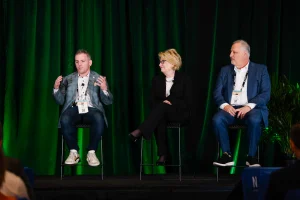
An Agent Summit panel of people who’ve been supporting auto dealers for years gave both timely and timeless advice for those starting out or mulling the prospect.
Rob Mancuso, who comes from a long line of auto dealers, values general agents’ place in the industry and makes a case for them taking an even bigger seat at the table.
Auto dealers don’t have to settle for high employee turnover. Despite historical patterns of rotating dealership doors, they can tweak their processes to find and keep the right people on staff.
A StoneEagle 2025 industry report reads like a stress test. In a noisy year, F&I became the foundation that kept the house standing when the front end thinned.
As America turns 250, explore how the automotive industry shaped jobs, culture, innovation, and mobility from Detroit assembly lines to today’s EV era.