



Greenberg Sues U.S. Over AIG Rescue

Maurice R. "Hank" Greenberg, the longtime former chief executive of American International Group Inc., launched a legal challenge to the government's 2008 takeover of AIG, alleging the move was unconstitutional.
Mr. Greenberg's lawyers on Monday sued the U.S. and the Federal Reserve Bank of New York on behalf of Starr International Co. and other AIG shareholders. The lawsuits accused the Treasury Department and New York Fed of wrongly taking control of the insurer and using it as a vehicle to funnel tens of billions of dollars to AIG's trading partners, which included large U.S. and European banks, reported The Wall Street Journal.
The suits allege that by taking a nearly 80 percent stake in AIG in September 2008 when it agreed to lend the insurer up to $85 billion, the government took valuable property from Starr and other AIG shareholders in violation of the Fifth Amendment, which says private property can't be taken for "public use, without just compensation."
Starr is seeking damages for itself and other shareholders of at least $25 billion. AIG is listed as a nominal defendant in the suits, which also seek damages for the company. A spokesman for the company declined to comment.
"The government is not empowered to trample shareholder and property rights even in the midst of a financial emergency," the suit against the government said.
The Treasury Department, which is AIG's majority owner, said it is reviewing the case and expects to defend its actions vigorously.
"Our actions were necessary, legal and constitutional," said Tim Massad, the Treasury's assistant secretary for financial stability and overseer of the Troubled Asset Relief Program. "It is important to remember that the government provided assistance to AIG, and stopped it from collapsing, in order to prevent a meltdown of the entire global financial system," Mr. Massad said.
In deciding to file the suits now, Starr faced potential issues with a three-year statute of limitations in cases involving allegations of breaches of fiduciary duty, which is what Starr is alleging against the New York Fed. By filing Monday, that suit came just before the three-year anniversary of the formation of Maiden Lane III, a vehicle that paid AIG's trading partners roughly $30 billion to cancel the insurer's derivative contracts.
Robert Ray, a partner at law firm Pryor Cashman LLP who isn't involved in the case, said Starr's lawsuit against the U.S. government is "a novel use of a constitutional provision" that has traditionally been used by others to challenge the government's right to seize property such as real estate and develop it for public use. The Supreme Court already has ruled on a case that used similar reasoning. In 2005, justices ruled, 5-4, that the city of New London, Conn., could condemn private land for a redevelopment project.
The Fed loan to AIG was repaid this year and most of the outstanding aid to the company was consolidated with the Treasury, though the New York Fed still has to recoup about $17 billion from mortgage securities it inherited from the AIG bailout. A New York Fed spokesman said "there is no merit" to Starr's allegations.
AIG was felled by bad bets on subprime mortgages and found itself in a liquidity crunch at the height of the financial crisis, owing billions of dollars to trading partners under the terms of insurance-like contracts it wrote called credit-default swaps.
To prevent the company from filing for bankruptcy protection, the New York Fed extended AIG a loan in September 2008, taking a majority ownership stake in the process and diluting the investments of all private shareholders.
The rescue package was later restructured and saw the government committing up to $182.3 billion in taxpayer support to AIG.
At its peak, AIG used more than $130 billion of the available bailout funds.
The Treasury now owns 77 percent of AIG after selling some shares to investors in May and is trying to recoup more than $41 billion from selling its remaining stake over time.
Mr. Greenberg, 86 years old, left AIG in 2005 after nearly four decades at its helm. Starr, which he runs, was the company's largest shareholder until AIG's near collapse. He has been a critic of the manner in which the U.S. bailed out AIG, the terms of the rescue and the fact that AIG was forced to sell some of its best assets to repay taxpayers.
"We have been very concerned about the terms of the bailout from the beginning," said David Boies, chairman of Boies, Schiller & Flexner LLP, which is representing Starr.
Mr. Boies said the government treated AIG differently from other financial institutions. The lawsuit said many financial firms got billions of dollars in government loans during the crisis without the U.S. taking ownership stakes or received aid in exchange for smaller equity interests. During the crisis, the government took large equity stakes in several companies after bailing them out, including Citigroup Inc., General Motors Co. and the company now known as Ally Financial Inc.
Mr. Boies called the treatment of the insurer "discriminatory…and deliberately so," because AIG was in a "peculiarly good position" to act as a vehicle for getting money to other troubled institutions, by dint of the swaps it had with banks around the world.
The lawsuit against the U.S. government was filed in the U.S. Court of Federal Claims, which has jurisdiction in cases involving claims against the federal government. The suit against the New York Fed, which is part of the U.S. central bank, was filed in the U.S. District Court for the Southern District of New York.
AIG has sold assets to repay large sums of the bailout. To break even on its investment in AIG, the government has to sell its shares at about $28.73 apiece. The Treasury sold the first batch of shares at $29 apiece. On Monday, AIG's shares fell 87 cents, or 4 percent, to $21.01.
More Industry
Nebraska Rooftop Changes Hands
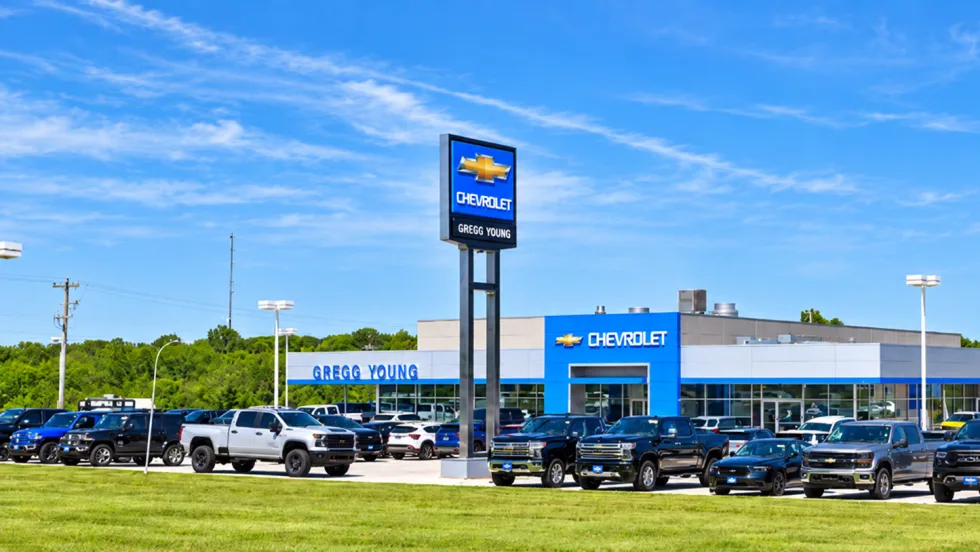
The Gregg Young Automotive Group has sold its second dealership to Janssen Auto Group, both in Plattsmouth, Neb.
Read More →
Penske Auto Group Deal a Record
The deal to take the dealership and transportation services company private sets a new pace for industry buy-sell transactions.
Read More →
War Toll a Damper on Used Auto Prices
Cox Automotive found wholesale depreciation to be elevated in September amid high fuel prices and this year's unusual hurricane season.
Read More →
Bridge the Maintenance Gap
With many drivers missing recommended maintenance, service departments offering transparency and efficiency have a better chance of reaching financially strained consumers.
Read More →
California Store Has New Owner
The longtime dealership in the northern part of the state is known for robust fleet sales and has served the state capital for 115 years.
Read More →
BMW Plant Pursues Cleaner Energy
BMW Group Plant Leipzig has utilized hydrogen to help power its production since 2013, but a new pipeline is planned to take it to another level.
Read More →
Auto Affordability Inches Up
The latest Cox Automotive and Moody’s Analytics index shows a slight increase in new-vehicle affordability despite high prices.
Read More →
Ohio Auto Group Under New Ownership
After 79 years with the Schluter family, Mansfield Auto Group has been acquired by Missouri-based Clement Auto Group.
Read More →
RV Group Expands Carolina Footprint
Blue Compass RV Columbia Northeast is the 13th RV dealership owned by Blue Compass in the Carolinas.
Read More →
Agent Acumen
An Agent Summit panel of people who’ve been supporting auto dealers for years gave both timely and timeless advice for those starting out or mulling the prospect.
Read More →