



Ford Says $2.55 Billion First-Quarter Profit May Be Year’s Best

Ford Motor Co. the second-largest U.S. automaker, said the $2.55 billion first-quarter profit it reported yesterday may be the company’s biggest this year as costs increase.
Ford will face $4 billion in higher expenses for commodities, new-product development, engineering, manufacturing and advertising this year. The company also said earnings from its Ford Credit finance unit will be $1.1 billion lower because of changes in lease depreciation and credit-loss reserves, reported Bloomberg.
“There are factors that you have to take into account as you get to the latter part of the year that will possibly result in our profits being lower than the first quarter,” Chief Financial Officer Lewis Booth said yesterday in an interview. “There are factors that we think will perhaps make the first quarter look like a very good quarter.”
Net income rose 22 percent from $2.09 billion a year earlier as fuel-efficient new models won higher prices, Dearborn, Michigan-based Ford said yesterday in a statement. Excluding some items, profit was 62 cents a share, beating the 50-cent average of 14 analysts’ estimates compiled by Bloomberg. Sales rose 4.7 percent to $33.1 billion.
The net income marks Ford’s most profitable first quarter since a $17.6 billion net income in 1998 that included a $16 billion gain from the spinoff of the First Associates Capital Corp. consumer finance unit.
Ford rose 12 cents to $15.66 yesterday in New York Stock Exchange composite trading. The shares have declined 6.7 percent this year.
Chief Executive Officer Alan Mulally has revived the automaker with a focus on fuel economy and raised U.S. prices twice this year as the cost of gasoline gained 26 percent. The prices consumers paid for Ford vehicles rose $900 million worldwide in the first quarter, the automaker said.
The cost of developing new models and improving the Ford and Lincoln brand images will add $2 billion to structural costs this year, Booth said.
“We are going to grow the business,” Booth said. “But growing the business does bring along with it some costs.”
The cost of commodities used in Ford’s cars and trucks will rise $2 billion this year, Booth said. Ford had $300 million in additional commodities expenses in the first quarter and expects an additional $1.7 billion in costs for the remainder of the year, he said.
“We’re seeing some signs of steel beginning to stabilize, the rest of commodities, given the economic activity around the world, we expect to carry on going up,” Booth said. “Even steel is stabilizing at a significantly higher level than last year.”
Ford said its quality performance in the first quarter was “mixed,” falling short of a goal to improve. The automaker said it expects a mixed quality performance for the year, instead of an improved one.
Some of the quality problems have been in the automaker’s touch-screen audio, navigation and communications system, known as MyFordTouch and MyLincolnTouch, Booth said.
“We had a bunch of issues, which were a little disappointing,” Booth said. “The quality issues were more a combination of launching a lot of new products and our volumes going up, rather than necessarily isolated on certain areas.”
Ford still hopes to do well in J.D. Power & Associates’ initial quality survey, where it was the top-ranked mainstream auto brand last year, Booth said.
Ford’s U.S. sales rose 16 percent in the first quarter, excluding the Volvo Cars unit it sold last year, and it outsold General Motors Co. (GM) last month for the second time in 13 years. Ford’s U.S. market share in the quarter fell to 16.2 percent from 16.8 percent as it cut discounts 9.1 percent while GM raised them 11 percent, according to Autodata Corp. in Woodcliff Lake, New Jersey.
Most of Ford’s price improvement came in North America, where net prices rose $700 million on a mix of lower incentives and higher vehicle prices, the automaker said. Ford’s first- quarter sales of $33.1 billion topped eight analysts’ average estimate for $30.8 billion.
Mulally said heated leather seats are one of the top options ordered on the Fiesta subcompact, which traditionally would have been a car sold without such expensive features. As fuel prices rise, consumers are moving to smaller models while still expecting the amenities they had in larger vehicles, he said.
“This is a tremendous change in the auto industry,” Mulally said. “We believe people are making a lifestyle choice and we’re going to see that trend by consumers continue.”
The automaker boosted North American production by 14 percent to 657,000 cars and trucks. Ford has lost 12,000 to 14,000 vehicles of production in Asia this year because of the earthquake in Japan and may lose more, Booth said. There has been no lost production in North America and the quake will have no “material” impact on Ford’s earnings, Booth said.
Pretax profit in the company’s European operations more than doubled to $293 million.
Ford Credit will distribute about $3 billion to the parent company this year, up from expected distributions of about $2 billion the company projected in January, Ford said.
“Ford Credit’s leverage is very low at 7-to-1,” Booth said. “We think we need to improve Ford Credit’s leverage, and we think the auto company can use the cash.”
Ford’s automotive operations had $21.3 billion in cash on March 31, up from $20.5 billion on Dec. 31. The company, which reduced debt by $14.5 billion last year, had automotive debt of $16.6 billion, down from $19.1 billion on Dec. 31. The automaker said it reduced automotive debt by $2.5 billion in the first quarter.
Ford has more debt than rivals because it borrowed $23 billion in late 2006 before credit markets froze, allowing it to avoid the bailouts and bankruptcies that befell the predecessors of GM and Chrysler Group LLC in 2009.
More Industry

Penske Auto Group Deal a Record
The deal to take the dealership and transportation services company private sets a new pace for industry buy-sell transactions.
Read More →
War Toll a Damper on Used Auto Prices
Cox Automotive found wholesale depreciation to be elevated in September amid high fuel prices and this year's unusual hurricane season.
Read More →
Bridge the Maintenance Gap
With many drivers missing recommended maintenance, service departments offering transparency and efficiency have a better chance of reaching financially strained consumers.
Read More →
California Store Has New Owner
The longtime dealership in the northern part of the state is known for robust fleet sales and has served the state capital for 115 years.
Read More →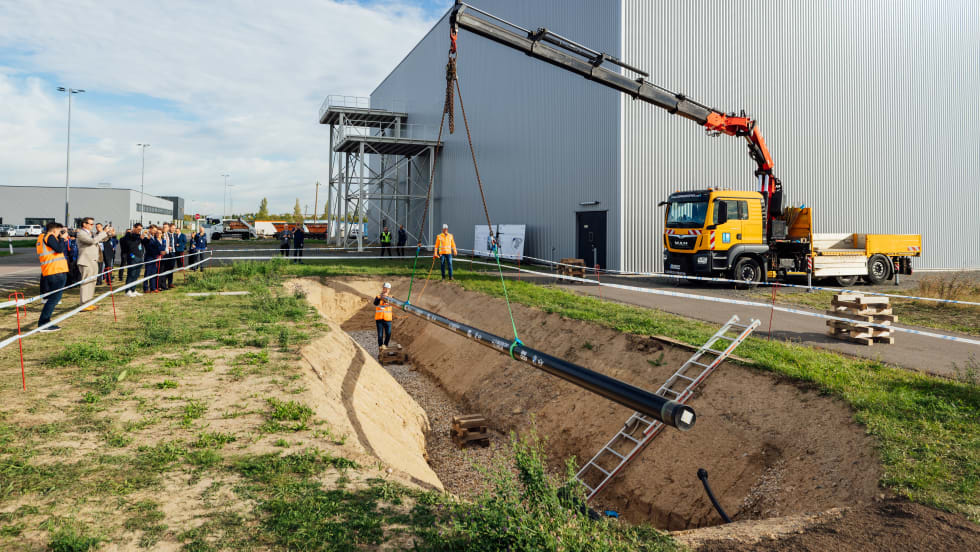
BMW Plant Pursues Cleaner Energy
BMW Group Plant Leipzig has utilized hydrogen to help power its production since 2013, but a new pipeline is planned to take it to another level.
Read More →
Auto Affordability Inches Up
The latest Cox Automotive and Moody’s Analytics index shows a slight increase in new-vehicle affordability despite high prices.
Read More →
Ohio Auto Group Under New Ownership
After 79 years with the Schluter family, Mansfield Auto Group has been acquired by Missouri-based Clement Auto Group.
Read More →
RV Group Expands Carolina Footprint
Blue Compass RV Columbia Northeast is the 13th RV dealership owned by Blue Compass in the Carolinas.
Read More →
Agent Acumen
An Agent Summit panel of people who’ve been supporting auto dealers for years gave both timely and timeless advice for those starting out or mulling the prospect.
Read More →
Missed Maintenance Creates Opportunity
As families get back on the road and into daily school routines, service drives have an opportunity to capture customers who are behind on recommended vehicle maintenance.
Read More →