



Federal Rule Pushes States to Cut Highway Pollution
States aren’t tied to particular numbers but will get funds to make strides.


There are $27 billion in federal funds to support pollution-cutting programs.
IMAGE: Pexels/Pixabay
The Biden administration finalized a rule requiring states to cut transportation-generated greenhouse gas emissions with the leeway to set their own target reductions.
The Federal Highway Administration will give states a performance measure to track emissions.
“Every state has its own unique climate challenges, and every state ought to have the data, funding, and flexibility it needs to meet those challenges head on,” said U.S. Transportation Secretary Buttigieg said in a press release on the new measure.
The rule comes without a stick – it includes no penalties for missing target reductions – but there is a carrot of $27 billion in federal funds to support pollution-cutting programs.
Funding examples include:
A $5 billion electric-vehicle infrastructure program to help states build a national charging network.
Another $5 billion to replace public buses with no-emissions electric and other low- or no-emissions models.
A Congestion Relief Program of $250 million in competitive money to develop “innovative, multimodal solutions” to reduce traffic congestion and “related economic and environmental costs” in major metropolitan areas.
States will be required to regularly report on their progress in cutting emissions.
The rule is a good step to protect the environment, said Natural Resources Defense Council Director of Federal Transportation Shruti Vaidyanathan.
“It’s way past time for officials to measure the impact of public spending and come up with ways to make it better. Just paving more, new lanes of highways is not the answer. The key is making sure the funds are spent on highway repairs and on alternatives such as charging stations, public transit, and bike lanes.”
Originally posted on Auto Dealer Today
More Industry
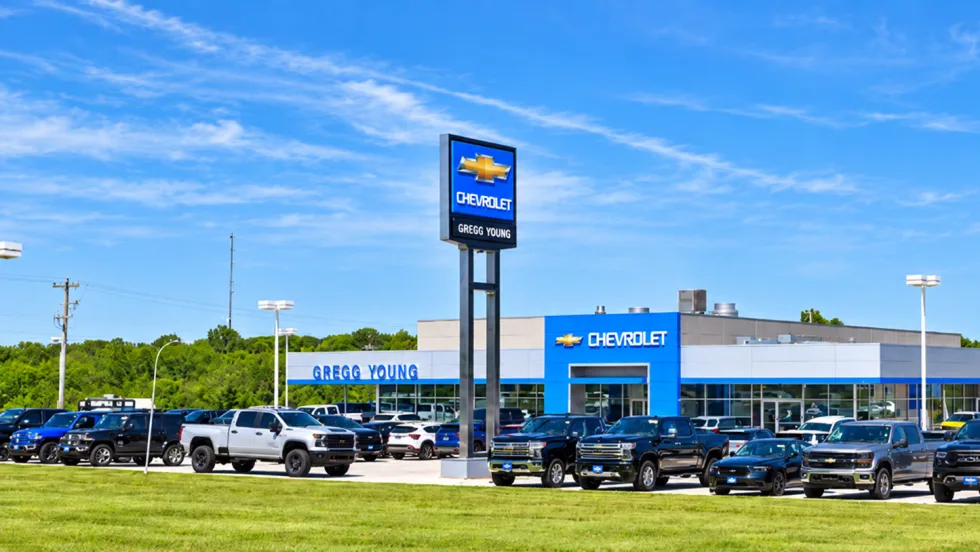
Nebraska Rooftop Changes Hands
The Gregg Young Automotive Group has sold its second dealership to Janssen Auto Group, both in Plattsmouth, Neb.
Read More →
Penske Auto Group Deal a Record
The deal to take the dealership and transportation services company private sets a new pace for industry buy-sell transactions.
Read More →
War Toll a Damper on Used Auto Prices
Cox Automotive found wholesale depreciation to be elevated in September amid high fuel prices and this year's unusual hurricane season.
Read More →
Bridge the Maintenance Gap
With many drivers missing recommended maintenance, service departments offering transparency and efficiency have a better chance of reaching financially strained consumers.
Read More →
California Store Has New Owner
The longtime dealership in the northern part of the state is known for robust fleet sales and has served the state capital for 115 years.
Read More →
BMW Plant Pursues Cleaner Energy
BMW Group Plant Leipzig has utilized hydrogen to help power its production since 2013, but a new pipeline is planned to take it to another level.
Read More →
Auto Affordability Inches Up
The latest Cox Automotive and Moody’s Analytics index shows a slight increase in new-vehicle affordability despite high prices.
Read More →
Ohio Auto Group Under New Ownership
After 79 years with the Schluter family, Mansfield Auto Group has been acquired by Missouri-based Clement Auto Group.
Read More →
RV Group Expands Carolina Footprint
Blue Compass RV Columbia Northeast is the 13th RV dealership owned by Blue Compass in the Carolinas.
Read More →
Agent Acumen
An Agent Summit panel of people who’ve been supporting auto dealers for years gave both timely and timeless advice for those starting out or mulling the prospect.
Read More →