



Fed: Auto Finance Hit New Highs, Lows in Q4
Concerns over subprime lending and 90-day delinquencies offset an otherwise prosperous year for the auto finance industry.

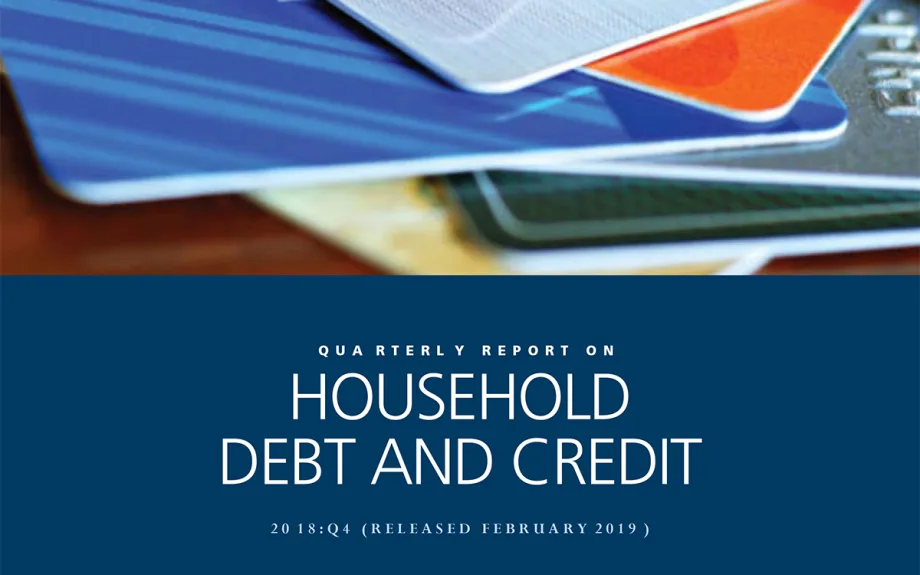
The Federal Reserve Bank of New York’s Q4 consumer debt report reflects historic growth and worrisome trends for the U.S. auto finance market.
Photo courtesy Federal Reserve Bank of New York
NEW YORK — The Federal Reserve Bank of New York’s Center for Microeconomic Data's “Quarterly Report on Household Debt and Credit” shows continued growth for the auto finance market amid concerns over increased lending to car buyers in the subprime credit tiers and an increasingly high 90-day delinquency rate.
Analysts said the aggregate U.S. household debt balance grew to $13.54 trillion in the fourth quarter of 2018. That’s a 0.2% increase from Q3 and 6.9% more than consumers owed when the Fed’s chart hit its last peak of $12.68 trillion in Q3 2008. About 195,000 U.S. consumers filed for bankruptcy in Q4, down from 200,000 in Q3. Aggregate credit card limits rose 1.5% for a 24th consecutive quarterly increase.
Auto originations totaled $144 billion in Q4 and $584 billion for the year, making 2018 auto finance’s biggest year since the Fed began tracking the metric 19 years ago. New mortgages, including refinanced mortgages, totaled $401 billion for the quarter, falling to a nearly four-year low.
Analysts noted that a “substantial” share (31%) of new auto loans were extended to borrowers with credit scores under 660 compared with only 10% of home loans. Also worrisome is the 90-day delinquency rate, which now accounts for 7 million U.S. car buyers.
“As of Dec. 31, 4.7% of outstanding debt was in some stage of delinquency, unchanged from the third quarter,” the report states, in part. “Of the $630 billion of debt that is delinquent, $416 billion is seriously delinquent (at least 90 days late or ‘severely derogatory’). The flow into 90-plus day delinquency for credit card balances has been rising since 2017, while the flow into 90-plus day delinquency for auto loan balances has been slowly trending upward since 2012.”
To read the complete report, click here.
Originally posted on F&I and Showroom
More Industry
Nebraska Rooftop Changes Hands
The Gregg Young Automotive Group has sold its second dealership to Janssen Auto Group, both in Plattsmouth, Neb.
Read More →
Penske Auto Group Deal a Record
The deal to take the dealership and transportation services company private sets a new pace for industry buy-sell transactions.
Read More →
War Toll a Damper on Used Auto Prices
Cox Automotive found wholesale depreciation to be elevated in September amid high fuel prices and this year's unusual hurricane season.
Read More →
Bridge the Maintenance Gap
With many drivers missing recommended maintenance, service departments offering transparency and efficiency have a better chance of reaching financially strained consumers.
Read More →
California Store Has New Owner
The longtime dealership in the northern part of the state is known for robust fleet sales and has served the state capital for 115 years.
Read More →
BMW Plant Pursues Cleaner Energy
BMW Group Plant Leipzig has utilized hydrogen to help power its production since 2013, but a new pipeline is planned to take it to another level.
Read More →
Auto Affordability Inches Up
The latest Cox Automotive and Moody’s Analytics index shows a slight increase in new-vehicle affordability despite high prices.
Read More →
Ohio Auto Group Under New Ownership
After 79 years with the Schluter family, Mansfield Auto Group has been acquired by Missouri-based Clement Auto Group.
Read More →
RV Group Expands Carolina Footprint
Blue Compass RV Columbia Northeast is the 13th RV dealership owned by Blue Compass in the Carolinas.
Read More →
Agent Acumen
An Agent Summit panel of people who’ve been supporting auto dealers for years gave both timely and timeless advice for those starting out or mulling the prospect.
Read More →