



Democrats Signal Defeat on EV Tax Credit
The federal spending bill being negotiated by House and Senate leaders is not likely to include an extension of the $7,500 tax credit for buyers of electric vehicles.

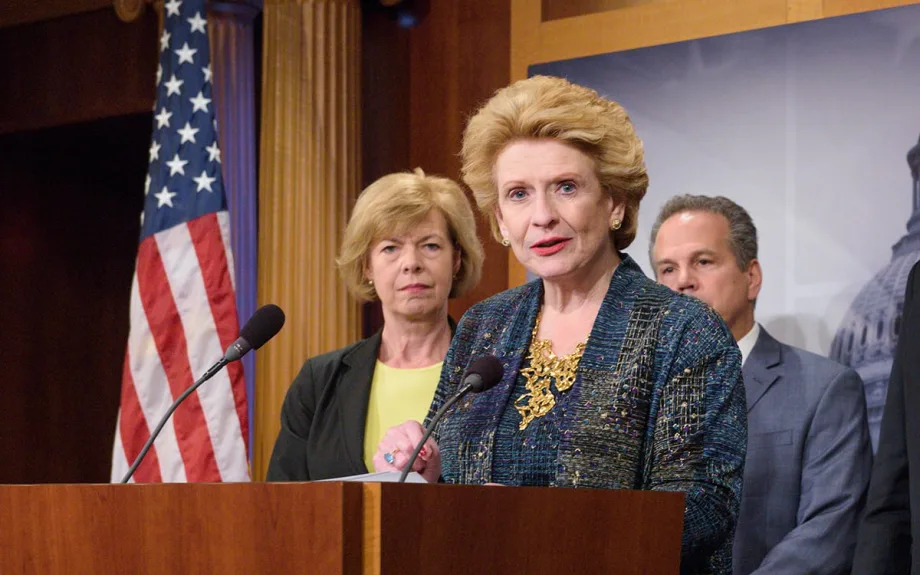
Sen. Debbie Stabenow (D-Mich.) told Bloomberg the federal electric vehicle tax credit would be difficult to extend in the face of “extreme resistance” from the Trump administration.
Photo courtesy Sen. Debbie Stabenow via Flickr
WASHINGTON — An Obama era tax credit for buyers and lessees of new electric vehicles will not likely be extended as part of a new federal spending bill, Reuters reports. A campaign led by manufacturers and Democratic legislators failed to sway Republican leaders, including President Donald Trump, who have denounced the credit as a tax break for wealthy car buyers.
“There has been extreme resistance from the president. It’s going to be difficult,” Sen. Debbie Stabenow (D-Mich.) told Bloomberg this week.
Read: Trump Budget Kills EV Tax Credit
The $7,500 income tax deduction was introduced in 2009 and applied to the first 200,000 electric units built by any manufacturer in the U.S. market. The nation’s EV leaders, General Motors and Tesla, exceeded that mark in 2018 but have since benefited from credits of diminishing amounts. The current federal tax credit of $1,875 for GM and Tesla units will expire Dec. 31 and March 1, respectively.
Opponents of the extension frequently referenced a 2014 IRS report that found 79% of electric vehicle tax credits went to households earning $100,000 or more. Only 1% were claimed by households earning less than $50,000.
Proponents countered the IRS figures set aside the fact that dealers were able to apply the credit to leases, which accounted for a majority of the EV market as recently as 2017, according to Bloomberg Intelligence.
“The tax credit quickly became another example of the government’s solicitousness for those who are comfortable and who are skillful in defense of their comforts.”
Columnist George Will summarized the conservative viewpoint in an April column for The Washington Post.
“The tax credit quickly became another example of the government’s solicitousness for those who are comfortable and who are skillful in defense of their comforts,” he wrote. “Today, demand for electric cars is still insufficient to produce manufacturing economies of scale (after a decade of production, moral exhortations and subsidies, electric cars are a fraction of 1% of all vehicle sales), and batteries are expensive.”
Originally posted on Auto Dealer Today
More Industry

Penske Auto Group Deal a Record
The deal to take the dealership and transportation services company private sets a new pace for industry buy-sell transactions.
Read More →
War Toll a Damper on Used Auto Prices
Cox Automotive found wholesale depreciation to be elevated in September amid high fuel prices and this year's unusual hurricane season.
Read More →
Bridge the Maintenance Gap
With many drivers missing recommended maintenance, service departments offering transparency and efficiency have a better chance of reaching financially strained consumers.
Read More →
California Store Has New Owner
The longtime dealership in the northern part of the state is known for robust fleet sales and has served the state capital for 115 years.
Read More →
BMW Plant Pursues Cleaner Energy
BMW Group Plant Leipzig has utilized hydrogen to help power its production since 2013, but a new pipeline is planned to take it to another level.
Read More →
Auto Affordability Inches Up
The latest Cox Automotive and Moody’s Analytics index shows a slight increase in new-vehicle affordability despite high prices.
Read More →
Ohio Auto Group Under New Ownership
After 79 years with the Schluter family, Mansfield Auto Group has been acquired by Missouri-based Clement Auto Group.
Read More →
RV Group Expands Carolina Footprint
Blue Compass RV Columbia Northeast is the 13th RV dealership owned by Blue Compass in the Carolinas.
Read More →
Agent Acumen
An Agent Summit panel of people who’ve been supporting auto dealers for years gave both timely and timeless advice for those starting out or mulling the prospect.
Read More →
Missed Maintenance Creates Opportunity
As families get back on the road and into daily school routines, service drives have an opportunity to capture customers who are behind on recommended vehicle maintenance.
Read More →