



BLACKBOOK: COVID-19 Market Update
As more stay-at-home orders go into effect and dealership sales departments are required to close, the buying activity on the lanes has decreased and so have the prices according to this week’s Used Car Market Insights report from Black Book and Laura Wehunt, Vice President, Automotive Valuations.

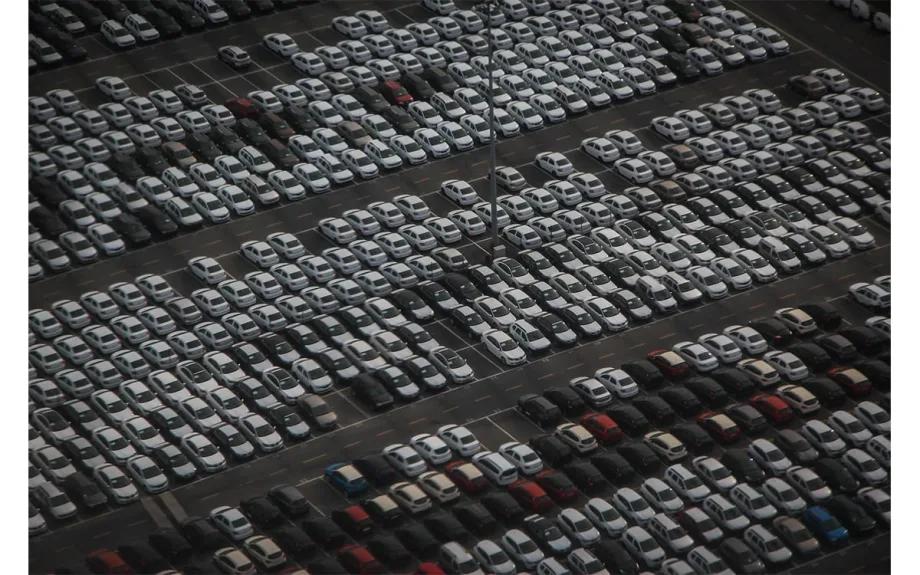
As more stay-at-home orders go into effect and dealership sales departments are required to close, the buying activity on the lanes has decreased and so have the prices according to this week’s Used Car Market Insights report from Black Book and Laura Wehunt, Vice President, Automotive Valuations.
Auction Updates:
Last week, Manheim was still hosting digital sales, but with updates to not allow sellers to physically represent their vehicles on the block and to not allow buyers to come before the sale to physically inspect inventory.
A lot of the independents were still open, but many moved their operations to virtual sales. Unfortunately, we received reports that some of the traditional dealers that are accustomed to in-person buying struggled to learn the new way of virtually purchasing so quickly.
Mid-week we received notice that America’s Auto Auction suspended operations at all locations.
Sale rates across auctions were very low and not what we would traditionally be seeing for this time of year. Typically, this is a strong time for values and sales percentages.
Wholesale Market Impacts:
This past week was a continuation of the trend we started to see at the end of the week prior – increased no-sales and low values on the units that did manage to sell.
We have been talking to remarketers, and most are preparing to “ride it out” and don’t feel the need to lower their floors to move the inventory right now.
Dealer sentiments have also been of the “wait and see” mentality.
Market Reactions:
Existing owner relief programs: Many manufacturer websites list numbers for existing customers to call to work out a plan for their auto loan payment if they have an extenuating circumstance due to COVID-19.
New buyers’ incentive programs: Hyundai and GM were the first to come out with new buyer incentives through payment deferrals and special interest rates, but others are now following with many manufacturers now providing some type of incentive.
US factory closures: Ford has announced they will be re-opening some of their facilities in April. Honda, Toyota, and others have made plans to extend their production suspensions, but with goals to get production back up in April also. General Motors and FCA have announced extensions of closures.
Dealerships: Dealers have been reporting retail sales are down as people are heeding the warnings, and, in some cases, mandates to stay home. A positive note is that online lead generation is up for many dealerships as consumers are spending time at home on the web browsing for their dream car.
Auction Closures: ADESA and America’s Auto Auction are two large auctions that have decided to suspend operations at all their locations.
Stay-at-home orders: State, county, and city mandates have increased substantially over the past week with nearly half of the states having stay-at-home orders in place.
New Sales Outlook
We anticipate a significant reduction in US new vehicle sales in 2020. Chinese automotive sales fell 21.6% in January, and 80% in February YOY.
Most Likely Scenario: Negative GDP growth in Q1- Q3, a drop in consumer confidence, and an at least 8% jump in unemployment will lead to a 25% drop in new sales in 2020 (12.75mm units)
Severe Recession Scenario: A prolonged social separation policy, followed by a deep recession, will result in a 40% drop in new sales in 2020 (10.2mm units)
New model releases are delayed. Plant closures are forcing some manufacturers to delay the releases of some long awaited new and redesigned models, e.g., VW Atlas Cross Sport, Nissan Sentra, and Toyota Sienna
Factors that will determine new sales volume in 2020 and 2021
Positive developments
Low interest rates
Credit is available to prime consumers
Increased incentives by OEMs to stimulate the demand / lease replacement
Low gas prices to help the popular SUV and Truck segments
Federal stimulus law will provide cash payments to consumers
Extension of tax filing deadline provided a short-term interest-free loan to some potential buyers
Negative forces
Unemployment will increase substantially (at least temporarily)
Supply chain issues (Europe, Asia) will slow down production
An expected dip in consumer confidence will result in fewer big-ticket item purchases
There is a projected reduction in fleet / rental purchases in 2020 and which will possibly extend to 2021 (as leisure / business travel will be reduced in 2020)
Wholesale prices impact under the most-likely scenario
Short-term outlook (3-9 months)
We project a drop in wholesale prices of 1-6-year-old vehicles, compared to a pre-virus baseline, this summer to fall as the US economy starts to recover from the effect of COID-19. We see an overall 13% drop in wholesale prices compared to the baseline.
Projections differ for different classes of vehicles:
14% drop for SUVs and light trucks and
10% drop for cars
There is a high probability that older, cheaper vehicles in good condition will not decline as much due to increased demand on those units
Longer-term projections (36-month residual values)
The effect of the pandemic will be felt, but we project that values will return to the pre-virus baseline as used supply will shrink due to cuts in production in 2020 and 2021.
Wholesale prices impact under a severe recession scenario:
Short-term outlook (3-9 months)
We project a drop in wholesale prices of 1-6-year-old vehicles compared to a pre-virus baseline this summer / fall as the US economy starts to recover from the effect of COID-19. We see an overall drop in wholesale prices of 22% compared to the baseline.
Projections differ for different classes of vehicles:
25% drop for SUVs and light trucks and
15% drop for cars
Longer-term projections (36-month residual values)
The effect of the pandemic and recession will still be felt, and we project a 10% market level decline of wholesale prices compare to pre-virus projections.
Originally posted on F&I and Showroom
More Industry

Penske Auto Group Deal a Record
The deal to take the dealership and transportation services company private sets a new pace for industry buy-sell transactions.
Read More →
War Toll a Damper on Used Auto Prices
Cox Automotive found wholesale depreciation to be elevated in September amid high fuel prices and this year's unusual hurricane season.
Read More →
Bridge the Maintenance Gap
With many drivers missing recommended maintenance, service departments offering transparency and efficiency have a better chance of reaching financially strained consumers.
Read More →
California Store Has New Owner
The longtime dealership in the northern part of the state is known for robust fleet sales and has served the state capital for 115 years.
Read More →
BMW Plant Pursues Cleaner Energy
BMW Group Plant Leipzig has utilized hydrogen to help power its production since 2013, but a new pipeline is planned to take it to another level.
Read More →
Auto Affordability Inches Up
The latest Cox Automotive and Moody’s Analytics index shows a slight increase in new-vehicle affordability despite high prices.
Read More →
Ohio Auto Group Under New Ownership
After 79 years with the Schluter family, Mansfield Auto Group has been acquired by Missouri-based Clement Auto Group.
Read More →
RV Group Expands Carolina Footprint
Blue Compass RV Columbia Northeast is the 13th RV dealership owned by Blue Compass in the Carolinas.
Read More →
Agent Acumen
An Agent Summit panel of people who’ve been supporting auto dealers for years gave both timely and timeless advice for those starting out or mulling the prospect.
Read More →
Missed Maintenance Creates Opportunity
As families get back on the road and into daily school routines, service drives have an opportunity to capture customers who are behind on recommended vehicle maintenance.
Read More →