



Black Book Used Vehicle Retention Index Shows Increase in February
February saw another record broken with the Index reaching 130 points for the first time.

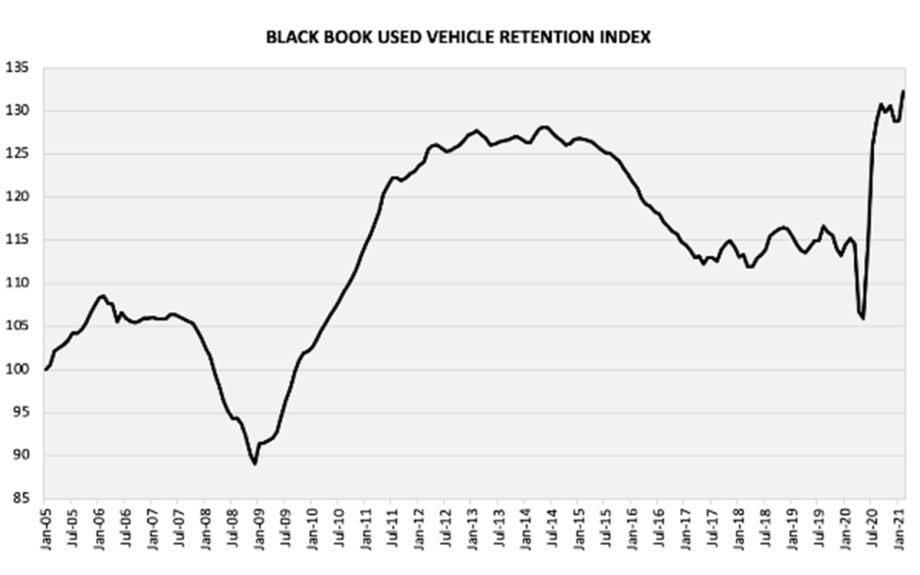
February saw another record broken with the Index reaching 130 points for the first time.
IMAGE: Black Book
LAWRENCEVILLE, Georgia – Black Book, a division of Hearst that provides industry-leading used vehicle valuation and residual value forecast solutions, released its Used Vehicle Retention Index for February 2021 (132.3), a 3.4 point (or 2.6%) increase from January (128.9). Click here to obtain a copy of the latest index data.
“We continue to see tremendous strength of used car prices across all segments."
“We continue to see tremendous strength of used car prices across all segments,” said Alex Yurchenko, SVP, Data Science and Analytics. “Fueled by the shortage of inventory at the wholesale market and issues with new vehicle production, prices continued to climb in February. The Full-size Pickup Truck segment remained strong with its Index increasing by 3.4 points and currently being 23% above its February 2020 level. The Sporty Car segment increased by 4.3 points and stands at 21% above 2020 levels.”
The Black Book Used Vehicle Retention Index is calculated using Black Book’s published Wholesale Average value on two- to six-year-old used vehicles, as percent of original typically equipped MSRP. It is weighted based on registration volume and adjusted for seasonality, vehicle age, mileage, and condition. The Index offers an accurate, representative, and unbiased view of the strength of today’s used vehicle market values.
The Index dates to January 2005, where Black Book published a benchmark index value of 100.0 for the market. During 2008, the index dropped by 14.1% while during 2016, the index fell by just 6.4%. During 2011, the index rose strongly from 113.3 to 123.0 by the end of the year as the economy picked up steam and used vehicle values rose higher. It continued to remain relatively stable, rising slightly until May of 2014 when it hit a peak of 128.1. To obtain a copy of the latest Black Book Wholesale Value Index, click here.
Originally posted on Auto Dealer Today
More Industry

Ohio Auto Group Under New Ownership
After 79 years with the Schluter family, Mansfield Auto Group has been acquired by Missouri-based Clement Auto Group.
Read More →
RV Group Expands Carolina Footprint
Blue Compass RV Columbia Northeast is the 13th RV dealership owned by Blue Compass in the Carolinas.
Read More →
Agent Acumen
An Agent Summit panel of people who’ve been supporting auto dealers for years gave both timely and timeless advice for those starting out or mulling the prospect.
Read More →
Missed Maintenance Creates Opportunity
As families get back on the road and into daily school routines, service drives have an opportunity to capture customers who are behind on recommended vehicle maintenance.
Read More →
Mitsubishi Unveils U.S. Plan
The automaker announced a strategy that includes an expanded lineup and dealership presence, along with more ‘rugged’ and electric models.
Read More →
Selling to Grow
The question of whether you should sell your agency and if so, when, is up to you. But it’s a question worth asking to ensure you keep the business on the right path for yourself, employees and clients.
Read More →
Recalled Vehicles Hit 5-Year High
Though the number of events has fallen so far this year, impacted units are up significantly. Meanwhile, regulators consider consumer notification changes.
Read More →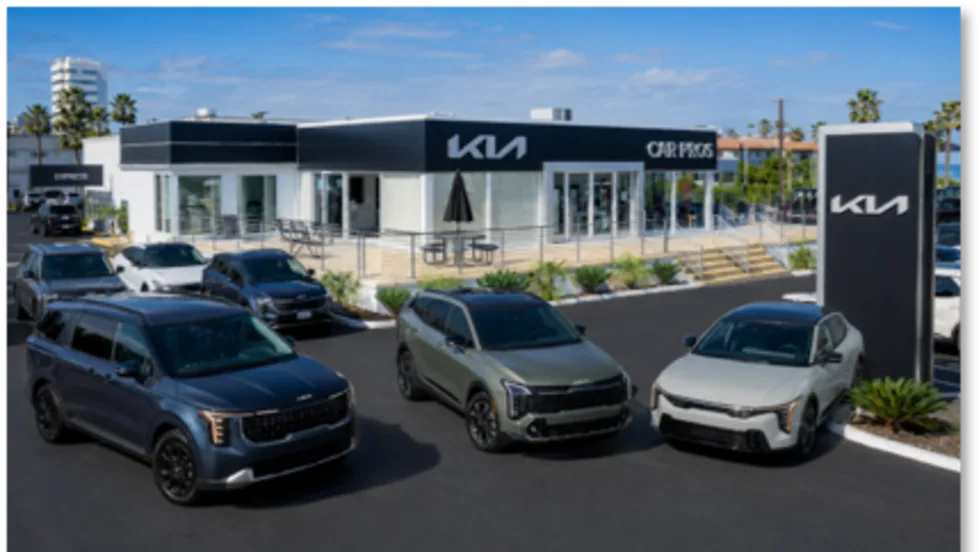
Auto Group Acquires Top-Performing Rooftop
Car Pros sold its Kia Huntington Beach location to Sutherlin Automotive Group, marking the buyer’s third location in Southern California.
Read More →
China as Pacesetter
Automotive leaders huddled on where North America stands in the global picture and how it can strengthen its position against the Asian juggernaut’s surging industry.
Read More →
BMW Concept Car Makes Fuel to Burn
The prototype developed in concert with a South Carolina university engineering team generates more solar energy than it uses in a typical daily commute.
Read More →