



Average New-Vehicle Prices Up Nearly 3% Year-Over-Year in March 2020
Average new-vehicle prices up nearly 3% year-over-year in March 2020, despite COVID-19 impact on the economy, according to Kelley Blue Book.


Average new-vehicle prices up nearly 3% year-over-year in March 2020, despite COVID-19 impact on the economy, according to Kelley Blue Book.
Image by Thomas B. from Pixabay
IRVINE, Calif. – The valuation analysts at Kelley Blue Book today reported the estimated average transaction price for a light vehicle in the United States was $37,736 in March 2020. New-vehicle prices increased $972 (up 2.6%) from March 2019, while dropped $38 (down 0.1%) from last month.
“While the automotive industry and broader U.S. economy were brought to a near halt in March, average transaction prices remained stable from February and increased from this time last year, showing strength in line with the first two months of the year,” said Tim Fleming, analyst for Kelley Blue Book. “Prices were supported by the abundance of incentives quickly enacted by manufacturers and their captive finance companies, including 0% financing for 84 months and payment deferrals of up to 180 days.”
With most of the country encouraged to stay at home for at least another month and unemployment skyrocketing as a result, the impact of this year’s auto sales will be severe. However, production is also at a standstill, as North American factories have been shut down for weeks. This coincidental drop in demand and lack of new supply is extraordinary. For March, new-vehicle prices remain solid, but there are still many unknowns about April and what the state of the economy will be for the remainder of the year.
Manufacturer | March 2020 Transaction Price (Avg.)* | February 2020 Transaction Price (Avg.)* | March 2019 Transaction Price (Avg.)* | Percent Change February 2020 to March 2020* | Percent Change March 2019 to March 2020* |
American Honda (Acura, Honda) | $28,999 | $29,057 | $28,840 | -0.2% | 0.5% |
$40,881 | $40,765 | $38,858 | 0.3% | 5.2% | |
Ford Motor Company (Ford, Lincoln) | $43,253 | $43,580 | $42,271 | -0.7% | 2.3% |
General Motors (Buick, Cadillac, Chevrolet, GMC) | $41,072 | $41,153 | $40,258 | -0.2% | 2.0% |
$27,931 | $27,976 | $25,669 | -0.2% | 8.8% | |
Nissan North America (Nissan, INFINITI) | $30,742 | $31,023 | $29,164 | -0.9% | 5.4% |
$31,125 | $30,952 | $30,151 | 0.6% | 3.2% | |
Toyota Motor Company (Lexus, Toyota) | $34,098 | $34,029 | $33,740 | 0.2% | 1.1% |
Volkswagen Group (Audi, Volkswagen, Porsche) | $42,526 | $42,299 | $42,648 | 0.5% | -0.3% |
Industry | $37,736 | $37,774 | $36,764 | -0.1% | 2.6% |
*Kelley Blue Book average transaction prices do not include applied consumer incentives | |||||
Hyundai and Kia are still seeing the biggest gains for the major manufacturers as Hyundai rose 13% and Kia was up 5%. The redesigned Sonata helped Hyundai the most as it climbed 13% and second place in the mid-size car segment behind the Subaru Legacy. In March 2019, the Sonata had the lowest ATP in the segment. In addition, the Palisade continues to perform well, making up more than 10% of Hyundai sales with transaction prices above $40,000. At Kia, the Telluride rose 7% year-over-year, while the redesigned Soul was up 4%.
At the segment level, cars continue to suffer – in addition to falling sales and market share, average transaction prices were roughly flat in March and down year-to-date. In a month where oil prices dropped to about $20 per barrel and gas prices to $2 per gallon nationally, no segment was hurt worse than hybrid cars, which fell nearly 3%. Electric vehicles did see prices rise, but that was tied more to the Audi e-tron, which was not available at this time last year. Prices of full-size SUVs, a segment that usually performs well when gas prices are low, were up just 1%. However, General Motors’ SUVs (Tahoe, Suburban, Yukon, and Yukon XL), which together make up more than half of the segment sales, have redesigns on their way in the coming months.
Segment | March 2020 Transaction Price (Avg.)* | February 2020 Transaction Price (Avg.)* | March 2019 Transaction Price (Avg.)* | Percent Change February 2020 to March 2020* | Percent Change March 2019 to March 2020* |
Compact Car | $21,193 | $21,063 | $20,588 | 0.6% | 2.9% |
Compact SUV/Crossover | $29,941 | $30,075 | $29,393 | -0.4% | 1.9% |
Electric Vehicle | $43,173 | $44,867 | $38,899 | -3.8% | 11.0% |
Entry-level Luxury Car | $42,345 | $42,274 | $43,028 | 0.2% | -1.6% |
Full-size Car | $35,178 | $35,045 | $35,116 | 0.4% | 0.2% |
Full-size Pickup Truck | $50,075 | $49,898 | $50,160 | 0.4% | -0.2% |
Full-Size SUV/Crossover | $63,269 | $63,082 | $62,525 | 0.3% | 1.2% |
High Performance Car | $114,464 | $114,504 | $109,880 | 0.0% | 4.2% |
High-end Luxury Car | $95,859 | $97,665 | $98,645 | -1.8% | -2.8% |
Hybrid/Alternative Energy Car | $27,433 | $27,442 | $28,229 | 0.0% | -2.8% |
Luxury Car | $59,257 | $59,340 | $60,676 | -0.1% | -2.3% |
Luxury Compact SUV/Crossover | $47,247 | $46,838 | $46,726 | 0.9% | 1.1% |
Luxury Full-size SUV/Crossover | $87,818 | $88,157 | $88,165 | -0.4% | -0.4% |
Luxury Mid-size SUV/Crossover | $59,413 | $59,784 | $59,365 | -0.6% | 0.1% |
Luxury Subcompact SUV/Crossover | $39,194 | $39,384 | $39,181 | -0.5% | 0.0% |
Mid-size Car | $26,202 | $26,166 | $25,891 | 0.1% | 1.2% |
Mid-size Pickup Truck | $35,681 | $35,927 | $34,086 | -0.7% | 4.7% |
Mid-size SUV/Crossover | $39,686 | $39,937 | $38,594 | -0.6% | 2.8% |
Minivan | $35,348 | $35,436 | $34,682 | -0.2% | 1.9% |
Sports Car | $36,360 | $36,035 | $35,929 | 0.9% | 1.2% |
Subcompact Car | $17,086 | $17,140 | $16,413 | -0.3% | 4.1% |
Subcompact SUV/Crossover | $24,761 | $24,683 | $25,004 | 0.3% | -1.0% |
Van | $36,443 | $36,632 | $35,615 | -0.5% | 2.3% |
Grand Total | $37,736 | $37,774 | $36,764 | -0.1% | 2.6% |
*Kelley Blue Book average transaction prices do not include applied consumer incentives | |||||
Originally posted on Auto Dealer Today
More Industry

RV Group Expands Carolina Footprint
Blue Compass RV Columbia Northeast is the 13th RV dealership owned by Blue Compass in the Carolinas.
Read More →
Agent Acumen
An Agent Summit panel of people who’ve been supporting auto dealers for years gave both timely and timeless advice for those starting out or mulling the prospect.
Read More →
Missed Maintenance Creates Opportunity
As families get back on the road and into daily school routines, service drives have an opportunity to capture customers who are behind on recommended vehicle maintenance.
Read More →
Mitsubishi Unveils U.S. Plan
The automaker announced a strategy that includes an expanded lineup and dealership presence, along with more ‘rugged’ and electric models.
Read More →
Selling to Grow
The question of whether you should sell your agency and if so, when, is up to you. But it’s a question worth asking to ensure you keep the business on the right path for yourself, employees and clients.
Read More →
Recalled Vehicles Hit 5-Year High
Though the number of events has fallen so far this year, impacted units are up significantly. Meanwhile, regulators consider consumer notification changes.
Read More →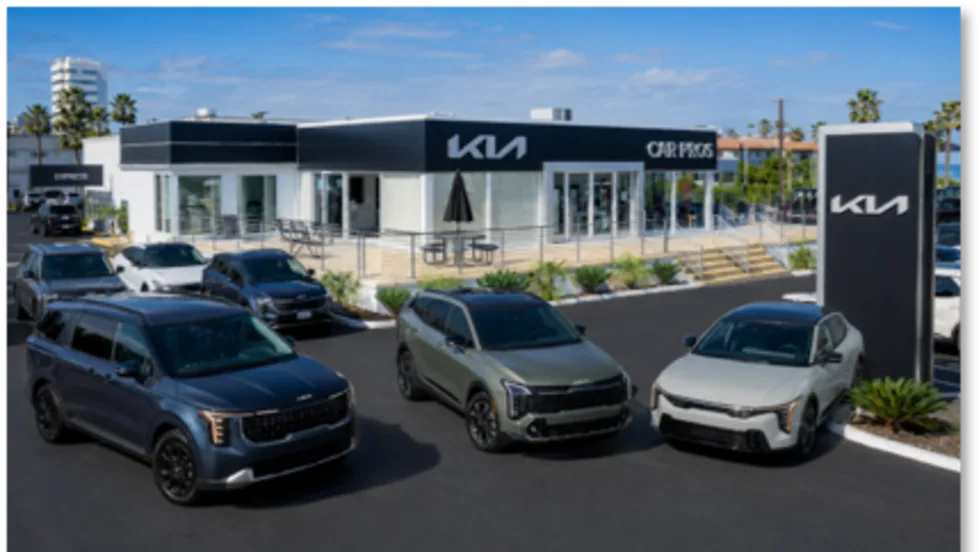
Auto Group Acquires Top-Performing Rooftop
Car Pros sold its Kia Huntington Beach location to Sutherlin Automotive Group, marking the buyer’s third location in Southern California.
Read More →
China as Pacesetter
Automotive leaders huddled on where North America stands in the global picture and how it can strengthen its position against the Asian juggernaut’s surging industry.
Read More →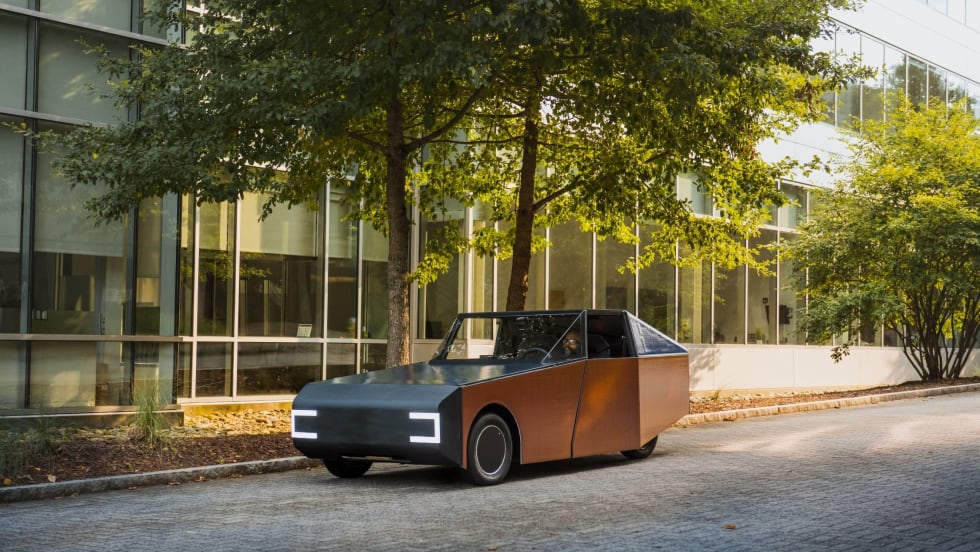
BMW Concept Car Makes Fuel to Burn
The prototype developed in concert with a South Carolina university engineering team generates more solar energy than it uses in a typical daily commute.
Read More →
South Carolina Auto Group Downsizes
Florida-based group Holler-Classic has acquired four rooftops, its first in South Carolina, from Dick Smith Automotive Group.
Read More →