



Auto Consumer Affordability Brightens
Average payment at two-year low while income needed to buy the least in three-plus years.


The average new-vehicle payment fell about 2% in August to $737, the lowest level in two years.
Pexels/Negative Space
Though new-vehicle prices still aren’t what anyone would consider low, buying new is getting more affordable, according to Cox Automotive data that shows it's the most accessible for consumers in more than three years.
Affordability has improved despite the fact that many models on the market are on the high end of the vehicle price scale, Cox said.
“The affordability story is complex,” explained Cox Economist Jonathan Smoke. “When analyzing the data, we observe that affordability is becoming less of a macroeconomic issue and more of an automotive industry issue. Automakers are opting to manufacture higher-priced vehicles, so further declines in interest rates will not significantly reduce payments. Instead, income growth will have a greater impact than interest rate changes in the auto industry.”
The Federal Reserve is expected to lower interest rates this week, which can’t hurt from the consumer’s perspective, at least overall.
Cox estimates that the average automotive loan rate already fell last month by 41 basis points to 9.95%, its lowest level in over a year and the first time in two years that it fell year-over-year.
Meanwhile, the average new-vehicle price fell nearly 1% (0.6%), while incomes increased by about 4% year-over-year and incentives grew, Cox said.
Consequently, the average new-vehicle payment fell about 2% to $737, the lowest level in two years, according to Cox, which said the number of median weeks of income required to buy the average new vehicle fell from about 37 weeks to 36 weeks, the lowest point since May 2021 and down about 9% year-over-year after peaking at $795 in December 2022.
Originally posted on Auto Dealer Today
More Industry

Auto Affordability Inches Up
The latest Cox Automotive and Moody’s Analytics index shows a slight increase in new-vehicle affordability despite high prices.
Read More →
Ohio Auto Group Under New Ownership
After 79 years with the Schluter family, Mansfield Auto Group has been acquired by Missouri-based Clement Auto Group.
Read More →
RV Group Expands Carolina Footprint
Blue Compass RV Columbia Northeast is the 13th RV dealership owned by Blue Compass in the Carolinas.
Read More →
Agent Acumen
An Agent Summit panel of people who’ve been supporting auto dealers for years gave both timely and timeless advice for those starting out or mulling the prospect.
Read More →
Missed Maintenance Creates Opportunity
As families get back on the road and into daily school routines, service drives have an opportunity to capture customers who are behind on recommended vehicle maintenance.
Read More →
Mitsubishi Unveils U.S. Plan
The automaker announced a strategy that includes an expanded lineup and dealership presence, along with more ‘rugged’ and electric models.
Read More →
Selling to Grow
The question of whether you should sell your agency and if so, when, is up to you. But it’s a question worth asking to ensure you keep the business on the right path for yourself, employees and clients.
Read More →
Recalled Vehicles Hit 5-Year High
Though the number of events has fallen so far this year, impacted units are up significantly. Meanwhile, regulators consider consumer notification changes.
Read More →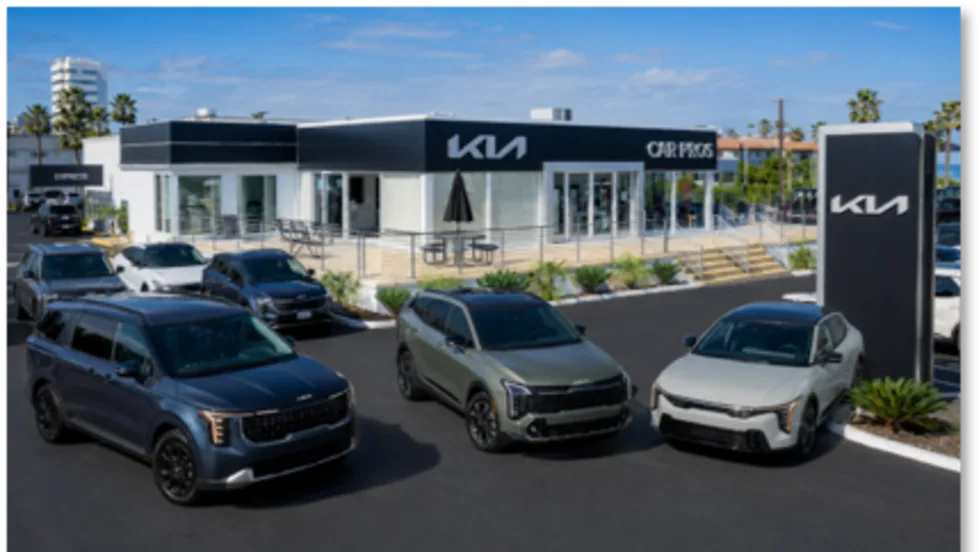
Auto Group Acquires Top-Performing Rooftop
Car Pros sold its Kia Huntington Beach location to Sutherlin Automotive Group, marking the buyer’s third location in Southern California.
Read More →
China as Pacesetter
Automotive leaders huddled on where North America stands in the global picture and how it can strengthen its position against the Asian juggernaut’s surging industry.
Read More →