



Take Profit and Stop Loss for F&I
How dealerships can balance profitability and compliance.

To maintain profitability and compliance, dealers should review their product prices and profit points annually.
Pexels/Tima Miroshnichenko
F&I departments across the country are some of the most profitable divisions in dealership operations. However, with increasing scrutiny from the federal government, particularly the Federal Trade Commission, the question arises: When does profitability cross the line into overreach?
To support profitability while ensuring compliance, dealerships can adopt two simple, effective strategies that are easy to control with proper oversight:
Strategy 1: Minimum-Maximum Pricing Guidelines
Dealerships should approach each F&I product like a stock trade—set clear boundaries for both the lowest acceptable profit (stop loss) and the highest (take profit). The foundation of this strategy is the minimum-maximum pricing guideline, which establishes profit thresholds for F&I products and enforces consequences for violations.
By setting clear profit parameters, dealerships can protect themselves from accusations of price gouging or discrimination. However, if the range between minimum and maximum profits is too wide, it can undermine the effectiveness of the guideline, exposing the dealership to legal risks. For instance, if paint and fabric protection have a minimum profit of $100 and a maximum profit of $2,000, the significant gap leaves room for potential allegations of unfair pricing.
A better approach is to review the average profit for each product over the previous 12 months and create a tighter range around that average. For example, if paint and fabric protection average $600 in profit, a maximum profit of $700 and a minimum of $500 would create a $200 range. This narrower window makes pricing variations easier to justify through negotiations while reducing the risk of accusations.
It’s also crucial to implement a safeguard preventing F&I managers from independently discounting products. When discounts are readily offered, customers may question the product's value or assume they were initially being overcharged. By prohibiting discounts and requiring a manager’s approval for price reductions, the focus shifts from negotiating prices to proving the product’s inherent value.
Strategy 2: Standardized Pricing Guide
Building on the first strategy, a pricing guide eliminates the need for price negotiation altogether. Some states, such as Florida, require dealerships to file their F&I product profits with the state, mandating that all customers pay the same price. This forces F&I departments to hone their value-building skills, as they cannot rely on discounts to close sales.
Dealerships can apply this same principle by implementing a pricing guide that standardizes profits for all F&I products. To establish this, dealers should again look at the average profit for each product over the previous 12 months and set fixed profit points accordingly. This ensures that all customers pay the same price for the same coverage, significantly reducing the risk of discrimination claims.
In this approach, discounts are not an option. Instead, F&I managers must adjust coverage levels to meet customers’ budgets—by offering different deductibles or adjusting coverage terms, such as mileage or months. To avoid sacrificing quality, dealerships should set minimum coverage standards, ensuring that customers are still getting robust protection even when adjustments are made.
To maintain profitability and compliance, dealers should review their product prices and profit points annually, accounting for inflation or other cost increases. By standardizing prices and enforcing strict compliance with the guide, dealerships can manage F&I performance and quickly identify any managers who violate the guidelines.
The Path to Profitable Compliance
Implementing minimum-maximum pricing guidelines or a standardized pricing guide in the F&I department allows dealerships to maintain strong profitability while significantly reducing the risk of price discrimination lawsuits. These methods have a proven track record of boosting profits and lowering chargebacks by ensuring customers feel they are getting fair value for their money. By shifting the focus from discounting to building product value, dealerships can create a more transparent and compliant sales process that benefits both the business and the customer.
Allen is director of compliance and F&I specialist services for Vanguard Dealer Services.
Originally posted on F&I and Showroom
More Industry
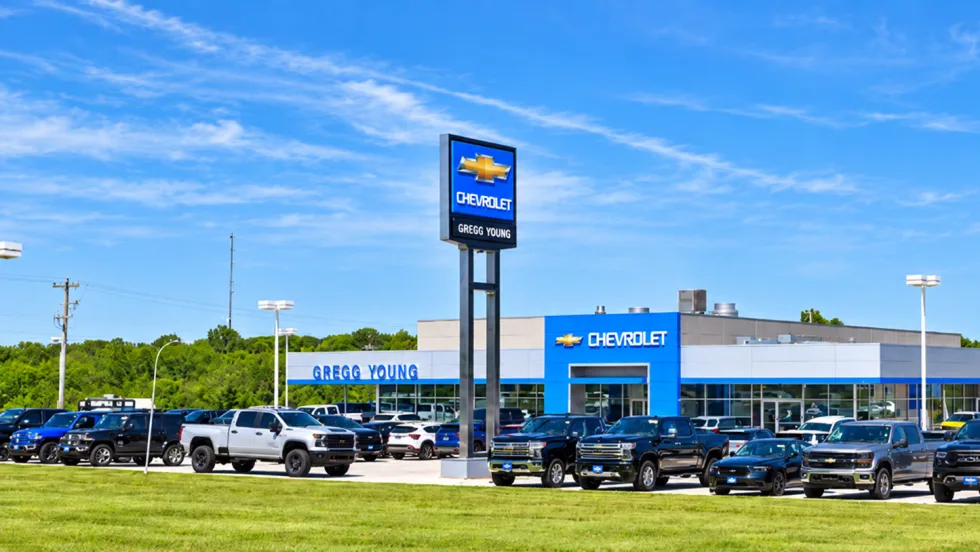
Nebraska Rooftop Changes Hands
The Gregg Young Automotive Group has sold its second dealership to Janssen Auto Group, both in Plattsmouth, Neb.
Read More →
Penske Auto Group Deal a Record
The deal to take the dealership and transportation services company private sets a new pace for industry buy-sell transactions.
Read More →
War Toll a Damper on Used Auto Prices
Cox Automotive found wholesale depreciation to be elevated in September amid high fuel prices and this year's unusual hurricane season.
Read More →
Bridge the Maintenance Gap
With many drivers missing recommended maintenance, service departments offering transparency and efficiency have a better chance of reaching financially strained consumers.
Read More →
California Store Has New Owner
The longtime dealership in the northern part of the state is known for robust fleet sales and has served the state capital for 115 years.
Read More →
BMW Plant Pursues Cleaner Energy
BMW Group Plant Leipzig has utilized hydrogen to help power its production since 2013, but a new pipeline is planned to take it to another level.
Read More →
Auto Affordability Inches Up
The latest Cox Automotive and Moody’s Analytics index shows a slight increase in new-vehicle affordability despite high prices.
Read More →
Ohio Auto Group Under New Ownership
After 79 years with the Schluter family, Mansfield Auto Group has been acquired by Missouri-based Clement Auto Group.
Read More →
RV Group Expands Carolina Footprint
Blue Compass RV Columbia Northeast is the 13th RV dealership owned by Blue Compass in the Carolinas.
Read More →
Agent Acumen
An Agent Summit panel of people who’ve been supporting auto dealers for years gave both timely and timeless advice for those starting out or mulling the prospect.
Read More →