



State of the CARS Rule, Part 2
Regardless of how the courts rule on this FTC regulation on hold, it's best to go ahead and be prepared for some form of it.

As we wait on a court ruling, at a minimum, stop doing what the CARS Rule would prohibit.
Pexels/Skylar Kang
In the time since I wrote part 1 of this multipart article, most of the briefing has been completed in NADA, et al. v. Federal Trade Commission, the case the National Automobile Dealers Association and Texas Automobile Dealers Association filed in the Fifth Circuit Court of Appeals seeking to overturn or limit the FTC’s CARS Rule. Final briefs will be submitted in June. Oral arguments will be scheduled after that.
After all of the procedural matters, briefs and arguments have concluded, the Fifth Circuit will eventually render its decision. “Eventually” is the operative term, as it is unlikely the court will fast-track this case after the FTC voluntarily eliminated the reason for speed in the first place by staying the original July 30 enforcement date. But this much we know for certain:
As of right now, the CARS Rule is the law.
As of right now, the CARS Rule is not being enforced.
Even if the CARS Rule is completely overturned, the FTC can always go back and correct the procedural defects in it its creation and try again.
The bad acts the CARS Rule was ostensibly written to preclude are still illegal – they just can’t be enforced with monetary fines by the FTC. But they can be enforced by the Consumer Financial Protection Bureau, the Department of Justice, and the 50 states. So don’t do those things.
And that last point is the important one. The CARS Rule, or one substantially similar to it, can only become lasting law if the FTC can prove it is not just a solution in search of a problem. One of NADA/TADA’s arguments is that the FTC went forward with the rule without properly documenting that significant numbers of consumers were actually harmed by the prohibited conduct, or its actual prevalence. If the FTC loses the case currently before the Fifth Circuit, you can bet it will go after that documentation. This is a serious risk – under torture, numbers will confess to anything the FTC wants.
What will the final CARS Rule look like? Only God and the Fifth Circuit know for sure, but here’s how I handicap the ultimate outcome:
The FTC will succeed in counteracting its defeat in the AMG Capital Management case. Thus, the CARS Rule will:
Formally define the enumerated bad acts as “deceptive trade practices,” and
Allow the FTC to assess hefty fines in the first instance.
I think this is a lock. If this is as far as the CARS Rule goes, we can live with it.
2. “Offering Price,” as the Rule defines it, will be the norm. This will:
Eliminate the use of dealer fees, document fees, and the like, and
Eliminate most use cases for addendum stickers.
I believe this piece of the CARS Rule is highly likely to go into effect. It’s not just the advertising requirements that cause concern, but what dealership personnel must say and when they must say that will be a nightmare.
3. “Express, Informed Consent” will be required in some form.
This is the part of the CARS Rule that gives me the most heartburn. If it goes into effect in its current form, every buyer’s order and every retail installment sale contract will become obsolete. The sale of voluntary protection products will become much more difficult. Record-keeping will expand substantially and will probably require consistent recording or transcription of all transactions in the F&I office. Expect the time necessary to buy a vehicle, and the transaction cost, to go up, while customer satisfaction index drops.
Until the Fifth Circuit rules, what should a dealer do? At a minimum, stop doing what the CARS Rule would prohibit. Advertise full cash price (no later-disclosed dealer fees, doc fees or market adjustments; exclude government fees only). Eliminate fine print. If you charge for filling tires with nitrogen, actually fill the tires with nitrogen(!). Don’t sell GAP on cash deals. You get the idea.
The CARS Rule is coming, eventually, in some form. A new administration in the White House could change things but not necessarily – there is no guarantee a Trump administration would make repealing the CARS Rule a priority.
At the very least, the CARS Rule should be seen as a very serious shot across the bow of all dealerships. So straighten up and fly right, or the next shot could be a direct hit.
James Ganther is president of Mosaic Compliance Services.
Originally posted on Auto Dealer Today
More Industry
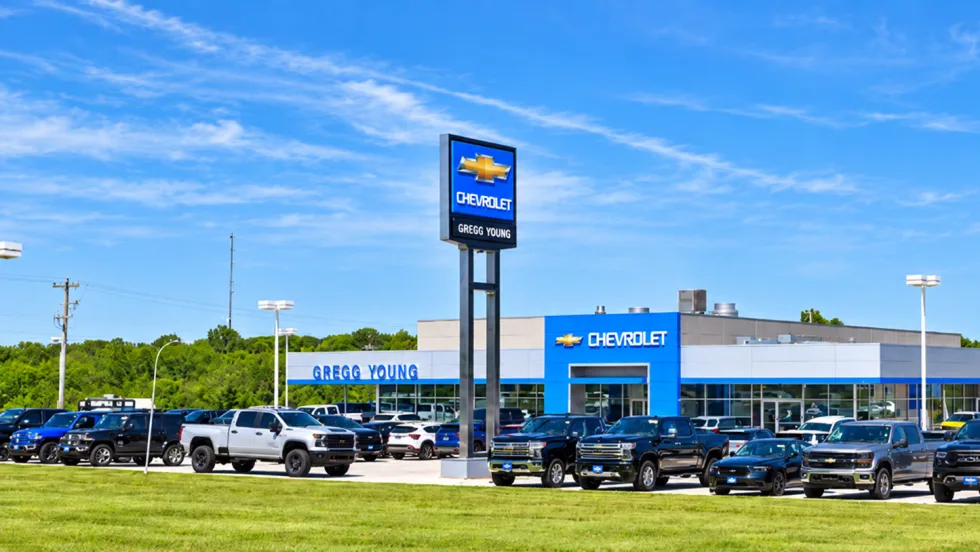
Nebraska Rooftop Changes Hands
The Gregg Young Automotive Group has sold its second dealership to Janssen Auto Group, both in Plattsmouth, Neb.
Read More →
Penske Auto Group Deal a Record
The deal to take the dealership and transportation services company private sets a new pace for industry buy-sell transactions.
Read More →
War Toll a Damper on Used Auto Prices
Cox Automotive found wholesale depreciation to be elevated in September amid high fuel prices and this year's unusual hurricane season.
Read More →
Bridge the Maintenance Gap
With many drivers missing recommended maintenance, service departments offering transparency and efficiency have a better chance of reaching financially strained consumers.
Read More →
California Store Has New Owner
The longtime dealership in the northern part of the state is known for robust fleet sales and has served the state capital for 115 years.
Read More →
BMW Plant Pursues Cleaner Energy
BMW Group Plant Leipzig has utilized hydrogen to help power its production since 2013, but a new pipeline is planned to take it to another level.
Read More →
Auto Affordability Inches Up
The latest Cox Automotive and Moody’s Analytics index shows a slight increase in new-vehicle affordability despite high prices.
Read More →
Ohio Auto Group Under New Ownership
After 79 years with the Schluter family, Mansfield Auto Group has been acquired by Missouri-based Clement Auto Group.
Read More →
RV Group Expands Carolina Footprint
Blue Compass RV Columbia Northeast is the 13th RV dealership owned by Blue Compass in the Carolinas.
Read More →
Agent Acumen
An Agent Summit panel of people who’ve been supporting auto dealers for years gave both timely and timeless advice for those starting out or mulling the prospect.
Read More →