



Mid-Year Update for the Reinsurance Tax World
New challenges and opportunities await agents and dealers invested in reinsurance, which faces renewed scrutiny as the IRS deploys auditors to investigate an industry few truly understand.

New challenges and opportunities await agents and dealers invested in reinsurance, which faces renewed scrutiny as the IRS deploys auditors to investigate an industry few truly understand.
PHOTO: GettyImages.com
In May, I shared my perspective on the latest developments in the IRS consideration of dealer participation structures, including CFCs, NCFCs, DOWCs, and variations, at Agent Summit. This article will recapitulate that presentation and amplify several of the issues discussed.
I have been a tax attorney for over 40 years, with a special expertise in tax and regulatory issues affecting auto F&I programs and structures since 1990. I’ve had a chance to see waves of IRS interest and disinterest in our industry. The bad news is that we are in a period of heightened scrutiny; the good news is that we have many tools to minimize risk to our dealers.
As always, the agents are the front line of the fight to make dealers aware of the issues and to catch problems at an early, and easily correctible, stage.
To set the stage, there was a period starting in about 2001 when the IRS decided that heightened scrutiny was warranted, due in large part to perceived abuses in the use of 501(c)(15) structures. For those who don’t remember ancient history, these were insurance companies with less than $350,000 in premiums (later $600,000) that could qualify as tax-exempt.
This scrutiny also drew attention to the more common arrangement involving an associated reinsurance company that elected to be treated as a small property and casualty company pursuant to Internal Revenue Code section 831(b). In Notice 2002-70, the IRS designated these as “listed transactions” — potentially abusive structures requiring special reporting.
Many said the death knell of the industry was near. I represented the taxpayers in two test cases, and ultimately the legitimacy of the structure was established in two Technical Advice Memoranda. The IRS de-listed the transaction in Notice 2004-65, simultaneous with the TAMs.
For many years, there was virtually no audit activity in our industry, and we thought that these issues were largely gone.
Audit Activity Has Reawakened.
As in 2001, the catalyst for renewed scrutiny came from a source unrelated to our industry. There have been certain captive insurance programs that have caught the IRS’s attention, particularly those that offer what the IRS considers overpriced and exotic coverages, designed to generate a deduction and not really to act as an insurance company.
This scrutiny led to Notice 2016-66, requiring disclosure of involvement in such programs. Because of the overly expansive definitions used in that Notice, dealerships offering dealer obligor products or GAP generally elected to make protective disclosures.
This in turn meant that on routine dealership audits, the existence of a related reinsurance company might be revealed by those disclosures. This has led to some agents investigating these transactions.
Some of the agents don’t have any training in this area. They make overly broad requests, sometimes going far beyond the years in issue, and asking for documents dating from the start of the program. The focus seems to be on the legitimacy of the business purpose for the structure.
Agents should be aware that in some audits, the IRS issues summonses to the program provider to produce all documents, including marketing communications and presentations. Thus, loose language in a sales pitch can lead to an IRS misunderstanding. Be careful what you write, and make sure your dealer is careful too!
The IRS agent will want to know:
Why use this structure rather than alternatives?
Is pricing inflated?
What about overrides?
Is there an artificial deduction being created?
My standard approach is to clearly draw the difference between automotive F&I principles vs. enterprise risk used in captive programs. Auto F&I is unrelated third-party risk. Auto F&I doesn’t create a phony deduction; it simply takes a transaction that was going to happen anyway (and be fully tax deductible) and affords the dealer an opportunity to participate in the underwriting profit and investment income.
The IRS has repeatedly recognized the propriety of this arrangement in the TAMs noted above, in its Audit Guide, and in numerous Private Letter Rulings.
The dealer can expect the following questions:
What did the owners know about the subject?
Who advised?
What tax authority supported the structure?
Was any opinion letter sought? Why not?
The answers typically are easy for dealers, and are variations on:
Owners are generally familiar with F&I programs.
Advice came from the program, who made sure dealers consulted their professionals.
The tax authority is the 2004 TAMs and other IRS rulings.
Why pay for an expensive tax attorney opinion on a matter that is already recognized as proper by the IRS?
The typical IRS agent simply doesn’t understand our industry or its history. It’s important to correct the misapprehension that we are like the abusive programs. The major proof is that unlike the problematic programs, our structures pay claims. Be prepared to show the evidence of the regular and routine payment of claims; it is powerful and favorable.
You may see questions about pricing. That’s because some of those captive programs charge premiums greatly inflated from commercially available products. This isn’t typically any problem in auto F&I, where pricing is highly competitive.
Precision and Accuracy Are Important.
One caution: all too often, we in the industry use poor terminology. We sloppily call the reinsurance companies “captive” companies. Auto F&I is not captive risk; it is unrelated third-party (customer) risk. We also misstate when we call the reinsurance companies “controlled foreign companies” (CFCs). These companies make 953(d) elections, and become domestic companies for all tax purposes. They aren’t CFCs, because the “F” no longer applies.
In responding to IRS requests, bear in mind who the real heroes are: the F&I managers, controllers, dealership and program accountants, who do the paperwork, make the boring data entries, and generate regular reports and reconciliations. Without them, the dealership can’t respond properly. Poor documentation is an expensive mistake. Take good care of these crucial personnel.
In terms of the non-controlled foreign company (NCFC) world, there have been recent changes with last year’s tax reform that have stirred some issues. The issue is the standard to not be treated as a Passive Financial Investment Company (PFIC), which is disadvantageous.
There is now an “applicable insurance liabilities” test required to avoid PFIC treatment, and the law excludes the use of unearned premium reserves from that test. This has raised several compliance concerns. A detailed discussion is beyond the scope of this article, but dealers who participate in NCFC programs are well-advised to have dialogue with their providers and professional advisors to ensure that appropriate steps are being taken to address the particular needs of that dealer.
Also, in light of the recent amendment to section 831(b) raising the ceiling for a small property and casualty company, some dealers may find that a classic reinsurance arrangement is more suitable to their needs than an NCFC. Many NCFC providers have taken steps that they feel sufficiently address the recent changes, but the situation is unsettled and we can only hope that further IRS guidance and clarification will be forthcoming. Please don’t misunderstand me; the NCFC continues to be an important option. I’m simply noting that the landscape has changed and prudence is advisable.
There have been three recent tax court cases that led to unfavorable results for taxpayers in captive programs. None of these were auto F&I cases; all were true captives. While these cases should not be directly applicable to our industry, they will likely affect the attitude of IRS auditors who don’t understand the difference. The cases do have lessons for us. In all of these, payment of claims was nonexistent or scanty, and justification of the pricing was questionable. These factors should be absent from typical auto F&I structures.
What Can We Expect in the Future?
I predict more audit attention, triggered by typical auto dealer audits in which the IRS notices that related entities might be involved. The best response is for dealers to review their programs with their agents and professional advisors to minimize risks and take advantage of opportunities.
If dealers are involved with enterprise risk captives rather than auto F&I, then they may want to take a long look at restructuring. Even the most compliant enterprise risk captives are likely to be subjected to scrutiny at this time, and a serious cost-benefit analysis should be considered.
But I remain confident that, although some of our population will get a bit more attention than we’ve seen for the past 15 years, properly managed auto F&I programs will continue to meet IRS approval.
Andrew Weill is a principal in the San Francisco law firm of Weill & Mazer, which focuses on complex commercial, estate, and tax litigation. He is a certified tax law specialist and a leading authority on litigation and tax controversies involving structures taxed as insurance and reinsurance, including tax audits and other compliance issues.
More Industry

RV Group Expands Carolina Footprint
Blue Compass RV Columbia Northeast is the 13th RV dealership owned by Blue Compass in the Carolinas.
Read More →
Agent Acumen
An Agent Summit panel of people who’ve been supporting auto dealers for years gave both timely and timeless advice for those starting out or mulling the prospect.
Read More →
Missed Maintenance Creates Opportunity
As families get back on the road and into daily school routines, service drives have an opportunity to capture customers who are behind on recommended vehicle maintenance.
Read More →
Mitsubishi Unveils U.S. Plan
The automaker announced a strategy that includes an expanded lineup and dealership presence, along with more ‘rugged’ and electric models.
Read More →
Selling to Grow
The question of whether you should sell your agency and if so, when, is up to you. But it’s a question worth asking to ensure you keep the business on the right path for yourself, employees and clients.
Read More →
Recalled Vehicles Hit 5-Year High
Though the number of events has fallen so far this year, impacted units are up significantly. Meanwhile, regulators consider consumer notification changes.
Read More →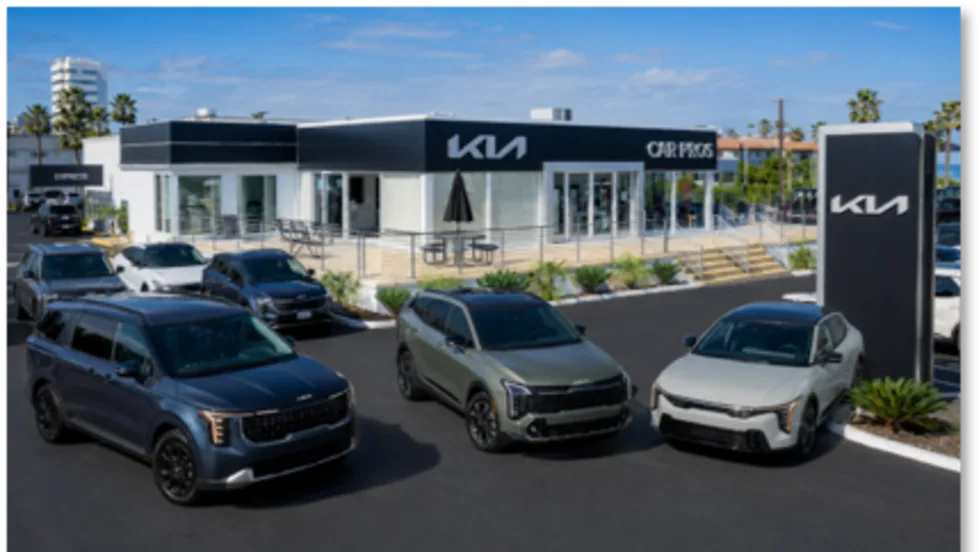
Auto Group Acquires Top-Performing Rooftop
Car Pros sold its Kia Huntington Beach location to Sutherlin Automotive Group, marking the buyer’s third location in Southern California.
Read More →
China as Pacesetter
Automotive leaders huddled on where North America stands in the global picture and how it can strengthen its position against the Asian juggernaut’s surging industry.
Read More →
BMW Concept Car Makes Fuel to Burn
The prototype developed in concert with a South Carolina university engineering team generates more solar energy than it uses in a typical daily commute.
Read More →
South Carolina Auto Group Downsizes
Florida-based group Holler-Classic has acquired four rooftops, its first in South Carolina, from Dick Smith Automotive Group.
Read More →