



Is an Agency Sale Right for You?
Agency sales are a hot topic in today’s market. For those of you trying to determine if you should sell your agency or continue to own, four agents shared insight into their stories, decisions, and any advice they learned along the way.

Agency sales are a hot topic in today’s market. For those of you trying to determine if you should sell your agency or continue to own, four agents shared insight into their stories, decisions, and any advice they learned along the way.
IMAGE: Metamorworks via Getty Images
Over the last few years, selling has become a hot topic for agents to consider. For those of you trying to determine if you should sell your agency or continue to own your agency, I recently had the opportunity to speak with your peers about their experiences. Below you will find insight into their stories, decisions, and any advice they had to share. You might be surprised by what they had to say.
Knowing the right time to sell is different for everyone, however, most of us should have a feeling for when the time is right.
When is the right time to sell?
Mike Rosenberg, who sold his agency in 2016, said, “You sell when you are ready to sell. You don’t need anyone to tell you when the time is right. You know it. COVID-19, political elections, or the stock market have nothing to do with selling your business. You just must have your head on straight and are good with letting go of something that you spent many hard years building.”
Agreeing with Rosenberg, Lyle King, who sold his agency in 2015, added, “My two partners and I came to the conclusion to sell only after we all examined the personal factors in our lives. We had to determine what was best for each of us and our families.”
Nick D’Amico sold his agency in 2017 and examined external factors, as well. Nick said, “Knowing the right time to sell is different for everyone, however, most of us should have a feeling for when the time is right. I’m not sure how long this window of opportunity will stay open; as more transactions take place, demand may diminish to pay top price for an agency.”
The last agent, Agent Z, spoke on the condition of anonymity. He wanted to share advice to help other agents, although he wanted to remain anonymous so he would not receive phone calls from other agents asking for advice. He wants to devote 110% of his time to growing the business for the new company while also maximizing earnout. He said, “I wanted the business to continue. I did not want to be that senile old guy that outlived his business. I want to be energetic and relevant. I started the plan when I was 60 years old. It took five years to pull the trigger and two years to execute it.”
Why did you want to sell your agency?
“It really wasn’t about the automobile market changing or the consolidation that was going on with dealerships – it was personal,” said Rosenberg. “After starting the agency in the early 1990’s, like an athlete, I knew it was time for me personally to ‘hang up the cleats.’ Being an agent is like a combination of war and sport. The business was great, the money was excellent, but personally, I had lost the fire to compete. I did not have the drive and focus that was needed to take the agency to that next level. I know many agents go through this. Ultimately, it took several months to get my head around the idea that it was time to sell and start that process.”
D’Amico said that consolidation was a big factor in why he sold. “I was looking at the trends, and it became apparent that the industry was consolidating. I saw the agency distribution channel becoming groups of large players controlling major blocks of business throughout the country. As those blocks continued to get bigger and stronger, I questioned my ability to compete and grow in that world long term.”
Who should you sell to?
For D’Amico, he had three main goals that he focused on when looking at a buyer. “First, I wanted, the ability to remain functioning as an independent agency with the various brands to offer my clients. I did not want a one-size-fits-all approach. As I looked at my options, many companies stated they would let us continue to sell other brands, however, when you drilled down on the details, the payout you received was biased to switching business to their brands. Second, I was reluctant to join a large agency platform and fall under the supervision of someone that did not share the same business philosophies that I do. Therefore, it was important for me to be able to help build a platform with a large company that had not yet built out their structure and was open to various ways of building out the platform. Third, it was also important that the company shared the same principles and business ethics.”
Agent Z had a different philosophy when finding the right partner, stating, “I had spent seven years in total planning the sale. If you are in your mid-sixties, do not be afraid to tell your suitors that you are not planning to stay on after the earn out is complete. If you think they want you to continue with them for several years, it needs to be a good fit. For me, I knew it was only for two years, so the fit for the agency employees was most important as they will continue. It was all about having trust in the acquisition team. They had longtime people in the F&I industry with a good reputation and ethics.”
Can you work for a company after all the years of independence?
“Yes,” said Agent Z. “I was very concerned about working for someone else after all my years of independence. I consulted a professor that teaches a business ethics class. He had me ask the suitors about ethics and core values and make sure they live by these and not just pull it out of a drawer. He also told me to be prepared for corporate tasks. He was right. I find it rather silly that instead of selling, I need to get payroll approved through ADP. I encourage anyone that is considering selling their agency to consult with other agents who have sold.”
King said, “This is a great question and very critical for each agent to understand. This is a challenging part of the transition. In most cases, fitting into a larger organization is not without frustrations. There are different accounting methods and people have more perspectives than when you own your agency. While some of these perspectives can be advantageous, it most likely will not always be the way it was before selling.”
How long will the sale process take?
“The process from start to finish will take at least six months,” said King. “It will be a distraction from your business and take you away from your dealers. I cannot imagine it taking less than six months. However, I heard a few groups have perfected their processes and can complete a deal in three months, but they are the exception, not the rule.”
Rosenberg shared, “The whole process is going to take more time than you think it will. It is just a long process including finding the right buyer.” He shared a list of things that can help:
Look for a good fit in a buyer. Find a buyer you trust, has the same work ethic as you do, and really understands the business.
Always have an NDA signed before talking to any prospect.
Have your records, commission, and financial statements organized and ready for the due diligence from the buyer.
Get a clear game plan set on how long you will stay involved with the new owners.
Find out if the buyers want to go in your stores.
Talk to your CPA before signing the deal to see what your tax situation is or if you need to modify the sale to pay less taxes.
These are just a few of the steps that need to be addressed and is why the process of selling an agency takes time.
“Whatever you do, take your time, do it right, so you can enjoy the next chapter,” Rosenberg added.
D’Amico felt time was less of a concern and wanted to make sure he got the right value for his business. “Knowing how to value your business is something that was eye opening to me,” he said. “As independent businesspeople, we look for creative ways to capitalize on tax deductions. The net profit we show on a financial statement may not be an actual reflection of the earnings that business generates. Part of the process involves adding back for deductions that would no longer be business expenses once the company was sold, resulting in getting credit for every dollar of net profit to determine the multiple to arrive at the purchase price. Reputable buyers will assist you with this and have an open discussion. They do this to arrive at adjusted EBITDA.”
Can my agency team still grow?
For D’Amico, this was a key requirement for selling his agency. “I insisted on being able to bring the key people in my operation and offer them strong incentive to remain with us. Obviously, someone paying good money to buy an agency will want to keep the talent in that agency and keep the relationships established with accounts. I structured strong employment contracts and incentives to bring my key people on board. I was allowed complete autonomy when it came to how to set up my organization and incentivize my team.”
In Agent Z’s sale, this was also extremely important. “I wanted continuity for the team. I did not want change. I wanted our legacy to live on beyond my time in the agency. Maybe that sounds conceited, but I wanted to take care of my staff that were always there for me. I wanted to take care of the dealers. With my buyers, my agency will be there for them for another 20 years. It was important to sell to a company that would be here to continue working with dealers for the long term. I was transparent with everyone in my agency. They knew that we were selling. The fit and growth prospects were key for them.”
These four successful agents went through the same process that many of you are going through right now, and I wanted you to hear this valuable advice from your peers to these very pertinent questions.
Doug Frey recently joined Amynta Group, a premier insurance services provider of property & casualty and warranty protection products and services, as senior vice president of mergers and acquisitions. He may be reached at doug.frey@amyntagroup.com
More Industry

Penske Auto Group Deal a Record
The deal to take the dealership and transportation services company private sets a new pace for industry buy-sell transactions.
Read More →
War Toll a Damper on Used Auto Prices
Cox Automotive found wholesale depreciation to be elevated in September amid high fuel prices and this year's unusual hurricane season.
Read More →
Bridge the Maintenance Gap
With many drivers missing recommended maintenance, service departments offering transparency and efficiency have a better chance of reaching financially strained consumers.
Read More →
California Store Has New Owner
The longtime dealership in the northern part of the state is known for robust fleet sales and has served the state capital for 115 years.
Read More →
BMW Plant Pursues Cleaner Energy
BMW Group Plant Leipzig has utilized hydrogen to help power its production since 2013, but a new pipeline is planned to take it to another level.
Read More →
Auto Affordability Inches Up
The latest Cox Automotive and Moody’s Analytics index shows a slight increase in new-vehicle affordability despite high prices.
Read More →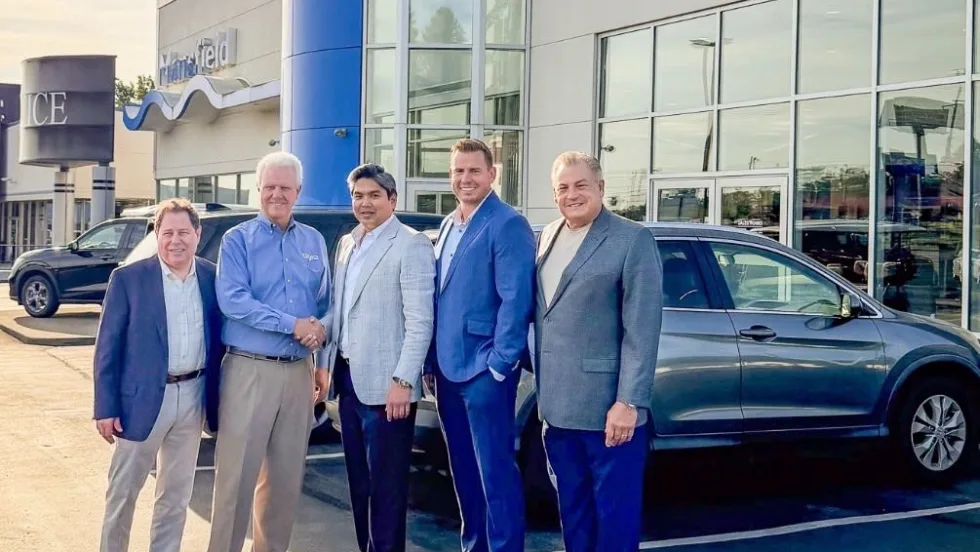
Ohio Auto Group Under New Ownership
After 79 years with the Schluter family, Mansfield Auto Group has been acquired by Missouri-based Clement Auto Group.
Read More →
RV Group Expands Carolina Footprint
Blue Compass RV Columbia Northeast is the 13th RV dealership owned by Blue Compass in the Carolinas.
Read More →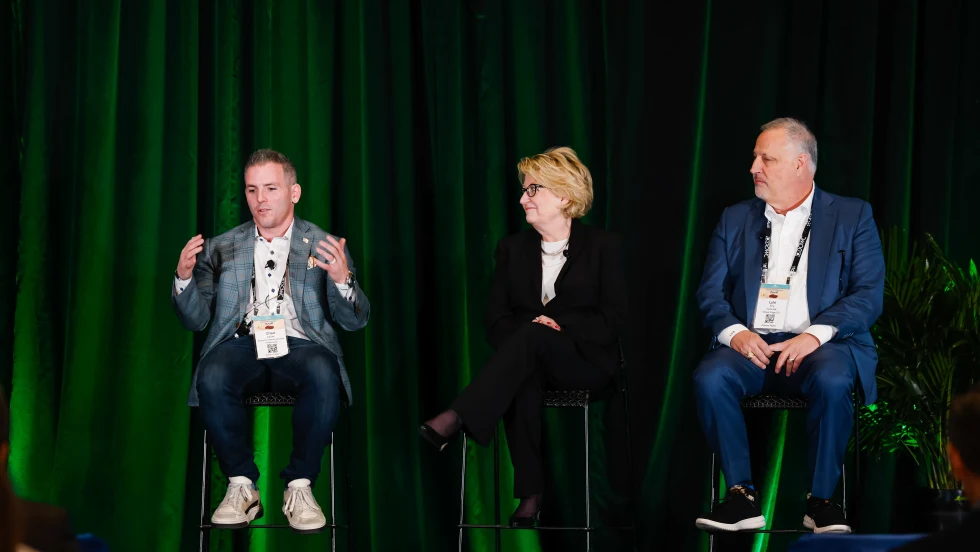
Agent Acumen
An Agent Summit panel of people who’ve been supporting auto dealers for years gave both timely and timeless advice for those starting out or mulling the prospect.
Read More →
Missed Maintenance Creates Opportunity
As families get back on the road and into daily school routines, service drives have an opportunity to capture customers who are behind on recommended vehicle maintenance.
Read More →