



Here We Go Again
As we enter a new administration, dealers will need to continue navigating new sales processes while also reverting their attention to risk management and government regulators. Let’s take a look at the likely highest risk areas and discuss a plan to mitigate them.


As we enter a new administration, dealers will need to continue navigating new sales processes while also reverting their attention to risk management and government regulators. Let’s take a look at the likely highest risk areas and discuss a plan to mitigate them.
IMAGE: Ilya Burdun via GettyImages.com
After four years of self-regulation, nearly every industry pundit, observer, and prognosticator is predicting a return to governmental regulation for the auto industry in a Biden administration.
Now NADA is advising that a Biden administration CFPB could be once again addressing the issue of potential disparate impact.
Unfortunately, this means that in addition to trying to figure out how to navigate new sales processes just to earn enough money to make payroll, cover floorplan, and pay the utility bills, dealers will have to dust off the risk management hat and focus on the risks they face.
Let’s take a look at the likely highest risk areas and discuss a plan to mitigate them.
Identity Theft
Issue – Identity Theft continues to be one of the fastest-growing crimes in the U.S. It’s sad that the thieves are getting better, while many dealers are still languishing with outdated Safeguards and Red Flags policies. Many times, managers are trained once if ever, little or no training is offered for new managers, and there are no documented periodic audits or demonstrated refreshing of policies. These components are required under the Federal Trade Commission’s (FTC) Safeguards Rule and Red Flags Rule. Additionally, the Red Flags Rule requires an annual written report to the business owner regarding the sufficiency of the program, identifying new risks, and enhancements to the policy to address the new risks. Just ask yourself if you have updated your Red Flags policy to address the threat of synthetic identity theft.
Mitigating Plan – The FTC Privacy Rule, Disposal Rule, Safeguards Rule, and Red Flags Rule are all intended to stem the tide of identity theft, and each one has components that dealers must use to demonstrate compliance. In the first quarter of 2021, a dealer should have these policies reviewed to ensure they adequately address today’s risks. Once the refresh is completed, the dealer must conduct and document employee training sessions on the refreshed policies. Finally, periodic audits and reports must be completed and retained, along with any corrective actions taken as a result of the audit.
ID Theft Subset – Digital or Out-of-Area Deliveries
Issue – In the rush to provide consumers with contactless sales experiences, some dealers developed procedures with only their sales hats on and left the risk management hat to collect dust and spiderwebs. While the new digital delivery process helped to pay the bills, it also opened a gaping loophole that sophisticated identity thieves leapt through. While empirical data of the potential surge of identity theft related to digital deliveries is not available, I’ve heard of many cases suggesting the surge is real.
Mitigating Plan – Before the pandemic, we created an out-of-area delivery policy to assist in those instances when the vehicle was being sold to someone outside of the dealer’s footprint and the consumer never stepped into the showroom. This policy is just as valid for digital deliveries.
Dealers should develop a digital delivery policy, train managers on how to handle deals and deliveries when the consumer never meets the receptionist, and periodically audit deals to ensure these deliveries are handled in accordance with the policy.
Items to consider including in the policy include:
Have the consumer submit an online credit application.
Run a credit report and obtain the out-of-wallet questions.
Conduct a visual call to obtain the answers to the questions (paying attention to the consumer for signs of looking up information).
Validating the answers.
Run a Google Earth search of the address to see if the information on the credit app mirrors the image on the search.
Use a Zoom or similar session to review the menu options.
Leverage a notary service or e-contracting process to execute the documents.
Instruct the delivery driver to avoid attempts to divert delivery to an alternative location.
Credit Application Fraud
Issue – Even during the prior administration, the Department of Justice (DOJ) was active in prosecuting dealers for instances of bank fraud, including credit application fraud. Credit application fraud is usually defined by enhancing the consumer’s information in one or more of five key credit determinants: time on the job, time at the residence, occupation, income, and housing expense.
Mitigating Plan – Ensure that every manager who can enter credit applications into one of the credit application submission portals understands that you will not tolerate any instances of credit application fraud. Require that every financed transaction has two signed credit applications that can be compared for consistency — the source credit application and the submitted credit application.
The signed source credit application can be an online submission, a handwritten credit application, or an application printed from a CRM. The signed, submitted credit application is the one printed from the credit application portal (Route One, Dealertrack, CUDL, or some on the captives). If the dealership is ever challenged by the DOJ, having these two signed, consistent credit applications are likely a dealership’s best defense against charges of credit application fraud.
Fair Lending
Issue – During the Obama administration, the Consumer Financial Protection Bureau (CFPB) issued a directive that required finance sources that service the auto industry to review portfolios for instances of disparate impact. Many viewed this directive as a back-door attempt to eliminate Dealer Reserve. Using a dubious methodology, some finance sources settled with the CFPB. Some finance sources went to flat or super-flat financing programs to protect themselves from CFPB oversight.
The National Automobile Dealers Association (NADA) recommended a Fair Lending tracking process which some dealers adapted, but few perfected. Other dealers decided they could reverse engineer a deal or a tranche of deals if challenged by a finance source. Heck, one dealer I know told me that when a finance source cautioned him with a letter regarding his portfolio’s metrics with one protected class, the sale rep told him to write more deals to members of the protected class at the buy rate.
Then the Trump administration reversed the guidance.
Now NADA is advising that a Biden administration CFPB could be once again addressing the issue of potential disparate impact.
Mitigating Plan – Let’s be honest, Fair Lending is a good policy and practice. Dealers should never discriminate against any protected class, and the ones that I am familiar with do not intentionally discriminate. They simply want to make money.
Regardless, it does appear a mitigating plan may be necessary if the CFPB once again starts looking at finance sources’ portfolios with a disparate impact slant in mind. A formalized process outlined in the NADA Fair Lending guidance is one approach. Whether a dealer adapts the NADA guidance or not, one thought is to review and refine your desking and first pencil process methodology.
Our recommended first pencil process starts with a simple process question: Did you run a report and know the credit score or have you not run a report and do not have the credit score?
If you have the credit score, use a dealership established matrix with the credit score down the left axis and new or used across the top axis. Then take the captive buy rate (or close equivalent to same), add a standard mark-up of 200 or 250 basis points. Then find the rate from that matrix and use it to calculate the payment on the first pencil. This matrix can also be loaded into many e-pencil software programs.
If you do not have the credit score, use a standard rate. This rate can be calculated in a number of ways and is not necessarily intended to be the average rate.
One key to defending a potential claim of discrimination is to start every pencil at the same rate given the information known at the time. Unless there is mitigating information such as the customer telling you they are approved at a lower rate at their credit union and wants to see a payment at that rate, then every first pencil must be consistent with the first pencil methodology.
Good luck, good selling, and stay safe.
Gil Van Over is the executive director of Automotive Compliance Education (ACE), the founder and president of gvo3 & Associates, and author of Automotive Compliance in a Digital World.
More Industry
Nebraska Rooftop Changes Hands
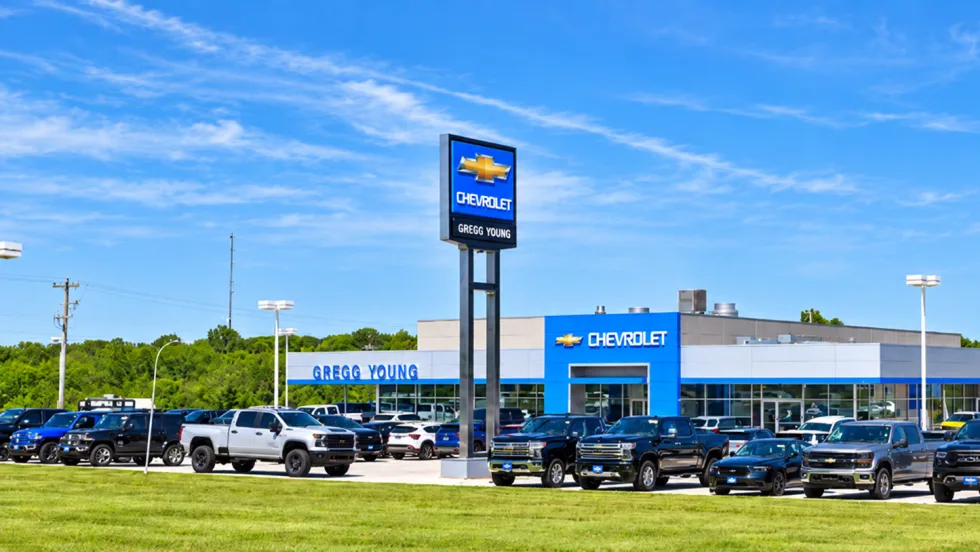
The Gregg Young Automotive Group has sold its second dealership to Janssen Auto Group, both in Plattsmouth, Neb.
Read More →
Penske Auto Group Deal a Record
The deal to take the dealership and transportation services company private sets a new pace for industry buy-sell transactions.
Read More →
War Toll a Damper on Used Auto Prices
Cox Automotive found wholesale depreciation to be elevated in September amid high fuel prices and this year's unusual hurricane season.
Read More →
Bridge the Maintenance Gap
With many drivers missing recommended maintenance, service departments offering transparency and efficiency have a better chance of reaching financially strained consumers.
Read More →
California Store Has New Owner
The longtime dealership in the northern part of the state is known for robust fleet sales and has served the state capital for 115 years.
Read More →
BMW Plant Pursues Cleaner Energy
BMW Group Plant Leipzig has utilized hydrogen to help power its production since 2013, but a new pipeline is planned to take it to another level.
Read More →
Auto Affordability Inches Up
The latest Cox Automotive and Moody’s Analytics index shows a slight increase in new-vehicle affordability despite high prices.
Read More →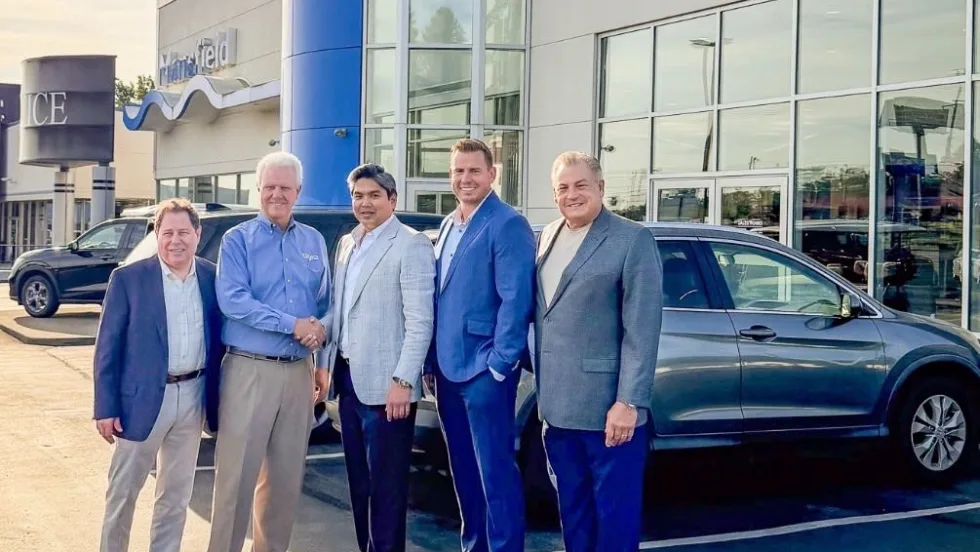
Ohio Auto Group Under New Ownership
After 79 years with the Schluter family, Mansfield Auto Group has been acquired by Missouri-based Clement Auto Group.
Read More →
RV Group Expands Carolina Footprint
Blue Compass RV Columbia Northeast is the 13th RV dealership owned by Blue Compass in the Carolinas.
Read More →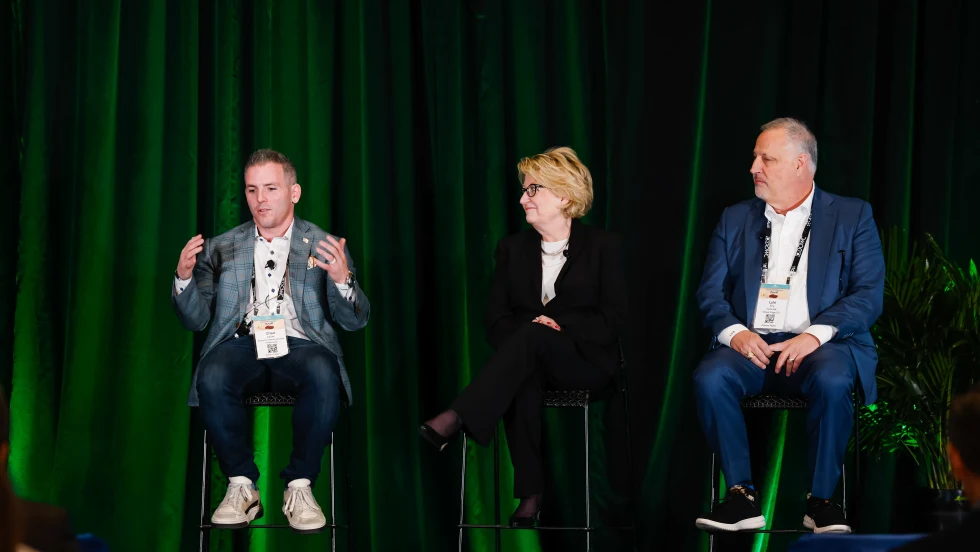
Agent Acumen
An Agent Summit panel of people who’ve been supporting auto dealers for years gave both timely and timeless advice for those starting out or mulling the prospect.
Read More →