



Demystifying the Dealer Participation Certification Form
Delving into the murky origins and real-world utility of a form that can come in handy when deviation from standard reserve is questioned.

The dealer participation certification form is a best practice for auto dealers to document reasons for closing a transaction at a lower dealer reserve spread for a particular buyer.
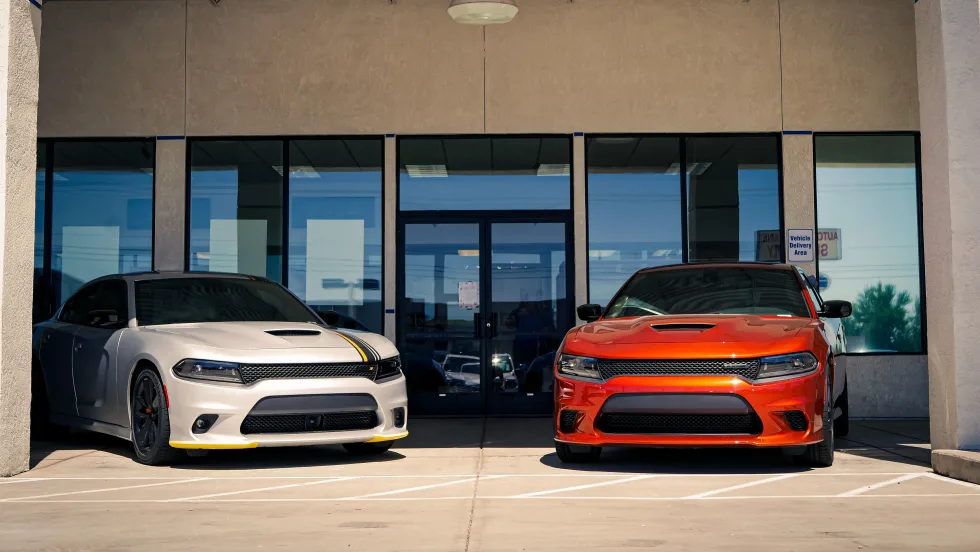
Pexels/Kindel Media
The more compliant dealers have processes that not only sell vehicles and voluntary protection products but demonstrate compliance with rules and regulations. The baseline for a dealer’s compliance initiative are the three laws:
Federal law
State law
Dealer law
Federal laws are self-explanatory, with the “acts,” including the Truth in Lending Act and the Equal Credit Opportunity Act, and the “Rules,” including the Used Car Rule, Safeguards Rule and Red Flags Rule.
Additional state laws include Texas’ trade equity form, the repeat-offender search required in Michigan, and the “Declination of Etching the Catalytic Converter” in California, to name a few.
Dealer laws are those best practices that are not required by federal or state law but help to document compliance. Examples of best practices include the use of a menu process to sell voluntary protection products and an e-desking tool to document sales negotiations.
… And, for some dealers, the dealer participation certification form.
Why the Form Exists
A number of years ago, the Consumer Financial Protection Bureau embarked on a mission to eradicate dealer reserve as a source of income for automotive retailers. Fortunately for our industry, the CFPB does not have regulatory oversight of franchised auto dealers. Unfortunately, the CFPB does have oversight of the finance sources we rely on to fund contracts.
So the CFPB started investigating auto lending portfolios for disparate impact against minority buyers. They used a convoluted and questionable statistical methodology. The results sometimes concluded that the finance source had a portfolio in which a protected class under the Equal Credit Opportunity Act paid a higher dealer reserve point spread than the control group, or the rest of the portfolio.
The finance source, believing that poop rolls downhill, completed its own analysis. It used the same flawed methodology for each dealer’s portfolio. If the results inferred that the dealer’s portfolio exhibited the same statistical results, disparate impact was alleged. The finance source then approached the dealer and required corrective action without offering real-world solutions.
The dealer participation certification form was created to document the reasons a dealer closes the transaction at a lower dealer reserve spread for a particular buyer. Some dealers adapted the process and use of the form in the event it was challenged by a finance source. The process and the form became part of dealer law.
How to Properly Complete The Form
The form is optional and does not require a customer’s signature. But it must still be completed properly in the event it is needed in the future to defend the dealer against a finance source’s allegations.
This form gathers the deal identifiers — customer name, VIN, date and assignee — as well as the standard markup percentage, the specific transaction markup, the reason for the deviation from the standard markup, and two signatures.
Under this program, the dealer is capped at a standard markup established by the dealer. Most dealers have a maximum markup of 200 basis points.
The second rate to include on the form is the transaction markup. This is the difference between the sell rate and the buy rate.
Any deal that deviates from the standard markup must have a documented reason. There are seven possible reasons for a deviation from the standard.
We conduct compliance audits at dealerships that voluntarily implemented the form. Here are a few of the documentation issues to be aware of:
A form that was not completed or is not in the file.
Misstating the dealer’s standard markup or the dealer reserve spread on the deal
The reason for the deviation from standard markup was not checked or the wrong reason was checked.
One of the two signatures is missing. One is the F&I manager, the second is the reviewer who confirms the form is correctly completed. The reviewer cannot be the F&I manager.
A form is in the file but was not properly completed. Completion errors include:
The form is optional unless required by dealer law. If you gotta do it, it is worth doing right.
Continued good luck and good selling.
Gil Van Over is executive director of Automotive Compliance Education (ACE). He is also founder and president of gvo3 & Associates and author of “Automotive Compliance in a Digital World.”
More Industry
Auto Affordability Inches Up
The latest Cox Automotive and Moody’s Analytics index shows a slight increase in new-vehicle affordability despite high prices.
Read More →
Ohio Auto Group Under New Ownership
After 79 years with the Schluter family, Mansfield Auto Group has been acquired by Missouri-based Clement Auto Group.
Read More →
RV Group Expands Carolina Footprint
Blue Compass RV Columbia Northeast is the 13th RV dealership owned by Blue Compass in the Carolinas.
Read More →
Agent Acumen
An Agent Summit panel of people who’ve been supporting auto dealers for years gave both timely and timeless advice for those starting out or mulling the prospect.
Read More →
Missed Maintenance Creates Opportunity
As families get back on the road and into daily school routines, service drives have an opportunity to capture customers who are behind on recommended vehicle maintenance.
Read More →
Mitsubishi Unveils U.S. Plan
The automaker announced a strategy that includes an expanded lineup and dealership presence, along with more ‘rugged’ and electric models.
Read More →
Selling to Grow
The question of whether you should sell your agency and if so, when, is up to you. But it’s a question worth asking to ensure you keep the business on the right path for yourself, employees and clients.
Read More →
Recalled Vehicles Hit 5-Year High
Though the number of events has fallen so far this year, impacted units are up significantly. Meanwhile, regulators consider consumer notification changes.
Read More →
Auto Group Acquires Top-Performing Rooftop
Car Pros sold its Kia Huntington Beach location to Sutherlin Automotive Group, marking the buyer’s third location in Southern California.
Read More →
China as Pacesetter
Automotive leaders huddled on where North America stands in the global picture and how it can strengthen its position against the Asian juggernaut’s surging industry.
Read More →