



Compliance Considerations When Texting Automotive Customers
The TCPA has been around for more than 25 years but remains one of the most litigated consumer protection statutes. By having proper compliance in place, your dealership can enjoy the benefits of contacting consumers with peace of mind.

The TCPA has been around for more than 25 years but remains one of the most litigated consumer protection statutes. By having proper compliance in place, your dealership can enjoy the benefits of contacting consumers with peace of mind.
IMAGE: SKYNESHER via GettyImages.com
Texting consumers is a very effective means to drive engagement and, ultimately, sales. Text messaging has outpaced email when looking at conversion and click-thru rates. In fact, 95% of texts are read in 90 seconds or less after being sent. Texting is unquestionably a great tool to engage consumers, but it is not without legal and regulatory risks. Dealerships must be mindful of the FCC’s Telephone Consumer Protection Act (TCPA), a regulation that has already put thousands of companies in the compliance crosshairs.
With proper compliance in place, dealerships can enjoy the benefits of contacting consumers with peace of mind.
Car dealerships can put their business at legal and financial risk each time they act on a lead because the TCPA allows consumers and law firms to bring lawsuits over even minor compliance lapses. Over the past decade, the number of TCPA lawsuits has increased tenfold. With penalties of up to $1,500 per text/call-in violation, and the cost of an average TCPA settlement over $6 million dollars, the potential threat the TCPA poses to a firm’s bottom line and reputation is real. Therefore, when a dealership sends a marketing message, compliance considerations should be top of mind.
If the ultimate goal of the telephone call or text is to make a sale or promote a product, then the call must be deemed solicitous which means it is covered by stringent TCPA rules. Examples of telemarketing calls/texts are:
Proactively reaching out to customers who purchased a vehicle because they are in an advantageous equity position such that they can trade in their vehicle for a new model (data/equity mining).
“We are having a July 4th Sale!”
Contacting a dealership visitor to follow up on a test drive.
Contacting a purchased lead list from a third party (like cars.com or truecar.com).
Contacting a referral.
Here are the top compliance considerations to help your dealership avoid a TCPA lawsuit:
1. Honor do-not-call and opt-out requests. Train consumer-facing personnel on how to capture and log do-not-call requests. Additionally, when texting, provide instructions on how to opt-out and look for other common phrases like “stop/quit/cancel.” Opt-outs should occur immediately with most common texting platforms. Additionally, the FCC has commented that calls and texts (and prerecorded messages) are one in the same, so an opt-out of one should always apply to future calls and texts alike.
2. Keep records. Maintain all records that demonstrate compliance with the TCPA. This includes call or text logs that capture date/time, express written consent received from consumers, and opt-out or do-not-call request logs.
3. Only call or text consumers between the hours of 8 a.m. and 9 p.m., according to the consumer’s location. It is better to base a consumer’s location on their address and not their phone number due to cell phone mobility. For instance, if you call numbers with California area codes at 8 p.m. PT, but the consumers live in New York, the consumers may complain about receiving calls at 11 p.m. ET (their local time).
4. Monitor compliance with these items. This is another one that may seem obvious, yet most companies fail to do so. It is a virtual guarantee that a company will find issues with most audits. Companies typically “don’t know what they don’t know.”
The TCPA has been around for more than 25 years but remains one of the most litigated consumer protection statutes. A quick Google search should shed light on the fact that the automotive industry is in the TCPA crosshairs. However, with proper compliance in place, dealerships can enjoy the benefits of contacting consumers with peace of mind.
Paul Gipson is director of marketing compliance for CompliancePoint, where he focuses on U.S. and international direct marketing compliance regulations. He may be reached at pgipson@compliancepoint.com.
Originally posted on F&I and Showroom
More Industry

War Toll a Damper on Used Auto Prices
Cox Automotive found wholesale depreciation to be elevated in September amid high fuel prices and this year's unusual hurricane season.
Read More →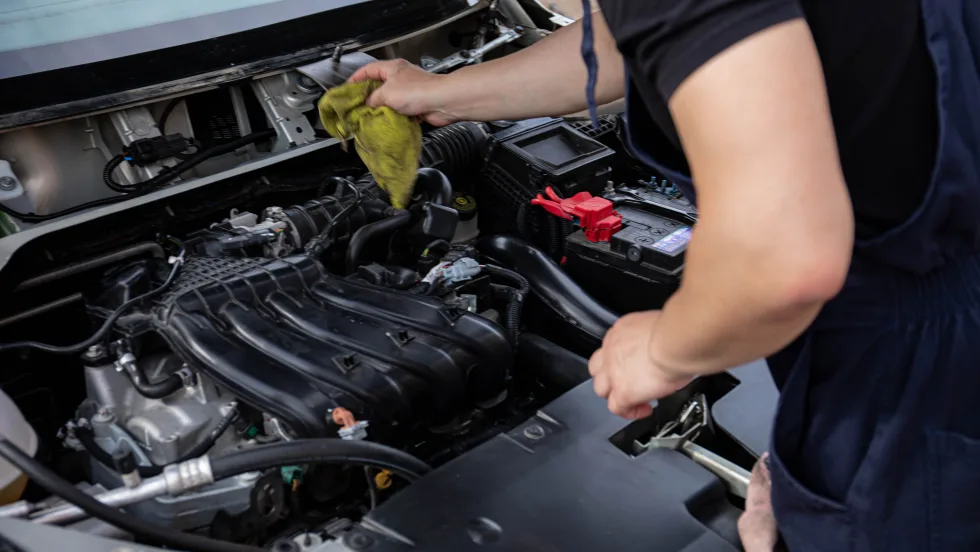
Bridge the Maintenance Gap
With many drivers missing recommended maintenance, service departments offering transparency and efficiency have a better chance of reaching financially strained consumers.
Read More →
California Store Has New Owner
The longtime dealership in the northern part of the state is known for robust fleet sales and has served the state capital for 115 years.
Read More →
BMW Plant Pursues Cleaner Energy
BMW Group Plant Leipzig has utilized hydrogen to help power its production since 2013, but a new pipeline is planned to take it to another level.
Read More →
Auto Affordability Inches Up
The latest Cox Automotive and Moody’s Analytics index shows a slight increase in new-vehicle affordability despite high prices.
Read More →
Ohio Auto Group Under New Ownership
After 79 years with the Schluter family, Mansfield Auto Group has been acquired by Missouri-based Clement Auto Group.
Read More →
RV Group Expands Carolina Footprint
Blue Compass RV Columbia Northeast is the 13th RV dealership owned by Blue Compass in the Carolinas.
Read More →
Agent Acumen
An Agent Summit panel of people who’ve been supporting auto dealers for years gave both timely and timeless advice for those starting out or mulling the prospect.
Read More →
Missed Maintenance Creates Opportunity
As families get back on the road and into daily school routines, service drives have an opportunity to capture customers who are behind on recommended vehicle maintenance.
Read More →
Mitsubishi Unveils U.S. Plan
The automaker announced a strategy that includes an expanded lineup and dealership presence, along with more ‘rugged’ and electric models.
Read More →