



Are Your Profits at Risk?
Junk and voluntary protection products are targeted by regulators.


'Junk fees' can be applied to a broad range of charges that may be unanticipated by the public.
IMAGE: Pexels/emmet
People use various terms for what they consider to be junk: trash, rubbish, waste, scrap, offal. Of course, there are more colorful definitions. George Carlin famously said that he owned stuff but that the same items in other people’s possession were junk.
What Is the Standard, and Why Should Dealers Care?
Dealers should be aware that regulators are targeting what they term “junk fees,” as such fees may include products dealers currently sell. The term may also encompass other fees dealers charge. Regulators seek to assess damages for them, so there are compelling reasons dealers should understand the term and the standard by which junk fees are judged.
It’s also important to always recognize that the government has an insatiable appetite to collect financial penalties. In these matters, it’s like the mythological beast the Wendigo, a giant humanoid with a heart of ice, a foul stench, and a limitless appetite.
In his State of the Union Address this past February, President Biden said his administration was going to police junk fees, including those charged by banks, airlines and hotels. To quote the president, “Junk fees may not matter to the very wealthy, but they matter to most folks in homes like the one I grew up in. They add up to hundreds of dollars a month.”
A Personal Tale of Junk Fees
In the latter part of the 1990s, when I was employed by the Florida Attorney General’s Office, I was part of an investigation of port charges. As anyone who has ever taken a cruise recognizes, there is a fare ticket with an added amount for a port charge, not seemingly subject to negotiation. Port charges are standardized governmental or quasi-governmental fees, such as wharfage, towage or pilotage against a ship or its cargo in port. Port charges are not crew salaries, profit, or fuel for the ship. Nevertheless, during the 1990s, all the cruise lines were charging them to disguise costs and profits. The public doesn’t challenge government fees and evaluates products and services based upon what appears to be the basic price. Consequently, cruise-line passengers ignored the port charge costs, not recognizing that part of that charge was deceptive. The Florida attorney general settled with all the cruise lines on the basis that this was an unfair and deceptive trade practice. Disguising port charges increased the overall cost of cruise tickets by hundreds of each. Part of the port charge would be considered a junk fee.
Defining Junk Fees
This term can be applied to a broad range of charges that may be unanticipated by the public. These are also the types of fees not clearly explained by the financial institution, service provider or merchant.
The Consumer Financial Protection Bureau has listed examples of junk fees that include service charges imposed by ticket sellers, resort fees charged by hotels, and other “mystery fees.” According to it, these fees “drain tens of billions of dollars per year from Americans’ budgets.”
The Federal Trade Commission also defines junk fees, describing them as “unfair or deceptive fees that are charged for goods or services that have little or no added value to the consumer, including goods or services that consumers would reasonably assume to be included within the overall advertised price.” This definition would include hidden fees as junk fees.
Could the term “junk fee” apply to dealer preparation or documentary fees?
Traditional Legal Reasoning
In contract law, when two parties agree to a contract, the value exchanged between them, called the consideration, is usually not subject to judicial review. In other words, if a consumer buys a Rembrandt painting at a yard sale for $10, and the seller doesn’t recognize the value of the painting he is selling, there is no remedy in court.
Traditional legal reasoning has no relationship with the new world of junk fee allegations.
Proposed Federal Legislation
The proposed Junk Fee Prevention Act has been projected to redress these fees and has encouraged states to use enforcement and legislation to prosecute junk fees. To quote Sen. Richard Blumenthal, one of the sponsors of the bill, it will “… help end this price gouging—forcing full disclosure upfront and restricting abusive fees. It will mandate basic common sense fairness and transparency, which consumers rightly demand and deserve.”
In addition to the proposed act, the FTC and CFPB are contemplating rulemaking to address this issue. State attorneys general are following this lead. It would appear that no industry will be exempt from these investigations.
Agencies Don’t Need Legislation or Rules to Prosecute Junk Fees
The CFPB, FTC and state attorneys general can all prosecute cases presently utilizing their unfair and deceptive trade practices authority. In addition, federal and state agencies can collaboratively prosecute merchants, including dealers.
It’s important to note that once agencies identify an issue to pursue, they will take action at some point.
Can Your Voluntary Protection Products Be Defended?
Are these products ever included in a transaction as a surprise line item? Do they have real value, and is the cost commensurate with the expense? Could they be entitled “add-on fees,” a pejorative term?
Dent-and-ding protection, customer appreciation programs, GAP, theft deterrents, etching, service contracts, bifurcated payment programs, windshield protection, appearance protection, alloy wheel protection, and so forth, are all potential targets of these allegations. And, once again, documentary fees could be, as well.
These products can be beneficial to customers and lucrative to dealers. However, they must have true merit and be thoroughly explained.
How Should a Dealer Respond?
Transparency, disclosure and redundancy are the true friends of a dealer. Dealers should make certain that they are advertising honestly and, at the point of sale, explaining the products and services that they are providing. Salespeople and finance managers need to be trained to explain in layman’s terms what is being offered for sale. The subsequent documents employed in the signing ceremony should further elucidate the transaction with clear and complete disclosures. Unfortunately, there is no absolute defense to these allegations, but dealers can prepare for them with sound business practices.
Terry O’Loughlin is director of compliance for Reynolds & Reynolds and is admitted to the Pennsylvania and Florida Bars. Before joining Reynolds, he was employed by the Florida Office of the Attorney General, where he investigated automobile dealers and financing sources. He previously was a public accountant.
Originally posted on F&I and Showroom
More Industry

Penske Auto Group Deal a Record
The deal to take the dealership and transportation services company private sets a new pace for industry buy-sell transactions.
Read More →
War Toll a Damper on Used Auto Prices
Cox Automotive found wholesale depreciation to be elevated in September amid high fuel prices and this year's unusual hurricane season.
Read More →
Bridge the Maintenance Gap
With many drivers missing recommended maintenance, service departments offering transparency and efficiency have a better chance of reaching financially strained consumers.
Read More →
California Store Has New Owner
The longtime dealership in the northern part of the state is known for robust fleet sales and has served the state capital for 115 years.
Read More →
BMW Plant Pursues Cleaner Energy
BMW Group Plant Leipzig has utilized hydrogen to help power its production since 2013, but a new pipeline is planned to take it to another level.
Read More →
Auto Affordability Inches Up
The latest Cox Automotive and Moody’s Analytics index shows a slight increase in new-vehicle affordability despite high prices.
Read More →
Ohio Auto Group Under New Ownership
After 79 years with the Schluter family, Mansfield Auto Group has been acquired by Missouri-based Clement Auto Group.
Read More →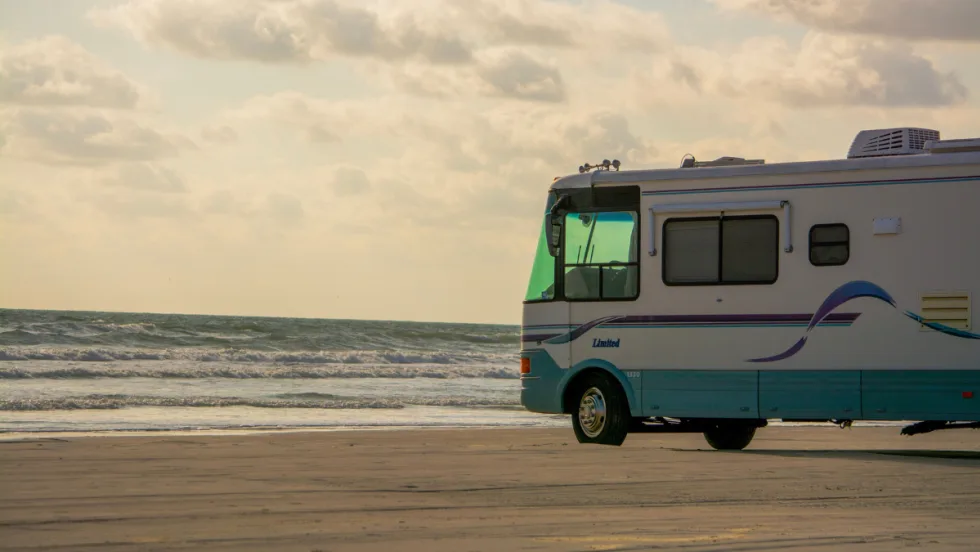
RV Group Expands Carolina Footprint
Blue Compass RV Columbia Northeast is the 13th RV dealership owned by Blue Compass in the Carolinas.
Read More →
Agent Acumen
An Agent Summit panel of people who’ve been supporting auto dealers for years gave both timely and timeless advice for those starting out or mulling the prospect.
Read More →
Missed Maintenance Creates Opportunity
As families get back on the road and into daily school routines, service drives have an opportunity to capture customers who are behind on recommended vehicle maintenance.
Read More →