



Agents and the Rise of the Digital Consumer


Agents and the Rise of the Digital Consumer
In the early 2000s, new technology and an innovative process were introduced to the automotive marketplace in the form of the F&I sales menu. The menu was initially met with a fair degree of skepticism by dealerships, but today’s menu-based process is accepted as the most effective way to sell F&I products. And from a regulatory perspective, menus are perceived to be the most compliant approach because they can offer every product to every customer in a flexible package.
The evolution of F&I sales has been a leading topic of discussion for many years. Questions have been raised regarding where the F&I conversation should start with the customer, how the process continues in the F&I office and whether information about F&I products should be featured on dealer and third-party websites. Much like the introduction of the menu, the prospect of change has generated doubts and hesitancy. However, the conversation should actually be focused on what online F&I really means and how the transition can be implemented.
The industry has been preparing to move more of the F&I process online, and the proof is the buzz generated at automotive events. At the Industry Summit in Las Vegas this past September, online F&I was the topic of several panels and was mentioned in a number of the presentations. It is recognized by many that regardless of what the F&I industry wants, the customers of today want more information about F&I products earlier in the process and this includes transparency on pricing.
Online F&I Defined
So what does online F&I really mean? And, more importantly, will moving F&I online mean the end of the traditional F&I office and F&I manager? Absolutely not. We believe the traditional F&I manager will be here for a long time to come. However, the F&I process and role within the dealership will need to transform over time. What will this digital transformation mean for the automotive industry and in particular to agents and providers?
First, there will be more customer research completed regarding F&I products before the customer even sets foot on the lot. The most critical step of moving F&I forward in the buying process is the customer education on F&I products during the initial shopping journey. This will take place either on the dealer’s website or on a third-party website, which will enhance the overall customer F&I experience by allowing them to inform themselves on F&I products in their own time. The dealer’s F&I website should not be a link off the homepage; it should be imbedded content specific to the dealers’ F&I products sold on the vehicle detail page (VDP) with pricing related to each specific vehicle.
Why is education so important? Recent surveys have indicated that the overall accuracy of awareness of F&I products by customers is relatively low. In today’s world of the Internet and Google, it is hard to name any other product in any category where it is so difficult to find good product information. And even if product information is available online, typically, the product pricing is not addressed.
The Big Three
There are several critical components of the online customer experience for F&I that will need to be developed and advanced as analytical data tells dealers what process, experience and content maximizes product sales for the F&I office. Specifically, the F&I industry will need to focus on three things: digital marketing content, consistent online and onsite processes and online pricing.
1. Digital Marketing Content
Most F&I product providers create sales brochures for their dealers’ F&I departments. There is some digital content available today for dealers who choose to offer a customer-facing tablet menu. However, dealers who present educational videos and promotional digital marketing content for tablet menu presentations are more the exception than the rule. Moving automotive F&I providers toward the ongoing development of online content will require a digital renaissance for companies and agents who largely distribute F&I products to dealers.
In the long run, the benefits to the F&I providers will be tremendous. The ability to move the focus from print to digital content will reduce overall marketing expenses by minimizing or eliminating print, storage and distribution costs. Better yet, creating digital marketing content will provide web analytics about what content creates the greatest customer engagement. Never before has an F&I provider been able to effectively manage creative content.
2. Consistent Online and Onsite Processes
It is also essential to have one process for all customers, whether they are on their computer or mobile device or at the dealership. As the Internet has evolved as a car-shopping tool, separate processes have been developed for Internet and in-store customers. But the majority of today’s shoppers start their process online and finish at the dealership. It’s important that the same information presented online is also available onsite.
Customers are more concerned with a streamlined process that saves time than they are with whether they are treated like an online or in-store customer. To them, the lines are blurred and irrelevant.
3. Online Pricing
That leads to pricing and how F&I products are presented. If you were exploring a dealer’s website and saw cars with no prices, what would you do? You would most likely leave that site and go look for another that has price information. The same applies to F&I products. If customers are going to be offered product information online, they also need pricing information — ideally, converted into a monthly payment or payment range.
There are several key components that need to be taken into account when placing F&I product pricing online. The prices must have established margins set by the dealer on a product-by-product basis, even down to the coverage level, if needed. And the prices must be specific to the dealer, vehicle and F&I product provider. The electronic rating needs to happen behind the scenes. It needs to go out to the product provider, get the eligible plans and rates, match up with content specific to the product and coverage and then be presented to the customer within seconds.
The bottom line is that the ability for dealers to offer online F&I as a part of the car-buying process is here. But it will require the industry to progress and develop the processes that are being brought on by the digital customer.
This advancement will result in many changes at the dealer level. It will also impact agents and product providers. There will always be a focus on how to effectively sell the products to customers at the dealership, but now it will be with customers who have started the education process while they were on their dealer’s website.
The agents who focus on helping the dealers with income development will need to help F&I professionals be better at bridging the online process with what happens in their office. The Internet has changed how customers shop for cars and now it will affect when and where F&I products are being sold to customers.
More Industry
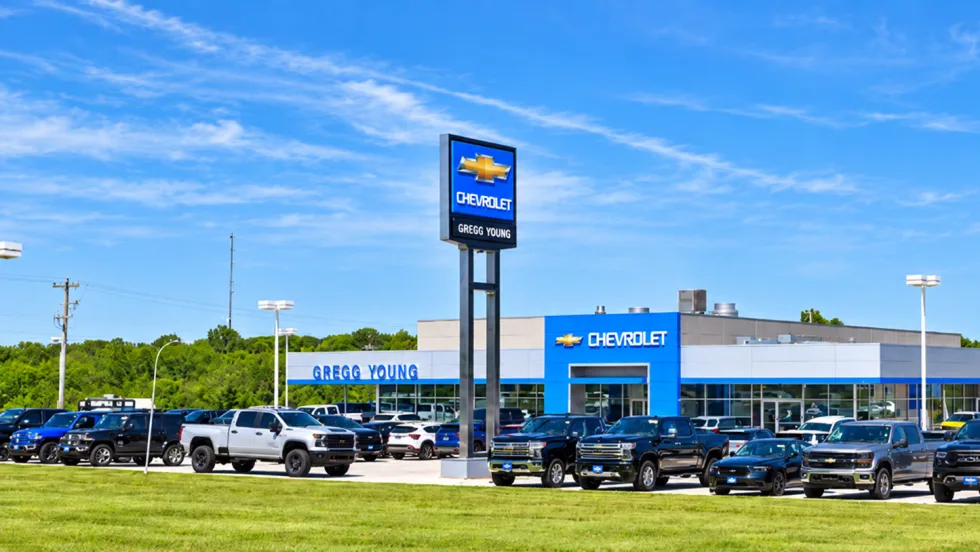
Nebraska Rooftop Changes Hands
The Gregg Young Automotive Group has sold its second dealership to Janssen Auto Group, both in Plattsmouth, Neb.
Read More →
Penske Auto Group Deal a Record
The deal to take the dealership and transportation services company private sets a new pace for industry buy-sell transactions.
Read More →
War Toll a Damper on Used Auto Prices
Cox Automotive found wholesale depreciation to be elevated in September amid high fuel prices and this year's unusual hurricane season.
Read More →
Bridge the Maintenance Gap
With many drivers missing recommended maintenance, service departments offering transparency and efficiency have a better chance of reaching financially strained consumers.
Read More →
California Store Has New Owner
The longtime dealership in the northern part of the state is known for robust fleet sales and has served the state capital for 115 years.
Read More →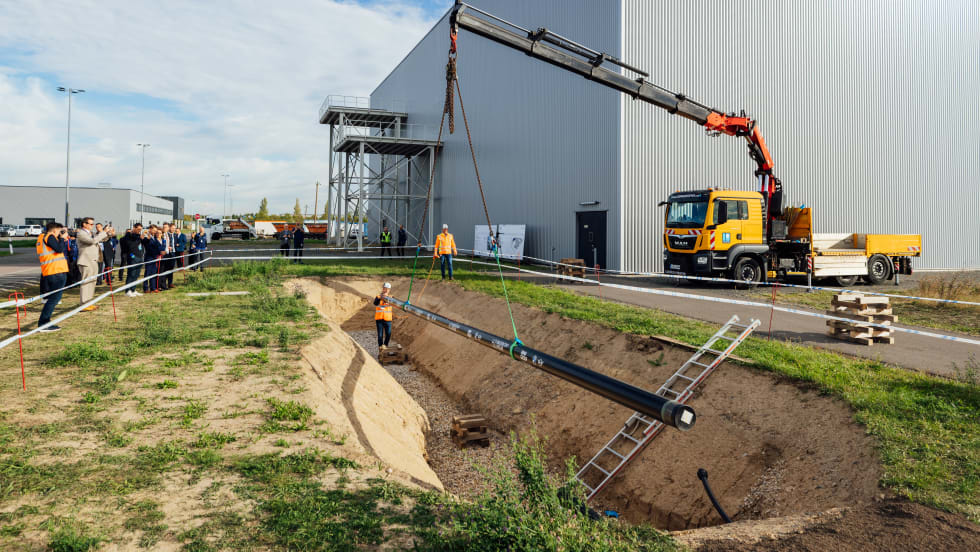
BMW Plant Pursues Cleaner Energy
BMW Group Plant Leipzig has utilized hydrogen to help power its production since 2013, but a new pipeline is planned to take it to another level.
Read More →
Auto Affordability Inches Up
The latest Cox Automotive and Moody’s Analytics index shows a slight increase in new-vehicle affordability despite high prices.
Read More →
Ohio Auto Group Under New Ownership
After 79 years with the Schluter family, Mansfield Auto Group has been acquired by Missouri-based Clement Auto Group.
Read More →
RV Group Expands Carolina Footprint
Blue Compass RV Columbia Northeast is the 13th RV dealership owned by Blue Compass in the Carolinas.
Read More →
Agent Acumen
An Agent Summit panel of people who’ve been supporting auto dealers for years gave both timely and timeless advice for those starting out or mulling the prospect.
Read More →