



A Timely Math Lesson
How small statistical samples can lead you in the wrong direction.

Picking out an extreme statistical example in meetings with customers can be misleading.
Pexels/Lukas
Math was always my weakest subject in school, and I studiously avoided the more advanced courses as much as possible. Though I did take statistics in college, I remember nothing from the class, at least not consciously.
My career as a writer and editor has ironically forced me to get better at my everyday use of numbers to make sense of data and communicate it to readers. And in my current reading of a book by Nobel Prize-winning psychologist and researcher Daniel Kahneman, who died last March, I’m learning more that’s helping me make better sense of automotive industry statistics.
“Thinking, Fast and Slow,” published in 2011, is jam-packed with insights on how the human mind works, from decision-making to how we form impressions and interpret our world.
One chapter in particular helped me gain new insight that could come in handy in the F&I office. It digs into how small research samples can be misleading. An example is a high rate of new kidney cancer cases in sparsely populated U.S. counties. Kahneman explains that, “extreme outcomes (both high and low) are more likely to be found in small than in large samples.”
So when I saw a recent LendingTree study about car thefts that pointed out a dramatic spike in Vermont between 2020 and 2022, I left the example out of my news item on the report. That’s because Vermont is the second smallest state by population, with far fewer residents than many larger U.S. cities. It’s an example of an extreme outcome.
What does this have to do with F&I? I share it because F&I managers need examples of the latest research to demonstrate their expertise and make relevant points to customers. Picking out extreme examples such as the Vermont theft rate could be misleading, painting a picture of car thieves run amuck on every street in the largely rural state, whereas the theft rate per 100,000 residents in 2023 would offer much more reality. The District of Columbia leads that list at about 1,150, according to LendingTree data.
Or as Kahneman further explained in the kidney cancer example:
“The incidence of cancer is not truly lower or higher than normal in a county with a small population, it just appears to be so in a particular year because of an accident of sampling. If we repeat the analysis next year, we will observe the same general pattern of extreme results in the small samples, but the counties where cancer was common last year will not necessarily have a high incidence this year.”
Even though I hated math growing up, I did appreciate the rare math teacher who was good at breaking it down into bite-sized steps that even I could absorb and understand. Kahneman was just one of those teachers that I happened upon. Hopefully his analysis will help you, too.
Hannah Mitchell is executive editor of F&I and Showroom.A former daily newspaper journalist, she honed her craft covering politics, business and more for publications that included the Charlotte Observer and the Orange County (Calif.) Business Journal. She holds a master’s degree in journalism from Columbia University, and her first car was a hand-me-down Chevrolet Nova.
Originally posted on F&I and Showroom
More Industry

Auto Affordability Inches Up
The latest Cox Automotive and Moody’s Analytics index shows a slight increase in new-vehicle affordability despite high prices.
Read More →
Ohio Auto Group Under New Ownership
After 79 years with the Schluter family, Mansfield Auto Group has been acquired by Missouri-based Clement Auto Group.
Read More →
RV Group Expands Carolina Footprint
Blue Compass RV Columbia Northeast is the 13th RV dealership owned by Blue Compass in the Carolinas.
Read More →
Agent Acumen
An Agent Summit panel of people who’ve been supporting auto dealers for years gave both timely and timeless advice for those starting out or mulling the prospect.
Read More →
Missed Maintenance Creates Opportunity
As families get back on the road and into daily school routines, service drives have an opportunity to capture customers who are behind on recommended vehicle maintenance.
Read More →
Mitsubishi Unveils U.S. Plan
The automaker announced a strategy that includes an expanded lineup and dealership presence, along with more ‘rugged’ and electric models.
Read More →
Selling to Grow
The question of whether you should sell your agency and if so, when, is up to you. But it’s a question worth asking to ensure you keep the business on the right path for yourself, employees and clients.
Read More →
Recalled Vehicles Hit 5-Year High
Though the number of events has fallen so far this year, impacted units are up significantly. Meanwhile, regulators consider consumer notification changes.
Read More →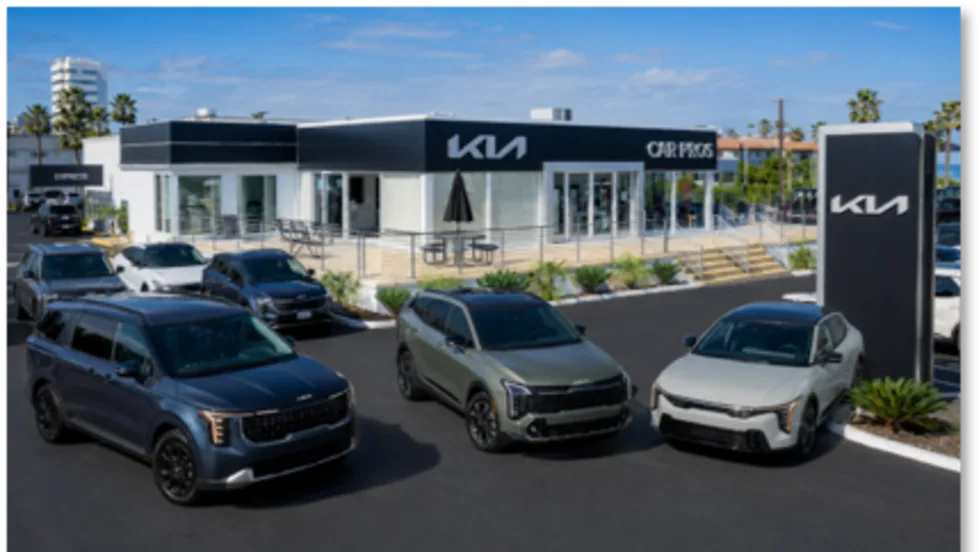
Auto Group Acquires Top-Performing Rooftop
Car Pros sold its Kia Huntington Beach location to Sutherlin Automotive Group, marking the buyer’s third location in Southern California.
Read More →
China as Pacesetter
Automotive leaders huddled on where North America stands in the global picture and how it can strengthen its position against the Asian juggernaut’s surging industry.
Read More →