



A Brief History of Reinsurance


A Brief History of Reinsurance
Successful reinsurance companies generate untold wealth for dealers and agents today. In the second decade of the 21st century, reinsurance has long been established as a mature, legally compliant and vital tool for helping reinsurance company owners achieve additional security and long-term prosperity.
Throughout the years, there were occasions when my company, SouthwestRe, played an important role in helping to guide the industry through some rather tumultuous times, as we and other companies sought to establish reinsurance as a legally viable program that would stand muster under intense IRS scrutiny.
Wright vs. Commissioner
Starting off on a rather negative note, one of the defining events in the history of reinsurance as it pertains to our industry occurred in 1993, with the “Wright vs. Commissioner” tax case. The reinsurance business was fairly virgin territory at the time, and unfortunately, the IRS decided that some Producer-Owned Reinsurance Company (PORC) owners were abusing the system. As a result, the IRS brought suit against a West Coast dealer and PORC owner named William Wright, treating it as a landmark case that could ultimately eliminate PORCs going forward.
The IRS won their case against Wright, with the court ruling that transactions between the dealership and the PORC were “sham” transactions, and that the PORC’s corporate form should be disregarded and its income deemed as being received by the owner of the dealership. In the end, the cost to the dealer was nearly $8 million dollars. To say this ruling “shook up” our industry would be an understatement.
The following year, the Consumer Credit Insurance Association (now Consumer Credit Industry Association), or CCIA, held their first reinsurance task force meeting. (As owner of SouthwestRe, I was a member of that task force.) The CCIA met to discuss the implications of the Wright case and other issues, and in response helped establish a plan of action for our industry going forward. The key positive result of this meeting was the establishment of the “dos and don’ts” of reinsurance structure and management that exist to this day.
Turks & Caicos
Another negative that was turned into a positive occurred in 1993. From nearly the beginning, the Turks & Caicos Islands (TCI) were the domicile of choice for our industry. An article was published that year in an industry newsletter that was extremely negative about TCI. Pressure built to leave TCI because of perceived problems with their government’s regulatory standards. Some companies succumbed to the pressure, and moved to other domiciles. Most companies realized that the criticism was unfounded and maintained their presence in the Turks & Caicos. Ultimately, the prediction of impending doom as portrayed by some did not come true, and now over twenty years later, TCI remains a healthy and viable domicile of choice.
Vehicle Service Contracts
The use of reinsurance in the beginning was mainly applied to credit insurance and a few other ancillary products. Over time, Vehicle Service Contracts (VSCs) became the dominant product. Also in the beginning, the only type of VSC was “Dealer Obligor” business. In 1992, the IRS took the position with Revenue Procedure 92-97 that Dealer Obligor business could not be deducted immediately, and had to be amortized over the life of the VSC. This was totally unrelated to reinsurance, and negatively impacted every dealership in the U.S. by creating a huge tax liability.
Fortunately, this was more-or-less rectified with the passage of IRS Revenue Procedure 92-98 (Service Warranty Income Method or SWIM), which mitigated most, but not all, of the negative consequences of Revenue Procedure 92-97.
This was a Godsend to the reinsurance industry from two perspectives. The first was that it took away the IRS’s argument that VSCs were not insurance and therefore couldn’t be reinsured as they had previously maintained. Secondly, this position was the beginning of “Administrator Obligor” legislation. This validated the entire reinsurance transaction, and started us on the path we are on today.
IRS & Administrators
Now we jump ahead a few years. Since the IRS wasn’t entirely successful with their insurance regulations for dealers, they decided to go after administrators instead. What wasn’t widely known at the time of the release of Revenue Procedure 92-97, was that the IRS was also trying to impose the same expense recognition principle on administrators (or “obligors”) as they had just done with dealers. In other words, if the automobile dealer could not deduct the premiums paid for the purchase of an insurance policy to cover the VSC, then by logical extension the IRS would not allow an Administrator to immediately deduct a similar premium payment. Clearly, this would have been devastating.
However, a very talented lawyer came to the rescue. Kirk Borchardt was retained by an administrator who was being audited by the IRS. Kirk took the position that if an administrator was taking premiums and paying premiums just like an insurance company, then it was in fact an insurance company. He made this argument to the Service in 1996 and the IRS agreed, releasing Technical Advice Memorandum (TAM) 9601001. This effectively allowed an administrator to be taxed as in insurer. TAM 9601001 was the progenitor of the “AO Model” that was first utilized over 15 years ago by SouthwestRe. And today, TAM 9601001 is the genesis of theory behind Dealer-Owned warranty companies.
It should be noted that Kirk Borchardt was also SouthwestRe’s lawyer at the time he helped establish TAM 9601001, and subsequently became the CEO of Dealers Assurance Company (DAC), our affiliated carrier. He was recently succeeded by Kristen Gruber. Fast-forward six years to 2002. Everything was going well in the Industry. Administrator obligor legislation was being adopted in most states, and the industry was growing dramatically because the private sector was making inroads on the manufacturer’s business. Profits were being made all around. And then…
The IRS issued Notice 2002-70, which stated that ownership of a PORC was a listed transaction. This didn’t have any tax implications, but created very negative implications from a perception (tax avoidance) standpoint. SouthwestRe took a proactive approach, and hosted an industry meeting to discuss the issues and determine a course of action to mitigate the negative implications of this IRS decision. A byproduct of this meeting was that SouthwestRe spoke with the IRS on behalf of the CCIA in Washington, D.C. in 2003, and pointed out the benefits of reinsurance to the producers of business, mainly the automobile dealers. This culminated in 2004 when the IRS issued Notice 2004-65, which repealed Notice 2002-70. PORCs were no longer a listed transaction, and it was back to business as usual. The IRS Commissioner at the time even admitted, “there were not the abuses we thought there were.”
That same year, Congress adopted new legislation in the form of HR 3108, which had positive implications to PORCs and the industry as a whole. While it did not change the way that business was being done, it did clarify the method of taxation for small casualty insurance companies. The result was the elimination of many gray areas in interpretation of the taxation of PORCs. Previously, practitioners were divided into two camps: one that used the 501(c)(15) legislation in addition to the 831(b)(2) portion of the IRC, and one that used 831(b)(2) only. With the release of HR 3108, the 501(c)(15) camp went to the sidelines, and the 831(b)(2) camp prevailed, and it is still recommended today.
Foreign Corporations
In 2013, the IRS again took a step that could have made ownership of PORCs problematic, depending upon one’s interpretation of their intent. As part of the Foreign Account Tax Compliance Act, or FATCA, the IRS issued Form 8938. This required owners of foreign investments to report their ownership on their tax return. The interpretation of who had to report brought about some differences of opinion among Industry professionals. However, we understood that the IRS’s target was not PORCs, but actually foreign investments on which U.S. citizens were not paying taxes on investment income.
Despite the fact that the IRS’s somewhat confusing instructions for Form 8938 were being interpreted to say that it applied to 953(d) electing companies, SouthwestRe took the somewhat controversial position that 953(d) electing companies did not have to report their ownership. We held the position that once clients made the election for their reinsurance company to be taxed as a U.S. corporation, their company was no longer a “foreign” corporation. Although our interpretation put us in the minority, we were later vindicated when the IRS revised their instructions to make the intent of Form 8938 clear. As a side benefit, we also saved our clients from increased scrutiny.
Going Forward
So what about today? Despite the many hurdles and potential crises we’ve all encountered throughout the years, SouthwestRe and companies like ours have endured and will continue to endure. The business is mature, law abiding, and profitable for reinsurance company owners. It is possible, however unlikely, that additional IRS rulings may come our way in the future that attempt to throw up roadblocks to our Industry. My feeling is, no matter what happens, reinsurance as it applies to our industry is here to stay. It’s a great business to be in, and I’m very proud to have been a part of its history.
More Industry

Penske Auto Group Deal a Record
The deal to take the dealership and transportation services company private sets a new pace for industry buy-sell transactions.
Read More →
War Toll a Damper on Used Auto Prices
Cox Automotive found wholesale depreciation to be elevated in September amid high fuel prices and this year's unusual hurricane season.
Read More →
Bridge the Maintenance Gap
With many drivers missing recommended maintenance, service departments offering transparency and efficiency have a better chance of reaching financially strained consumers.
Read More →
California Store Has New Owner
The longtime dealership in the northern part of the state is known for robust fleet sales and has served the state capital for 115 years.
Read More →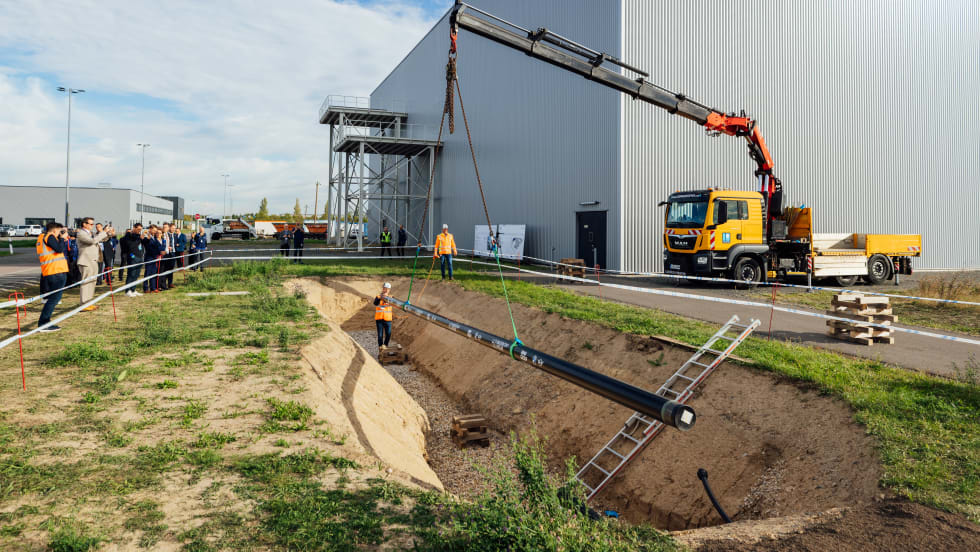
BMW Plant Pursues Cleaner Energy
BMW Group Plant Leipzig has utilized hydrogen to help power its production since 2013, but a new pipeline is planned to take it to another level.
Read More →
Auto Affordability Inches Up
The latest Cox Automotive and Moody’s Analytics index shows a slight increase in new-vehicle affordability despite high prices.
Read More →
Ohio Auto Group Under New Ownership
After 79 years with the Schluter family, Mansfield Auto Group has been acquired by Missouri-based Clement Auto Group.
Read More →
RV Group Expands Carolina Footprint
Blue Compass RV Columbia Northeast is the 13th RV dealership owned by Blue Compass in the Carolinas.
Read More →
Agent Acumen
An Agent Summit panel of people who’ve been supporting auto dealers for years gave both timely and timeless advice for those starting out or mulling the prospect.
Read More →
Missed Maintenance Creates Opportunity
As families get back on the road and into daily school routines, service drives have an opportunity to capture customers who are behind on recommended vehicle maintenance.
Read More →