



Rival Automakers Developing Alt-Fuel Engines
Japanese companies announce project to transform ICE technology.

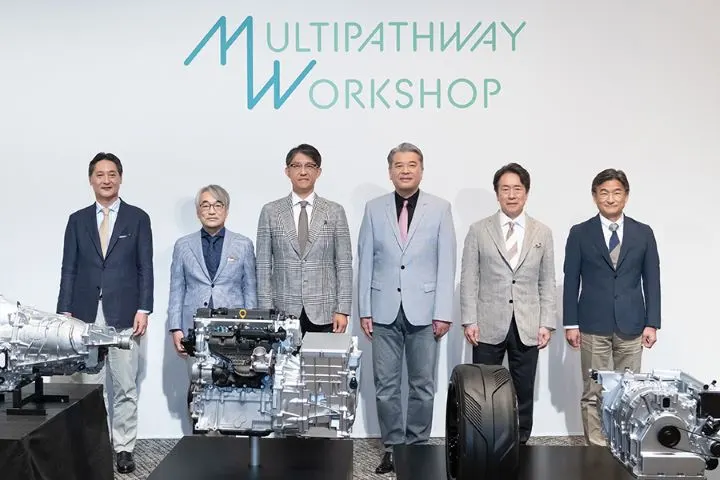
The companies called their technology 'highly efficient and powerful,' and that the more compact engines would make space for improved, more aerodynamic vehicle design, along with greater fuel efficiency.
Toyota
Three Japanese automakers said they’re developing internal-combustion engines to support low emissions as they seek to achieve net-zero pollution.
Mazda, Subaru and Toyota announced the project at a press conference Tuesday, saying they’re working to integrate the engine technology with motors, batteries and “other electric drive units.”
They said the more compact engines will use carbon-neutral fuels in order to “decarbonize” ICE.
The effort aligns with Toyota’s resistance to putting all of its power train eggs in one basket, particularly under former CEO Akio Toyoda, who stepped down and took the chairman role last year, though its new CEO, Koji Sato, quickly set the opposite target. The developing technology may be a way to split the difference and achieve carbon neutralily at the same time. It has lately appeared prescient as electric-vehicle adoption has flattened and hybrid sales taken off.
The three automakers said they’ve tested alternative fuels through their racing teams, including liquid hydrogen, and that the new engines would be compatible with those. Toyota said they will seek to integrate the developing technology with electric technology.
“This process has clarified the role that future engines will play in achieving carbon neutrality,” Toyota said in a press release. “With the next generation of engines, the three companies will seek to not only improve standalone engine performance but also optimize their integration with electric drive units, harnessing the advantages of each.”
The companies called their technology “highly efficient and powerful,” and that the more compact engines would make space for improved, more aerodynamic vehicle design, along with greater fuel efficiency.
“Even as Subaru, Toyota, and Mazda compete in the product arena with unique engines and cars, the companies have a shared dedication to achieving carbon neutrality through a multi-pathway approach,” the press release said.
Originally posted on Auto Dealer Today
More Industry

Penske Auto Group Deal a Record
The deal to take the dealership and transportation services company private sets a new pace for industry buy-sell transactions.
Read More →
War Toll a Damper on Used Auto Prices
Cox Automotive found wholesale depreciation to be elevated in September amid high fuel prices and this year's unusual hurricane season.
Read More →
Bridge the Maintenance Gap
With many drivers missing recommended maintenance, service departments offering transparency and efficiency have a better chance of reaching financially strained consumers.
Read More →
California Store Has New Owner
The longtime dealership in the northern part of the state is known for robust fleet sales and has served the state capital for 115 years.
Read More →
BMW Plant Pursues Cleaner Energy
BMW Group Plant Leipzig has utilized hydrogen to help power its production since 2013, but a new pipeline is planned to take it to another level.
Read More →
Auto Affordability Inches Up
The latest Cox Automotive and Moody’s Analytics index shows a slight increase in new-vehicle affordability despite high prices.
Read More →
Ohio Auto Group Under New Ownership
After 79 years with the Schluter family, Mansfield Auto Group has been acquired by Missouri-based Clement Auto Group.
Read More →
RV Group Expands Carolina Footprint
Blue Compass RV Columbia Northeast is the 13th RV dealership owned by Blue Compass in the Carolinas.
Read More →
Agent Acumen
An Agent Summit panel of people who’ve been supporting auto dealers for years gave both timely and timeless advice for those starting out or mulling the prospect.
Read More →
Missed Maintenance Creates Opportunity
As families get back on the road and into daily school routines, service drives have an opportunity to capture customers who are behind on recommended vehicle maintenance.
Read More →