



Toyota Expects 31 Percent Drop in Net Profit

TOKYO — Toyota Motor Corp. on Friday projected a 31 percent drop in annual profit due to the impact of Japan's massive earthquake in March and the strength of the yen against the dollar, despite a sharp sales rebound expected in the second half of the year as output ramps up.
Japan's biggest auto maker said it expects by July to have all the parts it needs for a full recovery of domestic production, although shortages will continue to limit output at its overseas factories. That represents a major improvement over Toyota's outlook as recently as last month, reported The Wall Street Journal.
The brighter production picture could bode well for other Japan's auto makers that have yet to issue their earnings and output forecasts. Mitsubishi Motor Corp. and Mazda Motor Corp. will release their fiscal-year projections on Monday and Friday, respectively.
Improved prospects at Japan-based Renesas Electronics Corp. will also help auto makers, including Toyota, boost production. The major supplier of semiconductors to the automotive industry said Friday it expected to resume full production by late September, a month earlier than previously projected.
The chips made by Renesas are among many core components whose manufacture was disrupted by the March 11 natural disaster, creating severe bottlenecks in Japanese and other global auto makers' supply chains.
But the recovery in output is not expected to rescue Toyota's bottom line. While the company pegged vehicle sales in the fiscal year ending March 2012 at 7.24 million units, down less than 1 percent from the previous year, it sees net profit falling by nearly a third, to ¥280 billion ($3.5 billion) from ¥408.1 billion.
That would be the lowest level in two years and well short of a forecast for a profit of ¥426.08 billion based on a survey of 21 analysts compiled by Thomson Reuters.
Speaking at a press conference in Tokyo, Satoshi Ozawa, Toyota's chief financial officer, attributed the lackluster outlook to a combination of currency pressures and unspecified "marketing activities" that it plans to step up. Marketing activities typically include incentives to entice customers to purchase vehicles.
Mr. Ozawa noted the gains made in recent weeks by German and Korean car-making rivals after Toyota had to slash its production volumes, and he acknowledged the company's global market share will likely shrink this year. But he said Toyota is not concerned if it loses the status it has held over the past three years as the world's largest auto maker.
"It's not at all important for us to be the world's No. 1," he said.
In the first three months of 2011, Toyota sold 1.79 million vehicles around the world, falling to third place globally, behind General Motors Co., with 2.2 million vehicles, and Volkswagen AG, which sold 1.99 million vehicles during the same period.
Of more concern is the yen and its abiding strength against other currencies. A strong yen can erode the yen value of profits made in overseas markets and make exports from Japan less price competitive abroad.
The company said it based its forecast for the fiscal year started in April on an exchange rate of ¥82 yen to the dollar, compared with ¥86 for the fiscal year ended in March.
Mr. Ozawa said Toyota would have to increase the price of its vehicles by 1.25 percent in the U.S. if it wanted to compensate for each one yen appreciation of the Japanese currency against the dollar.
He also hinted at internal tensions over whether the company should move more aggressively to offset the negative impact of a stronger currency by shifting more production out of Japan, where Toyota still manufactures nearly half of the vehicles it sells globally.
"Someone told the president that making things well doesn't necessarily mean making them in Japan," Mr. Ozawa said, referring to an objection to the argument that production should remain in Japan. Since taking the helm of the company, Toyota President Akio Toyoda has repeatedly stressed the importance of maintaining domestic production to preserve employment levels and to enhance technological development at home.
The debate about shifting output abroad comes as domestic production is poised to leap ahead of overseas output. Less than three months after the quake forced across-the-board cuts in production volumes, Toyota told its suppliers on June 1 that it would be back to 90 percent of capacity in Japan as of this month.
Back in April, Mr. Toyoda had predicted overseas production would not return to normal levels until November or December. And as recently as May 12, when it posted its latest quarterly earnings, the company estimated its Japanese factories would run at just 70 percent of their production capacity. Toyota plans to make up for lost time by boosting output in the second half of the year.
The company said it sees sales for the current fiscal year at ¥18.600 trillion, down 2.1 percent from ¥18.994 trillion, while it expects operating profit to decline 36 percent to ¥300 billion from ¥468.2 billion. Toyota officials say one factor is the lower margin per vehicle amid growing global demand for small cars.
Subtracting the company's first-half outlook from its full-year projection, the company's net profit will more than double to ¥270 billion in the fiscal second half from ¥119.03 billion in the same period a year earlier as sales soar 19 percent to ¥11.1 trillion from ¥9.315 trillion.
Toyota reports its earnings under U.S. accounting standards.
More Industry

Penske Auto Group Deal a Record
The deal to take the dealership and transportation services company private sets a new pace for industry buy-sell transactions.
Read More →
War Toll a Damper on Used Auto Prices
Cox Automotive found wholesale depreciation to be elevated in September amid high fuel prices and this year's unusual hurricane season.
Read More →
Bridge the Maintenance Gap
With many drivers missing recommended maintenance, service departments offering transparency and efficiency have a better chance of reaching financially strained consumers.
Read More →
California Store Has New Owner
The longtime dealership in the northern part of the state is known for robust fleet sales and has served the state capital for 115 years.
Read More →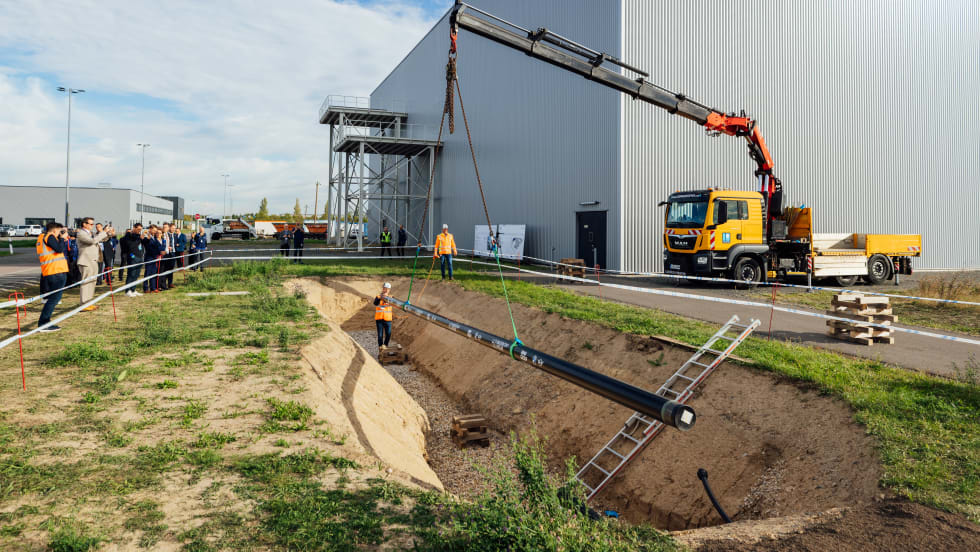
BMW Plant Pursues Cleaner Energy
BMW Group Plant Leipzig has utilized hydrogen to help power its production since 2013, but a new pipeline is planned to take it to another level.
Read More →
Auto Affordability Inches Up
The latest Cox Automotive and Moody’s Analytics index shows a slight increase in new-vehicle affordability despite high prices.
Read More →
Ohio Auto Group Under New Ownership
After 79 years with the Schluter family, Mansfield Auto Group has been acquired by Missouri-based Clement Auto Group.
Read More →
RV Group Expands Carolina Footprint
Blue Compass RV Columbia Northeast is the 13th RV dealership owned by Blue Compass in the Carolinas.
Read More →
Agent Acumen
An Agent Summit panel of people who’ve been supporting auto dealers for years gave both timely and timeless advice for those starting out or mulling the prospect.
Read More →
Missed Maintenance Creates Opportunity
As families get back on the road and into daily school routines, service drives have an opportunity to capture customers who are behind on recommended vehicle maintenance.
Read More →