



Quality Slips for All-New Models

Although the perceived quality of all new vehicles continued to improve in the latest Initial Quality Survey by J. D. Power & Associates, the results were not so bright for models that had been significantly redesigned or were new from the wheels up.
The quality of these all-new or extensively revamped cars declined by 10 percent in the 2011 Initial Quality Survey, to 122 problems per 100 vehicles from 111 a year earlier, reported The New York Times.
In contrast, carryover models that underwent few changes had only 103 problems per 100 vehicles — “better quality than ever before,” J. D. Power said.
Over all, the survey found an average of two fewer problems for 2011 new cars and trucks.
The survey measures issues that arise in the first 90 days of ownership. This year, the study included responses from more than 73,000 owners and lessees of new 2011 model vehicles.
While it is no surprise that all-new cars tend to have more problems than carryovers, that gap has been narrowing: in last year’s study, new models had only three more problems than carryovers per 100 vehicles.
The most notable issues this year were in categories labeled engine/transmission and audio/entertainment/navigation. Overall problem rates for multimedia technology rose 18 percent from 2010 and 28 percent from 2009.
These were the issues that sent Ford plunging in the rankings, to 23rd place this year from fifth place in 2010. Ford’s Lincoln brand also stumbled, to 17th place from eighth.
J. D. Power said those drops were mostly because of consumer complaints about the MyFord and MyLincoln Touch computer interfaces, through which drivers operate the audio system, navigation unit and climate controls by using a touch screen, a dashboard display and voice commands.
Owners said the system was not as intuitive as they would have liked, and they complained about the hands-free voice-activated controls.
Until recently, when Ford moved to take a lead in telematics technology, the company “had a really good quality story going,” said David Sargent, vice president for global vehicle research at J. D. Power.
The survey also measures manufacturing defects and malfunctions, and Ford “continues to perform pretty well” in those categories, Mr. Sargent said.
“What we are witnessing here essentially has nothing to do with manufacturing,” he added.
The survey asks owners if they had any of 228 possible problems in a range of categories.
Automakers are graded on the number of problems per 100 vehicles — the lower the number, the higher the initial quality score.
Lexus returned to first place this year, followed by Honda, Acura and Mercedes-Benz, with Mazda and Porsche tied for fifth. Porsche had been No. 1 in 2010.
Toyota made a big rebound to seventh place after having dropped 15 spots last year following widely publicized recalls.
And Mazda showed significant improvement. Mr. Sargent noted a reduction in problems with the Mazda 3 compact car, which accounts for more than half of the company’s sales.
Nissan dropped 12 places to 24th, but Mr. Sargent said that was primarily because the brand’s sales mix had changed. “They sold more of their lower-performing models and relatively fewer of their better-performing ones, such as the Altima and Maxima,” he wrote in an e-mail.
Land Rover, a perennial bottom-dweller in quality surveys, was the most improved brand, though it rose to only 26th place on the list of 32 automakers.
The Range Rover Sport was also the most improved model, with 80 fewer problems per 100 vehicles.
The 2011 survey also found, aside from problems with computer controls, a new set of complaints about engines being slow to respond or about transmissions hesitating or hunting for the right gears.
Mr. Sargent said this was because, as manufacturers downsized engines while making cars heavier, they had trouble calibrating powertrain software that struck an optimum balance between smooth power delivery and maximum fuel economy.
He said, “This is a new issue, more of a design or software issue, not around the reliability of the engine.”
More Industry

Penske Auto Group Deal a Record
The deal to take the dealership and transportation services company private sets a new pace for industry buy-sell transactions.
Read More →
War Toll a Damper on Used Auto Prices
Cox Automotive found wholesale depreciation to be elevated in September amid high fuel prices and this year's unusual hurricane season.
Read More →
Bridge the Maintenance Gap
With many drivers missing recommended maintenance, service departments offering transparency and efficiency have a better chance of reaching financially strained consumers.
Read More →
California Store Has New Owner
The longtime dealership in the northern part of the state is known for robust fleet sales and has served the state capital for 115 years.
Read More →
BMW Plant Pursues Cleaner Energy
BMW Group Plant Leipzig has utilized hydrogen to help power its production since 2013, but a new pipeline is planned to take it to another level.
Read More →
Auto Affordability Inches Up
The latest Cox Automotive and Moody’s Analytics index shows a slight increase in new-vehicle affordability despite high prices.
Read More →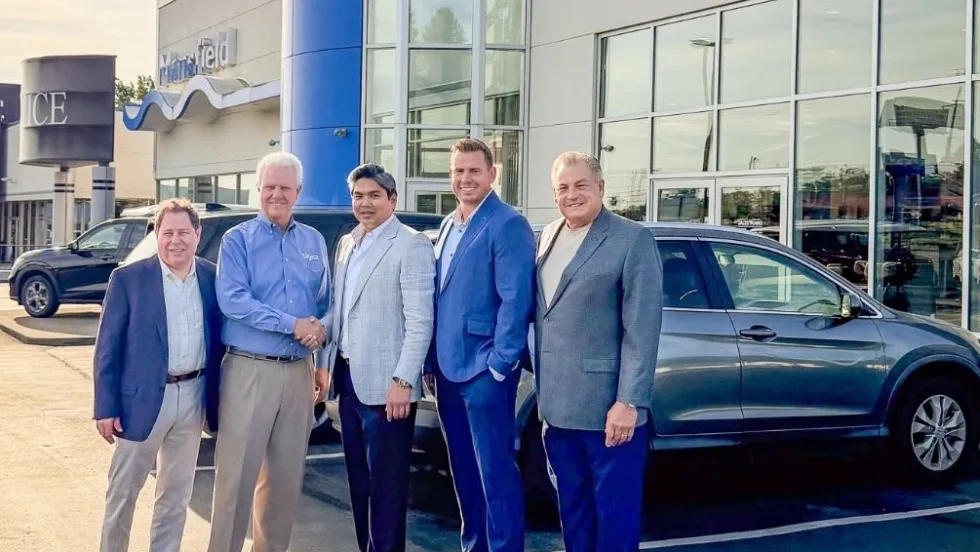
Ohio Auto Group Under New Ownership
After 79 years with the Schluter family, Mansfield Auto Group has been acquired by Missouri-based Clement Auto Group.
Read More →
RV Group Expands Carolina Footprint
Blue Compass RV Columbia Northeast is the 13th RV dealership owned by Blue Compass in the Carolinas.
Read More →
Agent Acumen
An Agent Summit panel of people who’ve been supporting auto dealers for years gave both timely and timeless advice for those starting out or mulling the prospect.
Read More →
Missed Maintenance Creates Opportunity
As families get back on the road and into daily school routines, service drives have an opportunity to capture customers who are behind on recommended vehicle maintenance.
Read More →