



Improving Lending Market Could Help Boost U.S. Auto Sales

Car buyers are hearing the words "Your loan is approved" more often these days, spurred by a trillion-dollar government program that provides guarantees when those loans are sold to investors. That is helping banks, credit unions and auto finance companies make auto loans at a quickening pace. And consumers are paying less to borrow. Interest rates have been at record lows since last December.
It's bit of good news for the auto industry in the United States, where 2009 sales are expected to hit a 30-year low of around 10 million when figures are announced Tuesday, reported The Associated Press. Partly because of loosening credit, industry analysts expect more than 1 million cars and light trucks to be sold in December, the best monthly performance since Cash for Clunkers in August.
Financial firms wrote 5.5 percent more car loans in the third quarter compared with the prior three months, Experian Automotive says. Fourth-quarter figures aren't yet available, but Jesse Toprak, vice president of the auto pricing tracker TrueCar Inc., says December saw an uptick in auto loan approvals for consumers with average or above-average credit as auto finance companies tried to clear out inventory.
Paul Taylor, chief economist for the National Auto Dealers Association, said used-car prices also have stabilized due to limited supply, making used-car loans more attractive to banks.
Still, Toprak said it could take another year or even longer for financial firms to trust consumers enough to return to normal levels for auto lending. It's also far from the freewheeling days of the credit boom. Third-quarter auto lending was down 30 percent from the same period in 2006, a year when U.S. car and light truck sales reached 16.5 million.
In the meantime, only those with good credit need apply.
A top-tier borrower — someone with a credit score between 720 and 850 — can get a 36-month auto loan with an average monthly rate of 5.74 percent, down from 6.65 percent a year ago, according to Informa Research Services, a financial research firm headquartered in Calabasas, Calif. On a $20,000 car loan, that's a savings of nearly $300 over three years.
But the cost of borrowing has risen for people in the bottom tier. A person with a score of 500 to 589 has seen the average rate climb to 18.56 percent from 16.47 percent a year ago. That translates to an extra $751.68 over 3 years. Banks are still nervous about loaning money to risky borrowers given high rates of unemployment, foreclosures and late payments since the financial crisis began.
"We used to have a subprime auto lending industry," says Dan Alpert, managing partner at Westwood Capital, an investment bank involved in the securitization business. "We don't have that anymore."
Although demand for autos has picked up from depths seen at the start of 2009, the lending machine really got moving thanks in large part to grease from the government's TALF — or Term Asset Backed Loan Facility — program. The program began last March and allows investors to borrow money from the Federal Reserve to buy the loans off lenders' books. This raises money and makes room for financial firms to write more loans.
There is evidence it's working. Financial institutions raised more than $19 billion by selling securities made of bundled auto loans in the third quarter last year. That's up nearly 60 percent from the second quarter and more than sixfold from the same period in 2008, according to the Securities Industry & Financial Markets Association.
TALF is scheduled to end in March 2010. Whether the market for securitized loans can stand on its own at that point depends on the state of the economy, lending experts say.
The concerns are similar to those in the housing market, where tax credits for first-time home buyers have helped prop up demand. But those credits expire April 30. And loan activity, in general, has been weak. According to the Federal Reserve, loans by the nation's 8,000 banks have fallen 8 percent to $6.7 trillion in the past year, and some analysts expect them to keep falling at least through next year.
But there are good signs. The proportion of loans — auto and other — requiring TALF support has declined steadily over the past several months and should continue to fall early this year as the market for securitized loans continues to improve, says Tom Deutsch, deputy executive director of the American Securitization Forum, an industry group that represents those who turn debt into bonds.
More Industry
Auto Affordability Inches Up
The latest Cox Automotive and Moody’s Analytics index shows a slight increase in new-vehicle affordability despite high prices.
Read More →
Ohio Auto Group Under New Ownership
After 79 years with the Schluter family, Mansfield Auto Group has been acquired by Missouri-based Clement Auto Group.
Read More →
RV Group Expands Carolina Footprint
Blue Compass RV Columbia Northeast is the 13th RV dealership owned by Blue Compass in the Carolinas.
Read More →
Agent Acumen
An Agent Summit panel of people who’ve been supporting auto dealers for years gave both timely and timeless advice for those starting out or mulling the prospect.
Read More →
Missed Maintenance Creates Opportunity
As families get back on the road and into daily school routines, service drives have an opportunity to capture customers who are behind on recommended vehicle maintenance.
Read More →
Mitsubishi Unveils U.S. Plan
The automaker announced a strategy that includes an expanded lineup and dealership presence, along with more ‘rugged’ and electric models.
Read More →
Selling to Grow
The question of whether you should sell your agency and if so, when, is up to you. But it’s a question worth asking to ensure you keep the business on the right path for yourself, employees and clients.
Read More →
Recalled Vehicles Hit 5-Year High
Though the number of events has fallen so far this year, impacted units are up significantly. Meanwhile, regulators consider consumer notification changes.
Read More →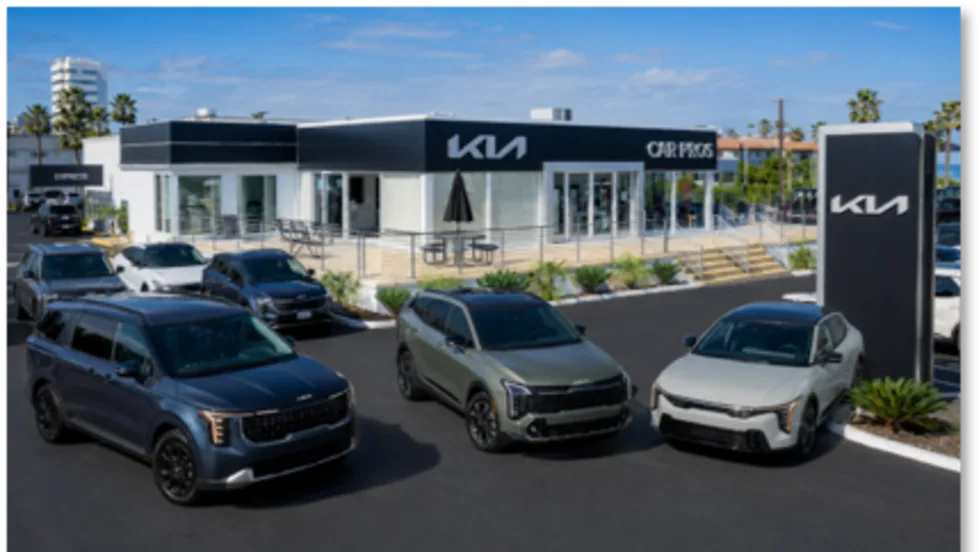
Auto Group Acquires Top-Performing Rooftop
Car Pros sold its Kia Huntington Beach location to Sutherlin Automotive Group, marking the buyer’s third location in Southern California.
Read More →
China as Pacesetter
Automotive leaders huddled on where North America stands in the global picture and how it can strengthen its position against the Asian juggernaut’s surging industry.
Read More →