



Cox: Franchised, Independent Dealers See Two Different Markets
Cox Automotive’s latest Dealer Sentiment Index shows a marked disparity in optimism and fear factors between America’s new- and used-car dealers.

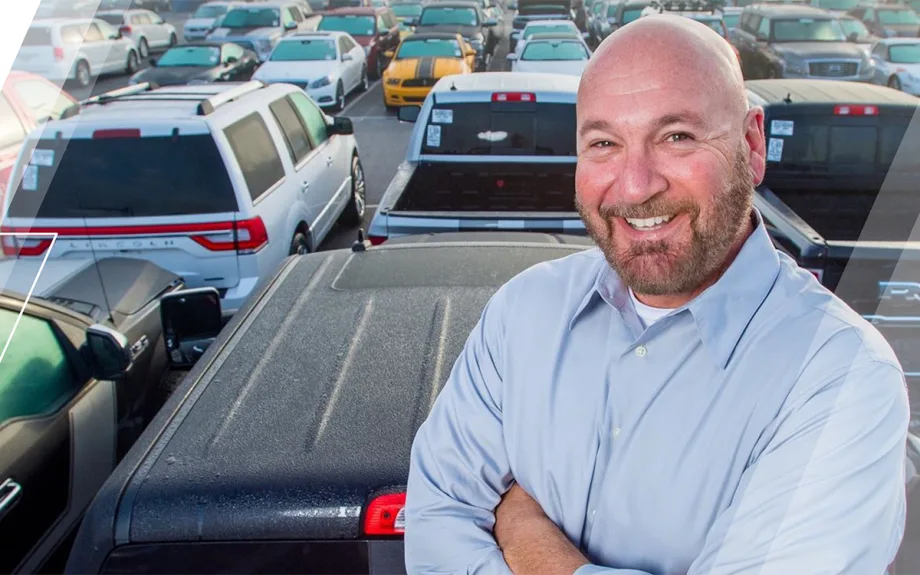
Cox Automotive’s Dealer Sentiment Index ticked up two points for franchised dealers and down two points for independent dealers heading into the third quarter.
Photo courtesy Cox Automotive
ATLANTA — According to the Q3 2019 Cox Automotive Dealer Sentiment Index, U.S. automobile dealers view the current market as negative, with an index score of 48.
Analysts noted the slight decrease from Q2’s score of 49 was not statistically significant. The index reading of 48 indicates that slightly more dealers feel that the current market is weak compared to the number who feel the current market is strong.
In many measures, however, the assessment of the U.S. auto market depends on what type of dealer you ask. Franchised auto dealers expressed a mostly positive view of the market. Independent dealers offered a different perspective.
Franchised dealers, for example, feel the current market is strong, with an index score of 56, a two-point increase from Q2. Independent dealers, on the other hand, feel the current market is weak, with an index score in Q3 of 46, a two-point decrease from Q2.
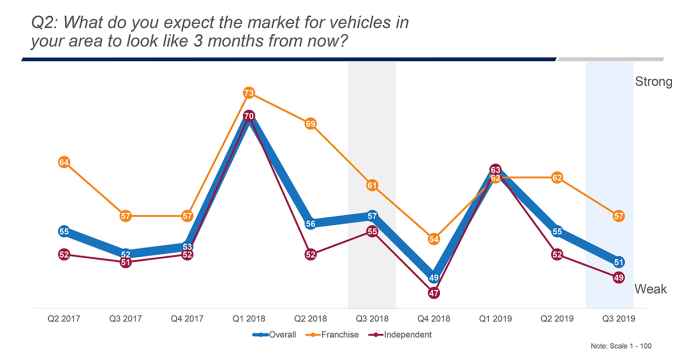
Expectations for the next quarter differ between the two groups as well. Franchised dealers continue to believe the market will remain strong, with an index score of 57. Independent dealers, conversely, expect the market to be weak in the next quarter. Their expectations score fell below 50 for only the second time since the CADSI began in Q2 2017.
“Sentiment consistently skews more positive for franchises compared to independents.”
For both groups, expectations for the future market are down from Q2 but still positive. The overall index score fell to 51 in Q3, below last year and last quarter. The decline in expectations was statistically significant from last quarter’s score of 55.
“Dealers are becoming less optimistic as they consider the future,” said Cox Automotive Chief Economist Jonathan Smoke. “We also continue to see a big difference in outlook by type of dealer, as sentiment consistently skews more positive for franchises compared to independents.”
When asked about factors holding back their businesses, dealers in aggregate reported no change from Q2 to Q3. “Market conditions” remained in the top spot as the most cited negative factor for both groups. “Competition” held in second place. “Limited inventory” remained No. 3, followed by “credit availability for consumers” and “expenses.”
Limited inventory and credit availability was more of a concern for independent dealers. Twenty-two percent of franchised dealers cited “staff turnover” as a top-five factor compared with only 5% of independent dealers.
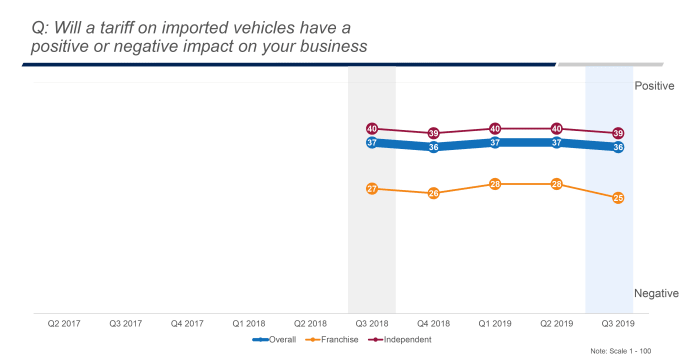
Both groups said costs continue to rise but agreed the threat of tariffs on imported vehicles and parts impacting their profitability is their most negative concern. Overall, only 8% of automobile dealers in the U.S. believe tariffs will have a positive impact on business profitability. Conversely, nearly six in 10 franchised dealers believe the impact will be negative. Independent dealers are more likely to see tariffs as having no impact on their business.
For the first time, dealers participating in the quarterly CADSI survey were asked about the state of the U.S. economy. On this front, there was perfect alignment between franchised and independent dealers. Both groups had an index score of 55, meaning more dealers feel the current U.S. economy is strong compared to the number who feel the current economy is weak.
To download the full report, click here.
Read: Dealer Sentiment ‘Remarkably Stable’ Despite Traffic, Profits
Originally posted on Auto Dealer Today
More Industry

Penske Auto Group Deal a Record
The deal to take the dealership and transportation services company private sets a new pace for industry buy-sell transactions.
Read More →
War Toll a Damper on Used Auto Prices
Cox Automotive found wholesale depreciation to be elevated in September amid high fuel prices and this year's unusual hurricane season.
Read More →
Bridge the Maintenance Gap
With many drivers missing recommended maintenance, service departments offering transparency and efficiency have a better chance of reaching financially strained consumers.
Read More →
California Store Has New Owner
The longtime dealership in the northern part of the state is known for robust fleet sales and has served the state capital for 115 years.
Read More →
BMW Plant Pursues Cleaner Energy
BMW Group Plant Leipzig has utilized hydrogen to help power its production since 2013, but a new pipeline is planned to take it to another level.
Read More →
Auto Affordability Inches Up
The latest Cox Automotive and Moody’s Analytics index shows a slight increase in new-vehicle affordability despite high prices.
Read More →
Ohio Auto Group Under New Ownership
After 79 years with the Schluter family, Mansfield Auto Group has been acquired by Missouri-based Clement Auto Group.
Read More →
RV Group Expands Carolina Footprint
Blue Compass RV Columbia Northeast is the 13th RV dealership owned by Blue Compass in the Carolinas.
Read More →
Agent Acumen
An Agent Summit panel of people who’ve been supporting auto dealers for years gave both timely and timeless advice for those starting out or mulling the prospect.
Read More →
Missed Maintenance Creates Opportunity
As families get back on the road and into daily school routines, service drives have an opportunity to capture customers who are behind on recommended vehicle maintenance.
Read More →