



Retros vs. Reinsurance: The Next Big Opportunity for Agents

Retros vs. Reinsurance: The Next Big Opportunity for Agents
Go Google “dealership admin fee” and check out the very first result. Go ahead. We’ll wait for you here.
Welcome back. And now you know that the first hit is from your buddies at TrueCar. And that the article is all about the lesser-known fees that dealerships are sometimes known to charge their customers. In the article, TrueCar warns the reader against paying “unnecessary” charges such as floorplan fees, vehicle prep fees and (especially) admin fees.
Here’s the dilemma that your dealers find themselves in: Since some dealerships are infamous for charging excessive fees to their customers, all dealers automatically assume that they are in turn getting shortchanged by their own providers’ admin fees. And the irony is, they are sometimes right, especially when it comes to their reinsured F&I program. Right or wrong, as an agent, you are often called upon to explain the intricacies of a reinsurance program, and fees are no exception.
Here are some of these nefarious reinsurance fees that are either unnecessary or bloated beyond belief:
Loss adjustment expenses (LAE)
Premium tax
Ceding fees
Capitalization fees
State taxes
Some dealers have no idea what they’re paying per reinsured contract for any of these additional fees, because they’re often cleverly hidden in piles of agreements.
And this is precisely why the “general” admin fee that dealers are quoted for their reinsurance program is almost never correct: Some administrators have the nerve to say their per-contract fee is $60, but once you add up all the secret nonsense fees, it’s more like $260.
This deception is a key factor as to why more dealers don’t reinsure their F&I products in the first place: They’re skeptical that the benefits of reinsurance are worth paying through the nose for in admin fees. When administrators try to hide the fees, it only fuels the skepticism.
Prolonged skepticism about reinsurance usually results in one of two outcomes: The dealer will either decide to keep foregoing any participation at all in their own products’ underwriting profits (ouch), or the dealer will decide to go with a retrocession program, also known as a “retro.”
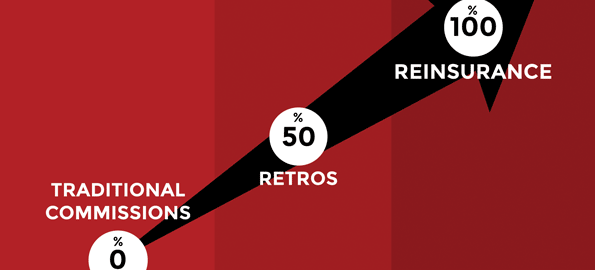
Retros are essentially a compromise between traditional dealer commissions and dealer reinsurance. With a retro, the F&I program administrator or agency is reinsuring the dealers’ products for themselves — and then turning around and paying a part of their proceeds back to the dealer as a taxable commission.
Because a retro is taxed at the dealership’s tax bracket level — and is roughly 50% fewer dollars to start with — it is far less desirable for a dealer principal than participating fully in reinsurance. Everyone’s situation is different, but a rough guide to the difference in income for dealers is that a retro check represents half of the underwriting profit that could have been generated using reinsurance.
Many dealers don’t realize that reinsurance is happening 100% of the time with their F&I programs, even with the programs that only pay them a dealer commission. What they don’t see is the reinsurance that takes place farther up the food chain: Either their agent is reinsuring, or the program administrator is reinsuring, or the claims adjudicator is reinsuring, or the insurance company issuing the clip is reinsuring. But someone, somewhere, is always reinsuring the dealers’ programs. The reason for this is that automotive F&I programs have so much actuarial data available that underwriting profits are a dependable outcome.
So why would a dealer choose a retro program, if it means that they only make half of what they could make using reinsurance? Well, if a dealer is a smaller independent store, then the lower sales volume could mean that it’s their only participation option with their particular provider.
A second reason that a dealer is encouraged to “do a retro” is that many F&I program administrators love the profits they make off reinsuring the dealer’s products — which they would lose when dealers reinsure themselves. So, in these instances, the dealer is told things like: “Oh, you don’t want to go through the hassle of reinsurance. You definitely should do a retro!” These words should strike fear in any franchise dealer, as well as many independent dealers — because it’s a dead giveaway that the F&I provider does not have anyone’s interest at heart besides their own.
It’s true that, depending upon the provider, a reinsurance program takes a few more pieces of paperwork than a retro program does, which in turn takes a few more signatures than a traditional commission program. But you have to ask yourself what the return on investment is for that extra hour it takes to set up reinsurance for a dealer, and the answer is invariably a pleasant surprise for those who take the time to find out.
Case in point: A good-sized dealer (seven stores) with good-sized volume was once a customer of a very large F&I product provider. At the advice of this product provider, only vehicle service contracts and theft/etch were available as participatory products, and only through the provider’s retro program. (All other F&I products were traditionally commissioned, again at the provider’s advice: “Mr./Ms. Dealer, those products are just too risky to participate in!” Yeah, right.) For years, this dealer group happily gobbled up the highly taxed $600,000 retro check that arrived every January. Once everyone realized that this provider was happily reinsuring all of this dealer group’s F&I products in the provider’s own program — thus denying the dealer principal millions of tax-advantaged dollars annually — then the doors were flung wide for a new agency with a new reinsurance provider.
This is the ripe opportunity for agents. Retros are truly low-hanging fruit in today’s F&I scene. You can walk your dealer clients through the process of really participating in underwriting profits. For those agents who have little experience with reinsurance, the best bet is to partner with a program provider who believes in reinsurance education. For those agents who have been around a while, it’s important to know just how interested dealers are in reinsurance today. The curiosity has never been stronger.
Taking the time to show your dealer clients how reinsurance of many (or most) of their F&I products could dramatically improve their chance to make a “dent in the universe” will result in a more stable book of business for you — not to mention that it creates loyal customers for life.
More Industry

Gone to the Dogs
A Stellantis brand decided to have some fun with one of its SUVs’ design to address growing emphasis on family pets.
Read More →
OEM Poll Sees Industry Evolution
Kerrigan Advisors’ survey of automakers finds that tariffs, technology, network tightening and other factors are poised to reshape auto retail.
Read More →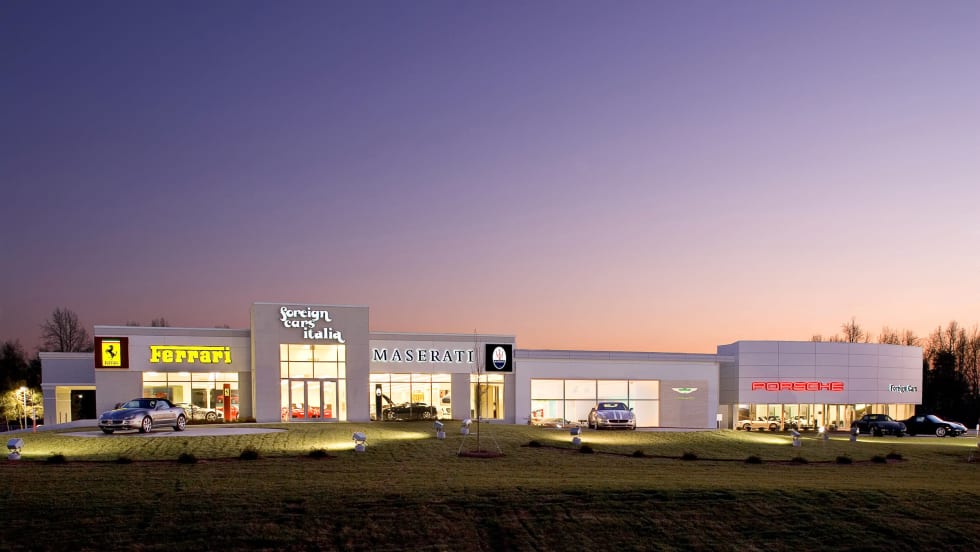
Luxe N.C. Dealerships Change Hands
A collection of Italian and English brand franchises were handed off to the owner’s friend in the business and include the Carolinas’ only Ferrari retail stores.
Read More →
Exposure Drives Interest in Chinese Cars
At a recent demonstration, consumers had the chance to ride in a Chinese-branded vehicle, a firsthand experience that improved their perceptions and purchase intent.
Read More →
Automotive Consumers Sink Further in Debt
Most financing metrics hit records in the second quarter as more buyers locked themselves into long terms and high monthly payments.
Read More →
Agent Advocate
Rob Mancuso, who comes from a long line of auto dealers, values general agents’ place in the industry and makes a case for them taking an even bigger seat at the table.
Read More →
Driving Under Distraction
Though consumers gave higher marks to new vehicles in JD Power’s most recent initial-quality poll, high-tech interference worsened, pointing to craving for simplicity.
Read More →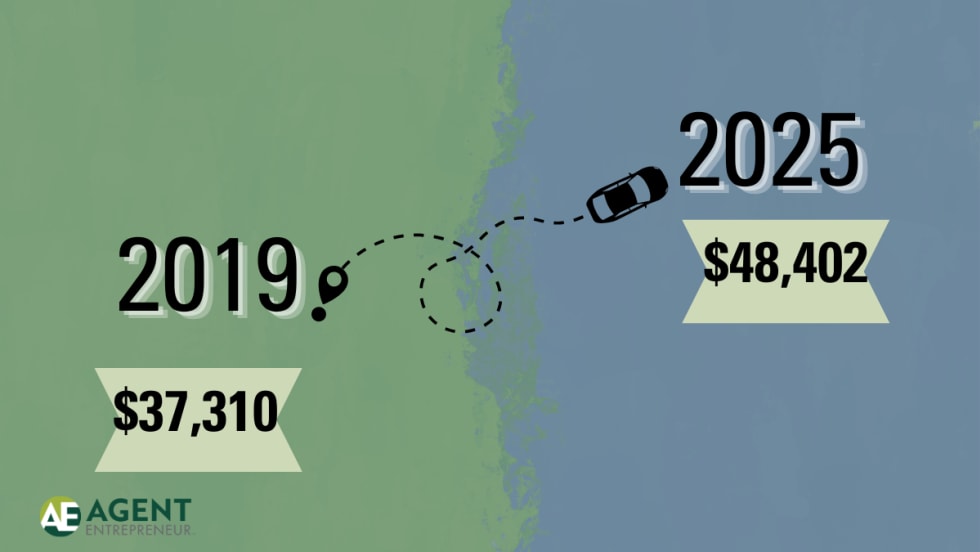
Affordable New Cars a Thing of the Past
More than one out of five new vehicles sell for more than $60,000, according to Edmunds. That's up 7% compared to prepandemic 2019.
Read More →
State Follows Federal Warning on Auto Ads
The Massachusetts attorney general cautioned the state’s automotive dealers to be upfront with the consuming public about their vehicle prices or risk punishment.
Read More →
Consumer Outlook on the Rise
Younger generations are feeling more positive about their financial futures and current affordability pressures than older generations, according to recent TransUnion data.
Read More →