



Leveraging Prepaid Maintenance


Leveraging Prepaid Maintenance
2016 marks the end of an uptick cycle with vehicle sales. Starting this year, industry experts expect vehicle sales to slow down and possibly plateau with little to no growth in overall unit sales. For dealers, this means customer retention and brand enhancement will become more critical to gain market share. Agents, in turn, can expect dealers to rely more heavily on them to help drive more service customers and expand in a stagnant market.
Meanwhile, the Consumer Financial Protection Bureau (CFPB)’s influence will continue to grow among lenders. As more lenders implement flat-fee models or caps on dealer markup, agents will feel pressure to help dealers reduce their reliance on finance reserves. However, adding products to the already crowded F&I menu can be tricky. Balancing CSI, the speed of the finance process, and providing products that make sense for the customer, as well as the dealership, is a difficult task.
One way to address current dealer needs is through a cutting-edge, customer-centric maintenance program designed to increase F&I profitability and service drive retention. Yes, I said maintenance programs. We have all heard statistics around prepaid maintenance driving higher customer retention rates — and it remains true. According to J.D. Power, maintenance packages help drive higher repurchase rates among owners, with 72% of those who have a complimentary or prepaid maintenance package repurchasing the same vehicle make on their next purchase.
A Powerful Tool
Even with statistics to back it up, this category of F&I products is one of the most overlooked and underutilized profit drivers for dealerships. But with the right foundation, it could be one of the greatest customer-retention tools at a dealer’s disposal. So rather than discuss the benefits of prepaid maintenance, let’s discuss how to effectively utilize it, starting with evaluating your dealership partners’ current prepaid maintenance programs.
The next time you visit your dealership partners, assess how successful each dealer is in offering prepaid maintenance on the sales floor, in the F&I office and in the service drive. Ask them the following questions:
What is their profit per retail unit (PRU) on maintenance contracts? How many are sold compared to the number of cars sold in a given week or month?
Does the dealership give away any maintenance contracts as a brand-enhancing value proposition? If so, how many?
Do they offer different levels of maintenance coverage? Of the contracts sold, how many are upsells?
Where on the F&I menu is the program positioned and how it is it sold?
What benchmarks does the dealership use to hold its team members accountable for selling maintenance contracts?
The answers to these questions will give you a clearer picture of whether a dealer is utilizing prepaid maintenance to meet their profit goals. Use the answers as a baseline to determine where you can plug in to help your clients achieve greater results.
Not Just Any Program Will Do
Next, evaluate the maintenance program itself. Underutilization could be due to not having the right maintenance program in place, poor handling of claims reserves, negative customer service from the administrator, lack of training within the dealership or ineffective compensation incentives.
Review the dealership’s top-selling inventory, customer demographics and surrounding geography, and ask, “Does the current maintenance program cover the required maintenance for the types of vehicles sold and the conditions in which the vehicles are driven?” If not, customers might not find it valuable, which could be another significant reason for a product’s underutilization.
Beyond looking at the product itself, it’s also important to partner with the right administrator to equip the dealership with tools to sell it.
Is the administrator backed by an A.M. Best rated underwriter/insurer? This signifies the administrator’s ability to pay claims and create products beneficial to both customers and dealerships.
How does the administrator benchmark customer service excellence? The claims process must be incredibly efficient for the service department. Is their current process automated? If not, what is their average speed to answer claims calls and average call handle time? How quickly do they pay claims?
Dealers benefit more from an administrator with strong customer service standards and happy customers in a couple of ways: First, it signifies that the products the dealer sells will be better received and seen as more valuable by customers. Second, those happy customers who bought a maintenance program from your dealer partners will be more likely to return to the selling dealership for their next vehicle because of the positive ownership experience the dealership delivered.
Does the administrator provide ongoing training and engagement to ensure the program’s success? No F&I product is successful without the right support, training and dealership buy-in. Seems obvious, but when we are all honest with ourselves, we know ongoing training is sorely lacking in many dealership environments. And as an agent, there’s only so much training you can provide without the in-depth knowledge of an administrator. With that in mind, selecting the right maintenance product for your dealership partners also comes down to the engagement model of the product administrator. Ask whether they do any or all of the following:
Conduct formal product installation and market launches
Implement quarterly account planning and performance tracking
Work with dealerships to develop incentivizing pay plans
Provide ongoing F&I development and one-on-one training
Successful prepaid maintenance programs are backed by dealerships equipped with ongoing training and development. Solid programs are priced for both effective claims management and dealership profit, and they are deemed valuable by customers.
Creating a Supportive Culture
To further ensure successful dealership utilization, work with your product administrator to focus training on the differences of selling prepaid maintenance compared to other F&I products.
While it is common practice for dealerships to maximize profit on an F&I product like a vehicle service contract, this approach is not effective when selling prepaid maintenance. When developing F&I pay plans, and in training, it’s important dealerships don’t apply the same markup rules they do for other products. In fact, it’s better to almost give the product away for little margin. This will help F&I managers demonstrate the value to the customer and how the dealership is working to save them money, making it very easy for managers to sell.
Prepaid maintenance programs are designed to be sold for a small margin upfront, for the purpose of gaining customer loyalty and attaining a larger, long-term margin on repeat business in both sales and the service drive.
Now, at this point, most dealer principals and general managers might think, “That’s well and good for my dealership, but my guys won’t sell it if they can’t make something on it too.”
This is a very valid point. In fact, the No. 1 reason most prepaid maintenance programs are underutilized is because dealership employees aren’t motivated to sell it. You can overcome this obstacle by creating a supportive culture around the program.
Cultivating this culture starts at the top. General managers, sales managers, F&I directors and service managers must buy into the idea of making prepaid maintenance central to their operations. Sales and service-drive teams must be trained on when and how to tee up the conversation about prepaid maintenance during the sales process. F&I managers need in-depth product knowledge training. Everyone needs training on asking questions to help position the program as relevant and valuable to customers. Lastly, tie the program to the dealership’s values. If they tout being family-oriented, then train team members to position the program as another way the dealership takes care of its customers like family.
Beyond training, one motivating factor in any dealership is pay plan development. Review the pay plans for your dealer partners and walk them through a retooling process for F&I, sales and the service drive, all geared specifically toward prepaid maintenance programs. Have them consider paying F&I managers on the number of programs sold versus the margin increase.
Another alternative is pay the same flat dollar amount derived directly from the markup. This ensures consistency and prevents managers from trying to mark the product up to maximize a percentage of the gross profit payout, resulting in a lack of value for the customer. Use this same approach with pay plans for sales, paying them for every handoff to F&I where they proactively informed the customer about the program during the sales cycle and when the customer bought the program prior to leaving.
On the service side, it’s important to remember that the dealership isn’t looking to make a huge profit on the individual sale of each program. This gives dealerships the opportunity to empower service managers to sell the program to their customers outside of a vehicle purchase. This further cements in the dealership’s customers’ minds the value they can receive from the dealership, as well as the dealership culture of putting customers’ needs first. To motivate service managers to sell the programs, it’s important to pay them on the number of programs sold. However, it’s even more important to make it easy for them to get paid.
If dealership team members have to verify the number of programs sold in three different ways — and work with accounting to get paid — the service drive simply won’t do it. While sales and F&I might have more time in the day to complete extra paperwork, the service drive doesn’t. The average service drive manager handles five times more transactions than anyone else in the dealership, and is working at a much faster pace. They don’t have time to jump through hoops to get paid and won’t do something that makes their job more difficult. So more important than determining what a service manager will be paid, focus on making the process to be paid easy for successful deployment in the service drive.
As dealers place higher demands on their agent partners, we will see agents become more efficient with their clients. If you’re looking for a deep and long-term relationship, consider providing a solution that keeps dealers thinking about how to increase market share and profitability, like successful implementation of prepaid maintenance.
The topic of prepaid maintenance repeatedly comes up because it has a lot of potential. While industry insiders can probably list the benefits of prepaid maintenance off the top of their heads, very few know how to actually implement it effectively. Those agents who use it to differentiate their service offering will better position themselves in a crowded market.
More Industry

Penske Auto Group Deal a Record
The deal to take the dealership and transportation services company private sets a new pace for industry buy-sell transactions.
Read More →
War Toll a Damper on Used Auto Prices
Cox Automotive found wholesale depreciation to be elevated in September amid high fuel prices and this year's unusual hurricane season.
Read More →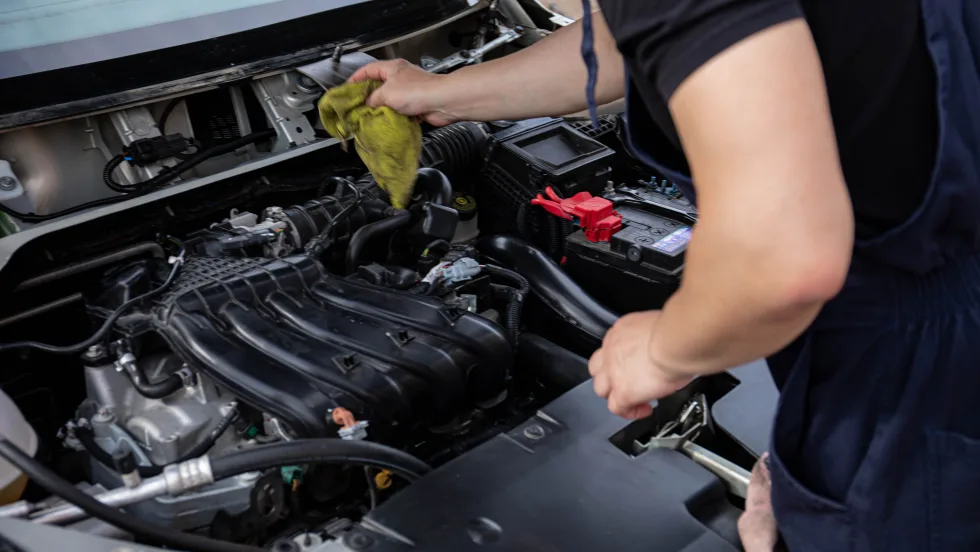
Bridge the Maintenance Gap
With many drivers missing recommended maintenance, service departments offering transparency and efficiency have a better chance of reaching financially strained consumers.
Read More →
California Store Has New Owner
The longtime dealership in the northern part of the state is known for robust fleet sales and has served the state capital for 115 years.
Read More →
BMW Plant Pursues Cleaner Energy
BMW Group Plant Leipzig has utilized hydrogen to help power its production since 2013, but a new pipeline is planned to take it to another level.
Read More →
Auto Affordability Inches Up
The latest Cox Automotive and Moody’s Analytics index shows a slight increase in new-vehicle affordability despite high prices.
Read More →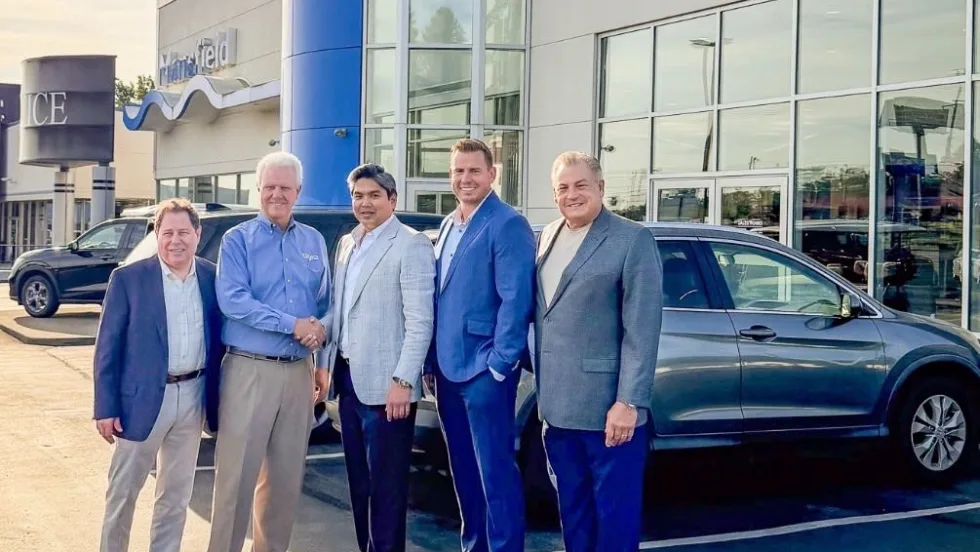
Ohio Auto Group Under New Ownership
After 79 years with the Schluter family, Mansfield Auto Group has been acquired by Missouri-based Clement Auto Group.
Read More →
RV Group Expands Carolina Footprint
Blue Compass RV Columbia Northeast is the 13th RV dealership owned by Blue Compass in the Carolinas.
Read More →
Agent Acumen
An Agent Summit panel of people who’ve been supporting auto dealers for years gave both timely and timeless advice for those starting out or mulling the prospect.
Read More →
Missed Maintenance Creates Opportunity
As families get back on the road and into daily school routines, service drives have an opportunity to capture customers who are behind on recommended vehicle maintenance.
Read More →