



Correcting the Chip Shortage Will Take Time
As the automotive industry spins its wheels waiting for chips, analysts say the road to correcting the chip shortage won’t clear until at least 2022.
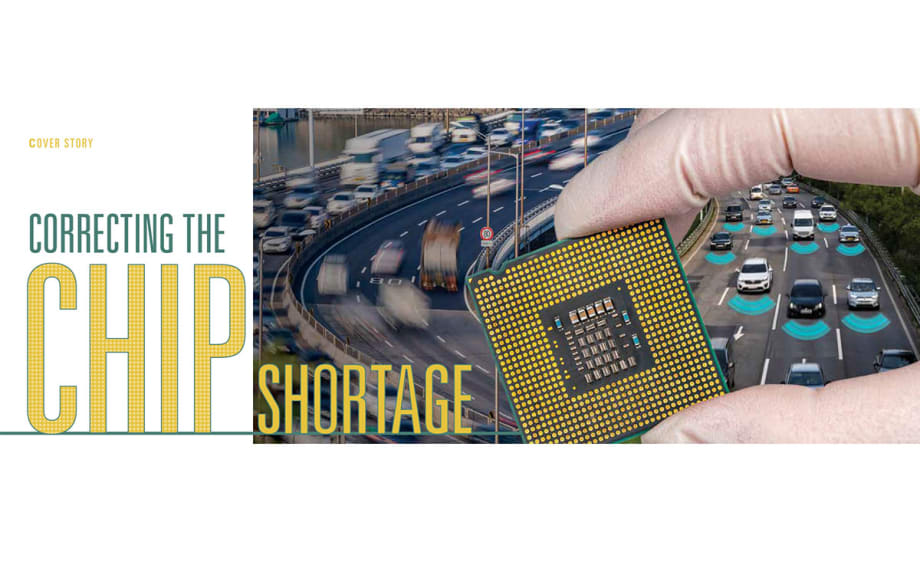
As the automotive industry spins its wheels waiting for chips, analysts say the road to correcting the chip shortage won’t clear until at least 2022.
IMAGE: Getty
A recent “60 Minutes” interview with Pat Gelsinger of Intel, the largest U.S. maker of semiconductor chips, shed light on the fragility of the computer chip supply chain.
According to Gelsinger, the U.S. once produced 37% of the world’s semiconductor chips. Today that number is 12% with 75% of all chips made in Asia. Further, 25 companies once manufactured the quarter-sized chips. Now just three companies make them, with Intel being the only U.S. manufacturer. Worse yet, Intel makes chips for many industries, but only recently entered the automotive space.
Intel broke ground on two fabrication plants in Arizona, costing the company $20 billion. The company also plans a $500 million upgrade of its plant in New Mexico to help ease the shortage.
The White House also has responded to the chip shortage with a $50 billion plan to inject new life into the U.S. semiconductor industry as part of the Biden Administration’s infrastructure plan.
And Taiwan is doing what it can to address the global shortage of semiconductors, reported Economy Minister Wang Mei-hua, when U.S. senators from Ohio and Michigan pressed the Taiwanese government to help address the shortage. She said Taiwan’s production of MCU, or microcontroller units commonly used for auto chips, rose 60% in the first half of 2021.
It’s not so easy to make up the shortage, TSMC Chairman Mark Liu told 60 Minutes. The company, headquartered in Hsinchu, Taiwan, is a leading supplier of automotive chips. He notes, though the industry saw the shortage as early as December 2020, the complexity of the automotive semiconductor chip supply chain complicates catching up.
“While the industry has taken steps to address near-term constraints, it could still take a couple of years for the ecosystem to address shortages of foundry capacity, substrates and components,” Gelsinger told a virtual session of the Computex trade show in Taipei in May.
Matt Degen, editor at Kelley Blue Book, agrees with this dire prediction. “It does not look like it’s going to be easing anytime soon,” he says. “Some analysts say this shortage could last into next year and even into 2023. It really depends on the output of these chips and getting them into vehicles.”
He adds, “Supply shortages can really affect how production goes and they can come out of nowhere. Earlier this year there was a rubber shortage and a foam shortage affecting seat materials. We are learning just how shortages can impact supply. We used to have a two-month supply of vehicles. A consumer could go out and choose from 10 different vehicles. Now they cannot find the vehicle they’re looking for.”
Even with supply pressures, Brian Moody, executive editor at Autotrader, says he sees a light at the end of the tunnel. “By the end of the year, the shortage will ease somewhat,” he says. “We will see impacts that last through 2022. But a year from now, manufacturers will reduce their inventory shortages and customers will be more likely to get the car they want.”
Other Impacts Complicate the Shortage
Other impacts continue to rattle semiconductor supply chains as well, Degen adds.
The chip shortage stems from a perfect storm where the pandemic shut down automotive plants and their suppliers. Automakers responded to COVID shutdowns by cancelling orders for chips because they assumed the economy would tank. The electronics industry was more than happy to scoop up the excess chip supply for laptops, gaming consoles and other electronics that experienced booming sales during the shutdowns. Sanctions against Chinese tech companies further compounded the crisis.
Fast forward to 2021, when demand exploded for automobiles as the U.S. emerged from its pandemic cocoon. Suddenly, demand for vehicles was there, but the semiconductor chips manufacturers needed to produce them were not.
“It all goes back to last year, when factories shut down; not just the automotive manufacturers but their suppliers,” Degen says. “Some of them are still catching up.”
Further complicating matters, an ongoing shipping crisis makes it difficult to move supplies from one part of the globe to another. Severe weather adds to manufacturing and shipping delays and now concerns about the Delta variant of COVID-19 and new outbreaks are shutting down ports and manufacturing facilities in Asia.
Automaker Responses Continue
In the meantime, automakers are taking drastic measures in response to the shortage.
General Motors (GM) halted the assembly of pickup trucks in several plants in late July because the company lacked enough computer chips to complete the job. At the time, GM’s CEO Mary Barra was quoted as saying: “I do think we’ll continue to see impact this year, and it will have a tail into next year.” GM has since announced plans to close its Orion Assembly Plant, which was supposed to open before Labor Day.
Ford plans to slow production at its Kansas City F-150 plant. Nissan Motor Co. halted output for two weeks at a Tennessee plant because of coronavirus outbreaks in Malaysia and chip shortages. Japan’s major automakers reported producing fewer vehicles in July when they released their global production figures on August 30. Honda’s output fell 23%, while production decreased 20% for Mazda, 18% for Subaru, 16% for Nissan and 4% for Daihatsu. All cited the global chip shortage and COVID-19 impacts in Southeast Asia as the reasons. And while Toyota reported an 11% increase in production, the automaker shaved global production by 360,000 vehicles for September, marking a 40% decrease.
All in, the global auto industry will produce 1.5 million to 5 million fewer vehicles this year than originally planned because of supply constraints, according to the consulting firm AlixPartners.
“Some manufacturers only have a one- to two-day supply of vehicles right now,” Degen says. “We used to say a 45-day supply was pretty tight and 60 was about normal. When you’re talking single or low double-digit days of inventory, that’s crazy.”
Shortage Affects Vehicle Features
The shortage not only affects inventory levels, but it also impacts the features vehicles offer, reports Moody.
Semiconductor chips are tiny transistors made of silicon that run software, manipulate data and control the functions of electric devices, including those found in automobiles.
As cars become computers on wheels and include features like heads-up displays, backup cameras, autonomous driving aids, cellphone integration, and high-performance engine elements, they need more and more chips. “These chips control everything from climate control systems to the engine and timing,” says Degen. “A lot of times vehicles cannot operate without these chips.”
The shortage has impacted features like GM’s Active Fuel Management System, which deactivates four of the engine’s eight cylinders in light load driving conditions to maximize fuel economy, reports Moody. “Impacts will vary by manufacturer,” he adds. “Ford, for example, knows it only has a certain number of chips available and reallocates them to higher volume automobiles and critical vehicle functions.”
Degen agrees, pointing out manufacturers now designate available chips to high-profit vehicles like trucks and SUVs. They also reduce the chips needed by removing ancillary features. He explains, “General Motors is conserving chips by not having the engine start-stop feature when the vehicle idles. This feature saves on gas, shutting down the vehicle at stoplights and stuff. It’s not a critical loss, however. Most people shut off this feature, anyway.”
Moody reports GM is giving consumers a $50 discount for opting out of this feature when purchasing its larger SUVs.
He adds, “Manufacturers also have removed HD radio capabilities. These steps help them get around the shortage and still sell vehicles.”
When the chip shortage impacts fundamental vehicle operations like fuel combustion, Degen notes manufacturers build the vehicles, but they sit on site until chips become available.
Tesla has taken another approach. The innovative automaker has adapted its vehicles to work with different chips. “They have always been a player that does things outside the traditional rules of the automotive industry. But they are showing it can be done,” Degen says.
Shortage Pushes Prices Up
In July, the average new vehicle price hit $41,044, according to J.D. Power’s most recent U.S. Automotive Forecast. The firm attributed the increase to skyrocketing demand and limited inventory.
Dealers had roughly 932,000 new vehicles for sale across the U.S. at the end of July, compared to 3.1 million two years ago, J.D. Power reported. The forecast predicted new vehicle sales in 2021 will reach 15 million units, down from 16.9 million in 2019.
“People are paying over sticker price,” says Moody. In fact, purchasers on the KIA forum report paying up to 19% over sticker price for the popular three-seat SUV.
Used vehicle prices also hit new highs. “When people cannot find a new vehicle, they often look for a used one. That has put pressure on used vehicles,” Degen says. “A recent study showed used vehicle prices were up 28% year over year. I’ve been working in the industry nearly 15 years, and I’ve seen nothing like this.”
Because prices hinge on supply and the chip shortage continues to constrain supply, Degen cautions consumers to expect to pay more for vehicles for the rest of the year. “We’re not expecting things to ease until late this year,” he says. “This will not go away tomorrow. It’s going to take a while for prices to stabilize.”
Still, Moody adds some reassurance, saying: “Prices will come back down.”
More Industry

Penske Auto Group Deal a Record
The deal to take the dealership and transportation services company private sets a new pace for industry buy-sell transactions.
Read More →
War Toll a Damper on Used Auto Prices
Cox Automotive found wholesale depreciation to be elevated in September amid high fuel prices and this year's unusual hurricane season.
Read More →
Bridge the Maintenance Gap
With many drivers missing recommended maintenance, service departments offering transparency and efficiency have a better chance of reaching financially strained consumers.
Read More →
California Store Has New Owner
The longtime dealership in the northern part of the state is known for robust fleet sales and has served the state capital for 115 years.
Read More →
BMW Plant Pursues Cleaner Energy
BMW Group Plant Leipzig has utilized hydrogen to help power its production since 2013, but a new pipeline is planned to take it to another level.
Read More →
Auto Affordability Inches Up
The latest Cox Automotive and Moody’s Analytics index shows a slight increase in new-vehicle affordability despite high prices.
Read More →
Ohio Auto Group Under New Ownership
After 79 years with the Schluter family, Mansfield Auto Group has been acquired by Missouri-based Clement Auto Group.
Read More →
RV Group Expands Carolina Footprint
Blue Compass RV Columbia Northeast is the 13th RV dealership owned by Blue Compass in the Carolinas.
Read More →
Agent Acumen
An Agent Summit panel of people who’ve been supporting auto dealers for years gave both timely and timeless advice for those starting out or mulling the prospect.
Read More →
Missed Maintenance Creates Opportunity
As families get back on the road and into daily school routines, service drives have an opportunity to capture customers who are behind on recommended vehicle maintenance.
Read More →