



Carryover Rate Important for Auto Retailers
Understanding how it plays into inventory risk management is an important consideration.
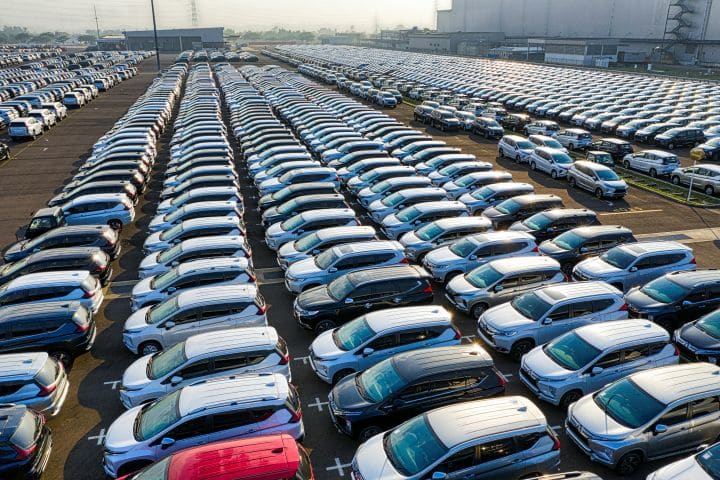
A back-to-basics mentality partnerships are helping dealers ensure proper inventory risk management.
Pexels/Tom Fisk
Auto dealerships face a perpetual challenge: balancing inventory to meet customer demand without overstocking, which can lead to carryover inventory. Carryover inventory—vehicles that remain unsold for extended periods—ties up capital, incurs holding costs, and often requires discounting and markdowns to clear the lot. This scenario impacts profitability and creates a cycle of reduced margins in today’s highly competitive market.
Traditionally, dealerships relied on historical sales data, market trends, and personal experience to manage inventory. However, those methods often lack precision and fail to account for rapidly changing market dynamics. A “back-to-basics” mentality, combined with partners that offer advanced data analytics, artificial intelligence, and predictive modeling – technological advancements that offer granular insights and actionable intelligence – are helping dealers ensure proper inventory risk management.
Inventory Risk Management in the Data Age
Car dealers today have a wealth of data to help sell vehicles from their lots. It’s no longer just about finding the vehicle identification number. Today, dealers are leveraging 190 different data points to help sell a car. They can even tell the type of weather a car sat under, which can help pinpoint slow sales during bad-weather weekends, for example.
Every dealer has a different success rate with different models. Deep data and machine learning are helping dealers determine their true competitive levels against other dealerships down the road to move vehicles.
Because of the heavy competition, dealers for a long time have been focused on their days’ supply rates and days-to-sale rates for internal benchmarking for monthly goals.
This is extremely critical data, especially as dealers try to constantly identify the key sales trends in the new-versus-used side of their business. Inventory is growing faster for new compared with used.
Legacy Inventory-Management Philosophies
The traditional thinking for many dealers is that you have to move a used car in 30 days and a new car or truck in 45 days. And this is why it’s important to be focused on the carryover rate, because it can be a significant leading indicator to help a dealer drive profitability when he or she can drill down into the correlation between length of carryover, or no carryover, versus the rate and severity of any markdown activity on a particular vehicle.
Profit levels are always great if a vehicle moves within its 30- or 45-day expected period, but profit levels are significantly diminished if it exceeds that time frame. When you can show how this timing is affecting the bottom line of a dealer, all of their old discipline comes back, and they return to the basics and fundamentals of selling a vehicle.
No Guarantees With Markdowns
It’s important to understand that carryover rates, when they rise, can be different depending on the brand. When a vehicle does carry over past its prime selling days, that is when dealers begin to panic and start slashing prices. However, while markdowns have traditionally been viewed as a surefire method to boost sales, the complexities of modern markets reveal that that strategy is fraught with misconceptions.
One of the most general beliefs in the auto industry is that reducing a vehicle’s price will automatically attract more views to its vehicle detail page and directly translate into sales.
However, real-world data paints a different picture. Approximately 69% of used-car listings and 76% of new-car listings do not experience a significant increase in organic or direct views following a price reduction. This suggests that merely lowering the price does not necessarily make the vehicle more attractive to potential buyers. Additionally, any brief spike in activity often comes from repeat visitors, who are already familiar with the vehicle and are alerted to price changes, rather than new shoppers.
Another legacy viewpoint is that a single price reduction will secure a sale. In reality, vehicles that are eventually sold often undergo three to four price reductions. That pattern demonstrates that relying on one markdown to close a sale is far from realistic, which is why dealers need to adopt a more sophisticated approach, integrating multiple factors, such as market trends, customer behavior, and competitive pricing.
AI and Machine Learning Enhance Decision-Making
Artificial intelligence and machine learning take data analytics a step further by enabling predictive capabilities in managing carryovers. AI systems can process vast amounts of data much faster than people, identifying trends and making predictions with remarkable accuracy. In the context of auto retailers, AI can predict which vehicles are likely to sell quickly and which might be carried over.
Machine-learning algorithms can analyze factors, such as past sales data, market trends, economic indicators, and even social media sentiment, to forecast demand for specific models. The predictions help dealerships make informed decisions about which vehicles to order and in what quantities. By aligning inventory with predicted demand, dealerships can minimize the risk of overstocking and understocking, leading to an imbalance of carryover inventory.
Predictive Modeling: Anticipating Market Dynamics
Predictive modeling is a statistical technique now being used alongside historical data to forecast future outcomes. In auto dealerships, it can be applied to various aspects of inventory risk management. For example, it can predict the depreciation rate of different vehicle models, helping dealerships price their inventory more effectively.
One practical application is predicting the optimal time to mark down a vehicle. By analyzing data on how long similar vehicles have taken to sell at different price points, especially in local regions, predictive models can recommend when to reduce prices to accelerate sales without eroding profitability. What’s more, the data can be used to inform a dealer when a vehicle should not be marked down, ensuring better profitability from analytical visibility that prevents an over-reliance on traditional gut instinct. That ensures dealerships can clear aging inventory at its maximum profit potential before it becomes a financial burden.
As technology continues to evolve, the role of advanced data analytics, AI and predictive modeling in auto dealerships will only grow. Future advancements may include more sophisticated AI algorithms that can predict market trends with even greater accuracy, as well as enhanced data integration platforms that provide real-time insights across all dealership operations. With that level of visibility, dealers will better understand the carryover risk on each vehicle – new and used – on their lots and will have the tools they need to properly manage inventory risk levels to maximize profitability.
Len Short is executive chairman of Lotlinx, provider of an inventory platform that enables dealers to automatically adapt to market dynamics, mitigating inventory risk through VIN-specific strategies.
EDITOR’S NOTE: This article was authored and edited according to Auto Dealer Today editorial standards and style. Opinions expressed may not reflect that of the publication.
Originally posted on Auto Dealer Today
More Industry

Penske Auto Group Deal a Record
The deal to take the dealership and transportation services company private sets a new pace for industry buy-sell transactions.
Read More →
War Toll a Damper on Used Auto Prices
Cox Automotive found wholesale depreciation to be elevated in September amid high fuel prices and this year's unusual hurricane season.
Read More →
Bridge the Maintenance Gap
With many drivers missing recommended maintenance, service departments offering transparency and efficiency have a better chance of reaching financially strained consumers.
Read More →
California Store Has New Owner
The longtime dealership in the northern part of the state is known for robust fleet sales and has served the state capital for 115 years.
Read More →
BMW Plant Pursues Cleaner Energy
BMW Group Plant Leipzig has utilized hydrogen to help power its production since 2013, but a new pipeline is planned to take it to another level.
Read More →
Auto Affordability Inches Up
The latest Cox Automotive and Moody’s Analytics index shows a slight increase in new-vehicle affordability despite high prices.
Read More →
Ohio Auto Group Under New Ownership
After 79 years with the Schluter family, Mansfield Auto Group has been acquired by Missouri-based Clement Auto Group.
Read More →
RV Group Expands Carolina Footprint
Blue Compass RV Columbia Northeast is the 13th RV dealership owned by Blue Compass in the Carolinas.
Read More →
Agent Acumen
An Agent Summit panel of people who’ve been supporting auto dealers for years gave both timely and timeless advice for those starting out or mulling the prospect.
Read More →
Missed Maintenance Creates Opportunity
As families get back on the road and into daily school routines, service drives have an opportunity to capture customers who are behind on recommended vehicle maintenance.
Read More →