


Business Day News defines the burden of leadership as “the weight of responsibility and expectation that comes from being in leadership.”
That’s a powerful 10,000-foot view.
 MENU
MENU SEARCH
A conversation we’re not having enough

There should be a clear, personal why for leading.
Pexels/Miguel A. Padriñán
Business Day News defines the burden of leadership as “the weight of responsibility and expectation that comes from being in leadership.”
That’s a powerful 10,000-foot view.
But what does that weight feel like when your boots are on the ground—leading a team, making the tough calls, and carrying the emotional load of those who count on you?
In my experience, this is one of the most overlooked conversations in business. It’s also the very first one I have with anyone I’m mentoring as he or she steps into leadership.
Before we talk about strategy, performance or management style, we talk about weight.
Let’s start at the beginning: Why do people become managers?
And yes, I use the word manager deliberately, because in all my years in business, very few titles include the word leader. And that distinction matters.
In my view, people usually pursue management for three reasons:
It seems like the natural next step.
They want more money or influence.
Ego
None of these are inherently wrong. In fact, they’re very human. It takes a healthy ego to believe in your ability to lead. It takes ambition to climb. And it’s perfectly reasonable to seek more responsibility as your skills grow.
But the issue isn’t the reason itself. The issue is whether that reason includes a clear, personal why for leading.
One of the most common leadership pitfalls starts with a promotion.
We’ve all seen it: Atop-performing individual contributor gets promoted to management because he or she was great in the job. Then—almost immediately—they struggle. Performance drops. Confidence fades. The team suffers. Leadership begins to question the decision.
What went wrong? They didn’t have a why.
The truth is that leadership isn’t just a promotion; it’s an entirely different job. And without a compelling reason to lead, the burden can become overwhelming.
The real burden of leadership isn’t about just long hours or difficult meetings. It’s about:
carrying emotional and psychological responsibility for others
showing up on your worst day and still being consistent
making decisions that affect people’s livelihoods
absorbing stress so your team can keep moving forward
And no job title prepares you for that. That’s why I always begin with one simple question: Why do you want to lead?
If the answer is vague, external or assumed—we stop right there. Because if you don’t have a personal connection to the responsibility of leadership—not just the perks—you’ll eventually burn out, or worse, bring others down with you.
It took years for my own answer to become clear. But deep down, it was always there: I love seeing people grow. I love knowing I made a positive impact.
We need to stop treating management as the default career path. Leadership should be a deliberate, values-based decision rooted in a desire to serve, develop and elevate others, not just ourselves.
So before you take the next step, ask yourself:
Am I prepared to put others first, even when it’s hard?
Do I find fulfillment in helping others grow?
Can I make peace with being misunderstood or standing alone at times?
Am I willing to carry the weight?
If your answer is yes—welcome. You’re stepping into one of the most challenging yet meaningful roles in business.
If your answer is no or not yet—that’s OK, too. Knowing that early is not failure; it’s self-awareness.
The burden and reward of leadership is real. It can be heavy. It’s often humbling. It’s even thankless at times.
But for those who choose it for the right reasons, it’s also transformative—not just for teams and organizations but for the leaders themselves.
Let’s have this conversation earlier. Let’s have it more often. Because leadership isn’t just a title change. It’s a life change. And it all begins with asking the right question: Why do you want to lead?
John Leaver is vice president of sales for CARS Protection Plus.
EDITOR’S NOTE: This article was authored and edited according to Agent Entrepreneur editorial standards and style. Opinions expressed may not reflect that of the publication.

California, as usual, led the country in EV registrations in the fourth quarter, but the U.S. as a whole saw a 43% year-over-year volume decrease.
Read More →
Forecasts show that the spring sales season is rising above overriding economic concerns, among them continuously rising car prices, trade tariffs, elevated interest rates, and now a war.
Read More →
The Kerrigan Index shows that despite a chaotic year of musical trade tariffs, high vehicle prices and more roadblocks, acquirers still flush with pandemic-era cash accelerated the consolidation pace.
Read More →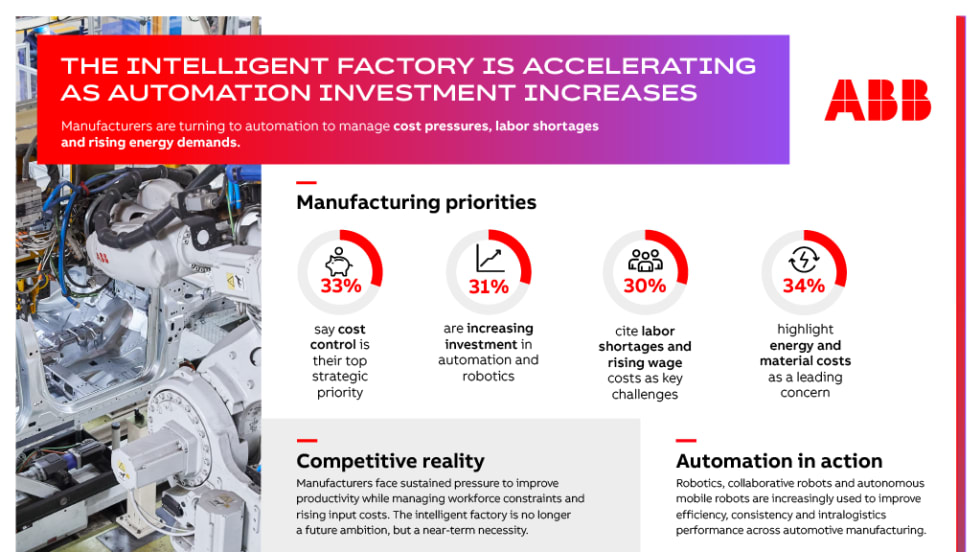
Labor shortages, material costs and tariffs are just a few of the reasons automakers are looking to expand their investments in automation and robotics this year.
Read More →
The Middle East imports a sizable share of vehicles made in the states. It’s unclear how the Iran War could affect the keystone market for U.S. automakers.
Read More →
New-vehicle sales fell year-over-year for the fifth month in a row in February, making retail deliveries the slowest they’ve been since 2023, according to a CarGurus report.
Read More →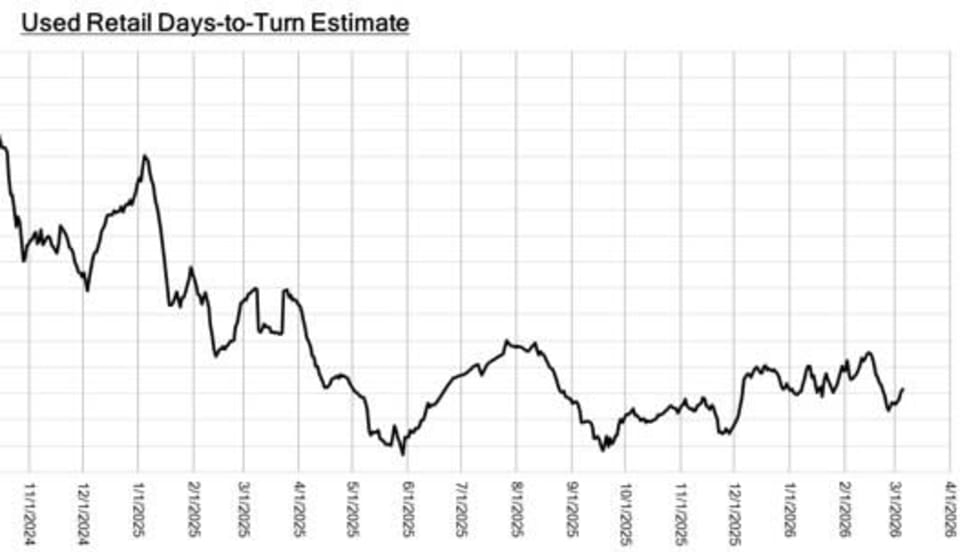
Both vehicle values and conversion rates sped up last week as two segments outperformed in the pre-spring burst of buying.
Read More →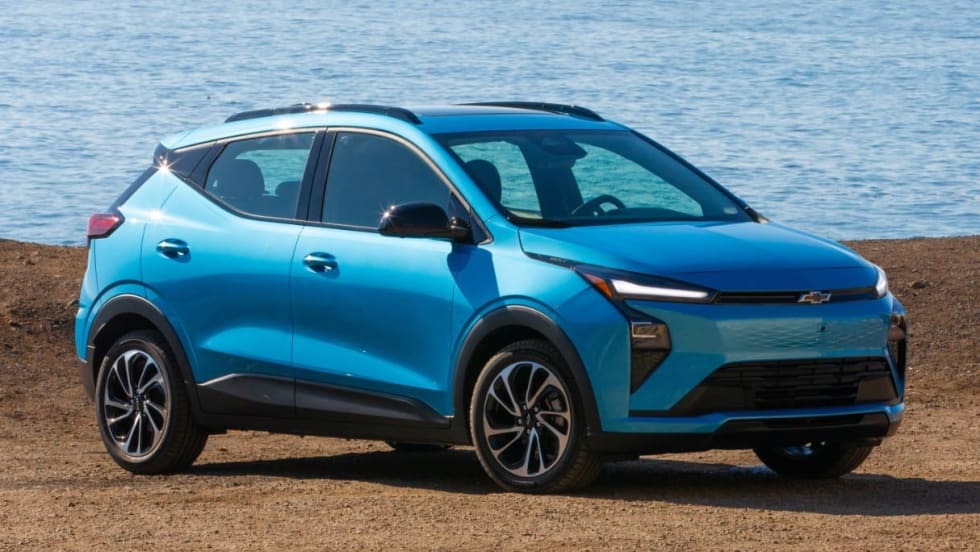
GM says it sells the cheapest electric vehicle in the U.S. market. It explains how it made improvements to the entry-level EV while keeping its price down.
Read More →
The South Korean automaker said it supports 570,000 jobs in the U.S. with a planned investment of $26 billion between 2025 and 2028, according to President and CEO José Muñoz.
Read More →
GM says more than 750 dealers across the U.S. are enrolled in CarBravo and that in January CarBravo dealers sold over two times the certified volume of Chevrolet, Buick and GMC dealers using traditional CPO.
Read More →