



Spectrum Automotive Declares National Sector Observance
First National Automotive Industry Day will be marked on Oct. 1

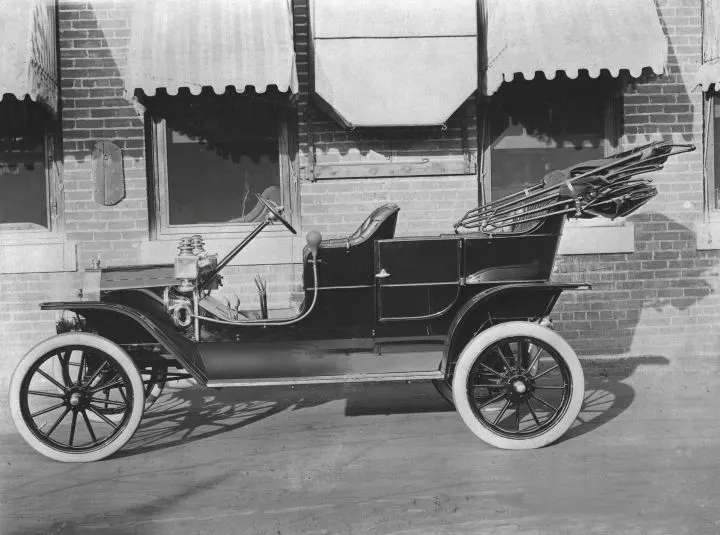
Spectrum Automotive chose the date of the first Model T's production for the national industry holiday.
Ford
Spectrum Automotive Holdings secured a national holiday recognizing the greater automotive industry, choosing Oct. 1 for the observance because that date in 1908, the first Model T was produced from Henry Ford's now famous assembly line. The company says the new production technology cut the time to build a vehicle from 12 hours to 93 minutes.
The company describes how and why it pursued the national industry holiday and what auto dealers can do to celebrate it each year:
What is National Automotive Industry Day? National Automotive Industry Day celebrates the automotive sector’s century-long role in shaping the U.S. economy, culture, and society. On Oct. 1, 1908, the first Ford Model T, considered by most to be the first mass-affordable automobile and the first car to come off an assembly line, was produced in a Detroit, Mich. Ford plant. By formally recognizing the industry’s historic achievements, immense economic contributions, cultural impact, and ongoing innovation, we honor the past and chart a vision for the automotive future.
How should National Automotive Industry Day be celebrated or observed? Social media promotion and celebrations across the automotive industry honoring employees, owners, trailblazers through education on the industry’s transformative nature
Why was National Automotive Industry Day created? It’s the perfect way to highlight and celebrate the automotive industry’s transformative staying power, in addition to it being a symbol of freedom and mobility. Overall, the automotive industry has provided for economic impact and job creation; cultural and social contributions, including pop culture iconography and formation of the middle class; environmental and technological innovation (green evolution and looking ahead to autonomous vehicles); educational and inspirational value (STEM, museums, innovation showcases for safety, fuel technologies, design); bridging communities and generations.
Originally posted on F&I and Showroom
More Industry

Penske Auto Group Deal a Record
The deal to take the dealership and transportation services company private sets a new pace for industry buy-sell transactions.
Read More →
War Toll a Damper on Used Auto Prices
Cox Automotive found wholesale depreciation to be elevated in September amid high fuel prices and this year's unusual hurricane season.
Read More →
Bridge the Maintenance Gap
With many drivers missing recommended maintenance, service departments offering transparency and efficiency have a better chance of reaching financially strained consumers.
Read More →
California Store Has New Owner
The longtime dealership in the northern part of the state is known for robust fleet sales and has served the state capital for 115 years.
Read More →
BMW Plant Pursues Cleaner Energy
BMW Group Plant Leipzig has utilized hydrogen to help power its production since 2013, but a new pipeline is planned to take it to another level.
Read More →
Auto Affordability Inches Up
The latest Cox Automotive and Moody’s Analytics index shows a slight increase in new-vehicle affordability despite high prices.
Read More →
Ohio Auto Group Under New Ownership
After 79 years with the Schluter family, Mansfield Auto Group has been acquired by Missouri-based Clement Auto Group.
Read More →
RV Group Expands Carolina Footprint
Blue Compass RV Columbia Northeast is the 13th RV dealership owned by Blue Compass in the Carolinas.
Read More →
Agent Acumen
An Agent Summit panel of people who’ve been supporting auto dealers for years gave both timely and timeless advice for those starting out or mulling the prospect.
Read More →
Missed Maintenance Creates Opportunity
As families get back on the road and into daily school routines, service drives have an opportunity to capture customers who are behind on recommended vehicle maintenance.
Read More →