



Wall Street Reform: Congress Starts to Deal

WASHINGTON - Wall Street reform negotiations officially kick off Thursday, when lawmakers are expected to start merging two different versions of sweeping changes to the financial system into one final bill, reported CNNMoney.com. Among the key issues that need to be resolved: Whether to limit banks' trading activities and how the kinds of risky bets that helped get AIG into hot water. The Senate passed its version in late May and the House passed its version last December. On Thursday, more than two dozen top Democrats and Republicans from both chambers will meet and give speeches. Senate Majority Leader Harry Reid, D-Nev., said Monday he hopes to wrap up work on the final negotiated product before the end of the month. The goal, according to congressional aides, is to finish reconciling the bills in time for President Obama to have progress to report when he heads to Canada on June 25 for the G-20 meeting. The Democrats hope a final vote in both the House and Senate will take place before July 4. "The bills both the House and Senate passed will enforce the toughest protections ever against Wall Street greed, will guarantee taxpayers they will never become too big to fail," Reid said Monday. The bills are pretty similar in many respects. Top Obama administration officials stressed in a briefing in late May that both bills met the president's call for "strong comprehensive reform." But they stopped short of saying the president would sign the final product. "It stands to reason that the likely outcome of this (conference process) is a bill that meets the true test of reform as the president has laid out," said Diana Farrell, deputy director of the White House National Economic Council. But there remains a couple of key differences in the bills, including some that divide Democrats within their own party. Over the past two weeks, congressional staffers from both chambers have been meeting to detail all the differences so lawmakers appointed to negotiate can move quickly. Here are some of the biggest issues in play: Proprietary trading: In the Senate bill, the Volcker rule, named for former Federal Reserve chairman Paul Volcker, directs regulators to limit the size and scope of banks' investment activities. The rule would direct regulators to create rules that would stop banks from owning hedge funds and trading for their own accounts. The House bill doesn't include the Volcker rule. Derivatives: Taxpayers are on the hook for tens of billions of dollars used to keep giant financial firms such as American International Group (AIG, Fortune 500) afloat. Nobody knew the depths of AIG's troubles when the government effectively took control in September 2008 because the risky financial trades - known as derivatives - that helped lead AIG astray were unregulated. Regulators also didn't understand the extent to which all the financial firms were linked together through these contracts, when the financial system was collapsing. The Senate bill is tougher than the House bill when it comes to ensuring these complex financial contracts are more transparent, pushing them onto clearinghouses and exchanges that can pinpoint the value of the securities. The House bill allows more leeway for financial firms to avoid exchanges and posting collateral on such contracts, especially if they're not considered big derivatives dealers. Spinning off swaps desks: The Senate bill bans banks from making derivative trades by forcing them to spin off their swaps desks. The idea is that banks that get access to emergency taxpayer-backed loans shouldn't make risky bets. The House bill contains no such ban. The White House and House Financial Services Chairman Barney Frank have both signaled they may push to drop that provision in negotiations. Debit card fees: Visa, Mastercard and all the banks are fighting a provision in the Senate bill cracking down on swipe fees that retailers pay when customers use debit cards. The fees comprise 1% to 3% of every transaction run through a debit or credit card, and go to cover the operational cost of transferring money from one account to another. Network operators such as Visa (V, Fortune 500) skim off a fraction of the fee, while the rest goes to the financial firm that issued the card. The Senate directs the Federal Reserve to make debit card fees "reasonable and proportional" to costs. The Senate also allows retailers to give price cuts to customers who pay with debit cards that carry lower transaction fees. Auto dealers: There's a debate over whether auto dealers should escape increased oversight from a consumer financial protection regulator created by the Wall Street reform push. The House exempted auto dealers from increased oversight. The Senate bill keeps auto dealers subject to the consumer regulator, although a majority of the Senate took a nonbinding symbolic vote advising key negotiators to advocate exempting auto dealers. The White House opposes exemptions for auto dealers. Bank capital requirements: Both bills require regulators to get tougher on the amount of capital that banks will have to keep as a cushion against losses. The Senate bill is tougher than the House, including a provision guiding regulators to develop new capital rules that are tougher on bank holding companies engaged in "risky" activities, such as derivatives and securitized products.
More Industry
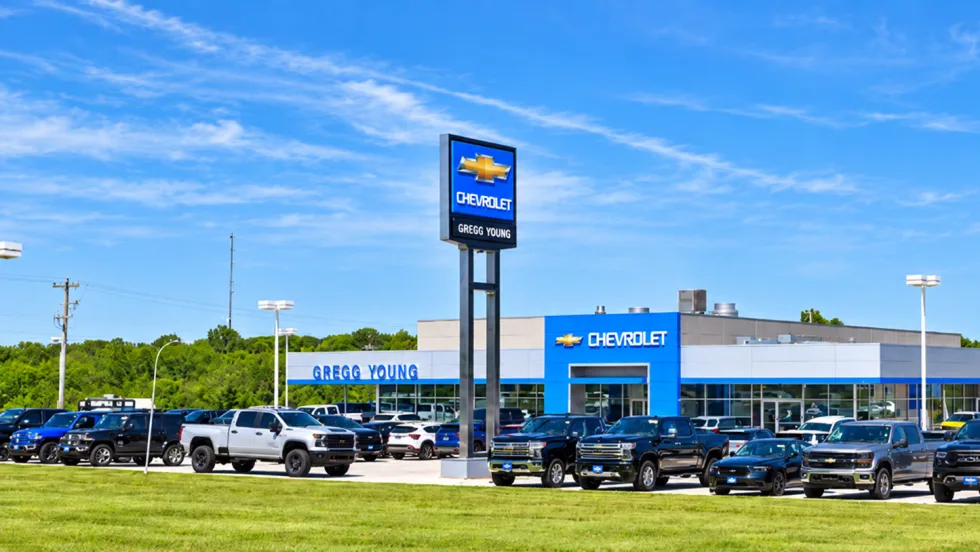
Nebraska Rooftop Changes Hands
The Gregg Young Automotive Group has sold its second dealership to Janssen Auto Group, both in Plattsmouth, Neb.
Read More →
Penske Auto Group Deal a Record
The deal to take the dealership and transportation services company private sets a new pace for industry buy-sell transactions.
Read More →
War Toll a Damper on Used Auto Prices
Cox Automotive found wholesale depreciation to be elevated in September amid high fuel prices and this year's unusual hurricane season.
Read More →
Bridge the Maintenance Gap
With many drivers missing recommended maintenance, service departments offering transparency and efficiency have a better chance of reaching financially strained consumers.
Read More →
California Store Has New Owner
The longtime dealership in the northern part of the state is known for robust fleet sales and has served the state capital for 115 years.
Read More →
BMW Plant Pursues Cleaner Energy
BMW Group Plant Leipzig has utilized hydrogen to help power its production since 2013, but a new pipeline is planned to take it to another level.
Read More →
Auto Affordability Inches Up
The latest Cox Automotive and Moody’s Analytics index shows a slight increase in new-vehicle affordability despite high prices.
Read More →
Ohio Auto Group Under New Ownership
After 79 years with the Schluter family, Mansfield Auto Group has been acquired by Missouri-based Clement Auto Group.
Read More →
RV Group Expands Carolina Footprint
Blue Compass RV Columbia Northeast is the 13th RV dealership owned by Blue Compass in the Carolinas.
Read More →
Agent Acumen
An Agent Summit panel of people who’ve been supporting auto dealers for years gave both timely and timeless advice for those starting out or mulling the prospect.
Read More →