



Volvo Needs to Gain U.S. Market Share, CEO Says
LOS ANGELES— Håkan Samuelsson has an admirable vision for Volvo Car Corp. By 2020, the company’s chief executive says no one will be seriously killed or injured in a new Volvo, reported The WSJ. In order to make it to 2020, however, Mr. Samuelsson needs to turn around a U.S. unit that is losing market ... Read More »

LOS ANGELES— Håkan Samuelsson has an admirable vision for Volvo Car Corp. By 2020, the company’s chief executive says no one will be seriously killed or injured in a new Volvo, reported The WSJ.
In order to make it to 2020, however, Mr. Samuelsson needs to turn around a U.S. unit that is losing market share and falling far behind German rivals he sees as setting the pace in the American luxury car business. Relying on China, he has stemmed losses in Volvo’s global business, but the U.S. business remains a laggard.
Taking the helm two years ago, Mr. Samuelsson’s initial job was to lift the Swedish brand’s profile in China. Bought by Chinese auto maker Zhejiang Geely Holding Group Co. for $1.8 billion in 2010, Volvo responded to pressure to significantly lift volumes in Geely’s home country, with sales up 35% in 2014.
The company, meanwhile, has hired consulting firm McKinsey & Co. to help sort out the situation in the U.S. Once a bigger player in America, sales have fallen 8.2% in 2014 compared with 2013, and its 0.3 percentage points of U.S. market share, or about 60,000 vehicle sales, is equivalent to little-known Fiat or a niche brand such as Land Rover.
The introduction of a new version of the XC90 family-sized SUV and a commitment to double the U.S. marketing budget in 2015 should jump-start the operation, he said. Down the road, a bevy of new products, such as an XC40 compact SUV, and a focus on Volvo’s core values—including safety—need to help Volvo boost sales by 40% in just a few years.
“It’s absolutely crucial for the brand to be global,” Mr. Samuelsson said. “If we would lose ground in the U.S. and become some kind of Chinese-European brand it’s not going be the same. The U.S. has to comeback.”
In 2015, Volvo plans to grow U.S. volumes from 60,500 sold cars to 78,000, according to an internal McKinsey report, and win back some market share in the process. By 2018, the goal is to sell 100,000 cars and post break-even operating results.
Its marketing budget will be boosted by a $200 million injection over the coming two years, on top of money it is already set to spend.
Mr. Samuelsson is encouraged by recent progress, as the brand’s monthly sales have stabilized. But he says it is too early to declare any victories.
The internal report published by McKinsey recently for Volvo shows how big the challenge is. Years of modest spending on advertising has severely damaged brand awareness, and led to a dealer network that is underutilized, the consultants concluded.
Volvo has the third largest dealer network in the U.S., but the number of sold cars per dealer is far below its competitors. In 2013, Volvo sold 203 cars per dealer, compared with BMW AG, which sold 915 cars per dealer, and Toyota Motor Co.’s Lexus, which sold 1175 cars per dealer.
The average premium car brands in the U.S. sold around 700 cars per dealer last year.
As a result, Volvo dealers are getting less profitable while most other luxury stores have seen their margins double.
Mr. Samuelsson said the answer isn’t to cut back on dealers. Instead, the company needs to better communicate its core message: Volvo builds “cars that protect what is important to you.”
The company is introducing new safety features to revive its image as the leader in safety. It’s new XC90, for instance, has an auto-braking function that automatically stops the car when something else unexpectedly gets in the way. The SUV also uses sensors to “hook up” with the car in front of it to regulate a safe distance.”
John Krafcik, a longtime automotive executive now running TrueCar.com, agrees safety is “an obvious anchor, and (Volvo) can still own it.” He suggests Volvo needs to make high-tech safety features free, giving Volvo a potential differentiation against German auto makers charging for the equipment.
To get its message out, however, Volvo needs to invest in advertising. Mr. Krafcik suggests “they need to spend big on marketing (the new XC90)—they’ve spent several billion on the product, now they need to get out and talk about it.”
Opening up the wallet would represent a shift for Volvo, which has decreased marketing spending significantly over the last decade, alongside the decline in the number of cars sold. While spending roughly the same amount on marketing per car sold as competitors, Volvo’s overall marketing spending was just $76 million in the U.S. last year, compared with the premium brand average of $228 million, according to McKinsey’s study.
More Industry
Nebraska Rooftop Changes Hands
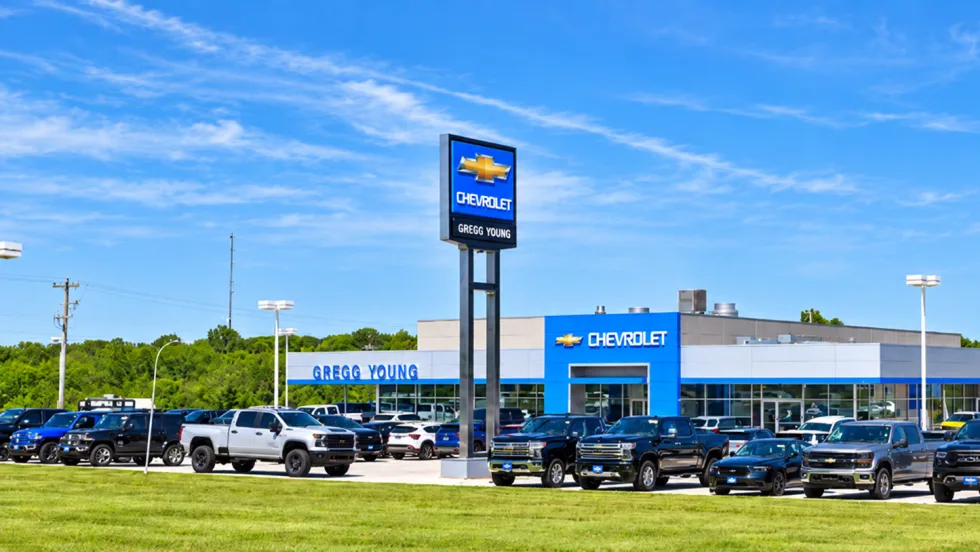
The Gregg Young Automotive Group has sold its second dealership to Janssen Auto Group, both in Plattsmouth, Neb.
Read More →
Penske Auto Group Deal a Record
The deal to take the dealership and transportation services company private sets a new pace for industry buy-sell transactions.
Read More →
War Toll a Damper on Used Auto Prices
Cox Automotive found wholesale depreciation to be elevated in September amid high fuel prices and this year's unusual hurricane season.
Read More →
Bridge the Maintenance Gap
With many drivers missing recommended maintenance, service departments offering transparency and efficiency have a better chance of reaching financially strained consumers.
Read More →
California Store Has New Owner
The longtime dealership in the northern part of the state is known for robust fleet sales and has served the state capital for 115 years.
Read More →
BMW Plant Pursues Cleaner Energy
BMW Group Plant Leipzig has utilized hydrogen to help power its production since 2013, but a new pipeline is planned to take it to another level.
Read More →
Auto Affordability Inches Up
The latest Cox Automotive and Moody’s Analytics index shows a slight increase in new-vehicle affordability despite high prices.
Read More →
Ohio Auto Group Under New Ownership
After 79 years with the Schluter family, Mansfield Auto Group has been acquired by Missouri-based Clement Auto Group.
Read More →
RV Group Expands Carolina Footprint
Blue Compass RV Columbia Northeast is the 13th RV dealership owned by Blue Compass in the Carolinas.
Read More →
Agent Acumen
An Agent Summit panel of people who’ve been supporting auto dealers for years gave both timely and timeless advice for those starting out or mulling the prospect.
Read More →