



Trump Signs Repeal of CFPB’s Dealer Participation Guidance
WASHINGTON, D.C. — On Monday, President Donald Trump signed into law the Congress-approved resolution of disapproval of the Consumer Financial Protection Bureau’s guidance on dealer participation — ending the regulator’s attack on a key source of dealer income exactly five years and two months since the regulator issued its controversial rule. The enactment of the ... Read More »

WASHINGTON, D.C. — On Monday, President Donald Trump signed into law the Congress-approved resolution of disapproval of the Consumer Financial Protection Bureau’s guidance on dealer participation — ending the regulator’s attack on a key source of dealer income exactly five years and two months since the regulator issued its controversial rule.
The enactment of the Congressional Review Act (CRA) resolution not only rescinds the bureau’s fair lending guidance, it prohibits the bureau from ever reissuing a substantially similar rule unless Congress authorizes it do so by law. The president’s signature also marks the first time the CRA has been used on a rule that has been in effect for several years.
“This is a great day for consumers, as Congress and the President have helped to preserve their ability to receive auto loan discounts from local dealerships,” wrote Peter Welch, president of the National Automobile Dealers Association (NADA), in a blog posted on the association’s website. “NADA congratulates the U.S. House and Senate for their focus and perseverance on this issue, and the president for signing the new law to protect consumers.”
The signing comes about two weeks after the U.S. House approved the resolution by a 234-175 vote and more than a month after the U.S. Senate approved its version of the resolution. Its enactment also comes more than five months after the Government Accountability Office (GAO) said Congress has the power under the CRA to repeal the bureau’s dealer participation guidance.
Under the CRA, both houses must approve resolutions of disapproval by a simple majority and receive the president’s signature to kill a regulation.
“I thank the president and Congress for reaffirming that the bureau lacks the power to act outside of federal statutes,” CFPB Acting Director Mick Mulvaney said in a statement issued after Trump signed the resolution. “As an executive agency, we are bound to enforce the law as written, not as we may wish it to be. In this case, the initiative that the previous leadership at the bureau pursued seemed like a solution in search of a problem. Those actions were misguided, and the Congress has corrected them.”
The statement goes on to note that given a recent Supreme Court decision distinguishing between antidiscrimination statutes that refer to the consequences of actions and those that refer only to the intent of the actor, “and in light of the fact that the bureau is required by statute to enforce federal consumer financial laws consistently, the bureau will be reexamining the requirements of the [Equal Credit Opportunity Act].”
“Today’s action also clarifies that a number of bureau guidance documents may be considered rules for purposes of the CRA, and therefore the bureau must submit them for review by Congress,” the statement notes. “The bureau welcomes such review, and will confer with Congressional staff and federal agency partners to identify appropriate documents for submission.”
The CFPB alleged in its five-page fair lending guidance that bank policies which allow auto dealers to mark up interest rates on retail installment sale transactions as compensation for services rendered create a significant risk of unintentional, disparate impact discrimination. It also warned lenders active in the indirect auto finance channel that they would be held liable for unlawful, discriminatory markups.
The bulletin goes on to state that lenders operating in the indirect auto finance channel “should take steps to ensure that they are operating in compliance with the [Equal Credit Opportunity Act] and Regulation B as applied to dealer markup and compensation policies.” It then listed a variety of steps and tools they could employ to address the bureau’s stated fair lending risks, including “eliminating dealer discretion to markup buy rates and fairly compensate dealers using another mechanism, such as a flat fee per transaction, that does not result in discrimination.”
Auto industry trade groups have argued that the bureau used its guidance to indirectly regulate the activities of dealers, which are mostly exempt from the bureau’s oversight under the Dodd-Frank Act. They also claimed the bureau was aware its methodology for determining disparate impact and potential harm to protected classes was flawed and prone to overestimation, yet pushed forward with claims of discrimination that resulted in enforcement actions that imposed millions of dollars in fines on auto finance sources, including Ally Financial.
The guidance also caused several finance sources, including BB&T and BMO Harris, to switch to a flat-fee compensation model. BB&T switched back to a dealer spread compensation plan earlier this year, while BMO switched to a three-tiered flat-rate model last summer.
The guidance was also behind consent orders the CFPB entered into with Fifth Third Bank, Toyota Motor Credit Corp., and American Honda Finance Corp regarding their dealer markup policies. As a result of those orders, the bank and two captives agreed to lower their markup caps to 1.25% and 1%.
In a May 1 filing with the U.S. Securities and Exchange Commission, Toyota Motor Credit Corp — better known to auto dealers and car buyers as Toyota Financial Services or “TFS” — announced it would raise its markup caps after earning early termination of its three-year-old consent order the captive entered into with the CFPB and the U.S Department of Justice. The captive plans to raise that limit to 2% for finance terms of up to 72 months and 1.5% for terms of up to 84 months, according to Auto Finance news.
Fifth Third’s consent order is set to expire this September, while Honda Finance’s consent order is set to expire in July 2020. The two finance sources have yet to say whether they’ll raise their markup caps when they do.
“There’s no question that this is a rule masquerading as guidance. The CFPB never submitted the guidance to the GAO. They could have done so. Had they done so, the 60-day clock would have run, we wouldn’t be here,” David Regan, the NADA’s executive vice president of legislative affairs, said during a press briefing a week before the House vote on May 8. “They chose not to submit that to Congress because they did not want the additional exposure to public notice and comment. Within just a few weeks of the guidance being issued in March of 2013, the congressional inquiries started pouring in asking very specific questions about the methodology that we now know was flawed. And yet, the agency repeatedly refused to respond to these questions.”
Congress had attempted to kill the bureau’s guidance through the legislative route. In November 2015, the House of Representatives approved the Reforming CFPB Indirect Auto Finance Guidance Act by a 332-96 vote. The bill, however, was not acted upon by the Senate before the end of the 114th Congress.
Last March, Sen. Pat Toomey (R-Pa.) asked the GAO whether the CFPB’s guidance on dealer participation falls under the CRA. The agency delivered its answer this past December, 16 days after former CFPB Director Richard Cordray informed bureau officials via email that he was stepping down. Cordray officially resigned on Nov. 24, 2017. The White House named Mulvaney acting director the same day.
When it initially issued its guidance, the bureau argued that because it had no legal effect on regulated entities, the CRA does not apply. The GAO, however, stated in its response to Toomey’s request that the bulletin “fits squarely within the Supreme Court’s definition of a statement of policy,” because it provides information on the manner in which the bureau planned to exercise its discretionary enforcement power.
And according to the GAO, the CRA “establishes special expedited procedures under which Congress may pass a joint resolution of disapproval that, if enacted into law, overturns the rule.” In a statement posted on its website just after the GAO delivered its answer, Sen. Toomey said he intended “to do everything in my power” to repeal the bureau’s guidance under the CRA.
“We welcome the action of Congress and the President,” said Chris Stinebert, president and CEO of the American Financial Services Association, which played a key role in the industry’s defense of dealer participation when it delivered a study critical of the bureau’s approach in November 2014. “We are working with our members to assess the impact of the vehicle financing industry as it continues to fully comply with all state laws and regulations on vehicle financing.”
More Industry
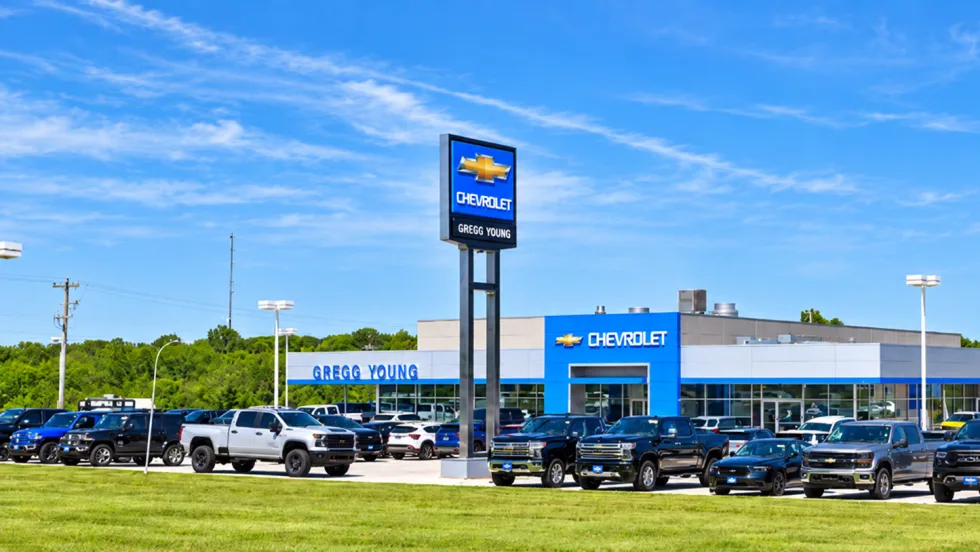
Nebraska Rooftop Changes Hands
The Gregg Young Automotive Group has sold its second dealership to Janssen Auto Group, both in Plattsmouth, Neb.
Read More →
Penske Auto Group Deal a Record
The deal to take the dealership and transportation services company private sets a new pace for industry buy-sell transactions.
Read More →
War Toll a Damper on Used Auto Prices
Cox Automotive found wholesale depreciation to be elevated in September amid high fuel prices and this year's unusual hurricane season.
Read More →
Bridge the Maintenance Gap
With many drivers missing recommended maintenance, service departments offering transparency and efficiency have a better chance of reaching financially strained consumers.
Read More →
California Store Has New Owner
The longtime dealership in the northern part of the state is known for robust fleet sales and has served the state capital for 115 years.
Read More →
BMW Plant Pursues Cleaner Energy
BMW Group Plant Leipzig has utilized hydrogen to help power its production since 2013, but a new pipeline is planned to take it to another level.
Read More →
Auto Affordability Inches Up
The latest Cox Automotive and Moody’s Analytics index shows a slight increase in new-vehicle affordability despite high prices.
Read More →
Ohio Auto Group Under New Ownership
After 79 years with the Schluter family, Mansfield Auto Group has been acquired by Missouri-based Clement Auto Group.
Read More →
RV Group Expands Carolina Footprint
Blue Compass RV Columbia Northeast is the 13th RV dealership owned by Blue Compass in the Carolinas.
Read More →
Agent Acumen
An Agent Summit panel of people who’ve been supporting auto dealers for years gave both timely and timeless advice for those starting out or mulling the prospect.
Read More →