



Toyota Ends Scion Experiment
TORRANCE, Calif. — Toyota’s Scion experiment had ended, with the automaker announcing on Wednesday that the youth-geared brand will be transitioned back into the Toyota brand. The announcement comes almost 13 years after the automaker established Scion as a separate brand to explore new products and processes that attract youth customers. The automaker said model-year ... Read More »

TORRANCE, Calif. — Toyota’s Scion experiment had ended, with the automaker announcing on Wednesday that the youth-geared brand will be transitioned back into the Toyota brand. The announcement comes almost 13 years after the automaker established Scion as a separate brand to explore new products and processes that attract youth customers.
The automaker said model-year 2017 Scion vehicle will be rebadged as Toyota beginning this August, with the FR-S sports car, iA sedan and iM five-door hatchback expected to become part of the Toyota family. The tC sports coupe, however, will have a final release series edition and end production in August. The C-HR, which debuted at the Los Angeles Auto Show, will also become part of the Toyota lineup.
“This isn’t a step backward for Scion; it’s a leap forward for Toyota. Scion has allowed us to fast-track ideas that would have been challenging to test through the Toyota network,” said Jim Lentz, founding vice president of Scion and now CEO of Toyota Motor North America. “I was there when we established Scion and our goal was to make Toyota and our dealers stronger by learning how to better attract and engage young customers. I’m very proud because that’s exactly what we have accomplished.”
Service and repairs for Scion customers will remain unaffected by the change, officials said, as customers will continue visiting Toyota dealership service departments.
More than a million Scion cars have been sold since the brand was established in June 2003, with the automaker noting that 70% of those purchases were made by customers new to Toyota. Additionally, 50% of those purchases were made by buyers under the age of 35.
The automaker claimed in its press releasing announcing the decision that the average age of the Scion buyer was 36, with the average age of the tC sports coupe buyer coming in at 29 — the lowest average age buyer in the industry.
As for the 22 dedicate Scion team members who handle sales, marketing, distribution, strategy, and product and accessory planning, the automaker said they will have the opportunity to take on jobs at Toyota Motor Sales in Torrance, Calif. Scion regional representatives will assume different responsibilities in their respective Toyota sales offices.
“Scion has had some amazing products over the year and our current vehicles are packed with premium features at value prices,” said Andrew Gilleland, an executive with Scion. “It’s been a great run and I’m proud that the spirit of Scion will live on through the knowledge and products soon to be available through the Toyota network.”
The Scion brand gave birth to several products, sales and marketing process, including the brand’s no-haggle Pure Pricing and Pure Process Plus online car-buying process. Personalization was also big with the brand, with buyers offered an array of accessories from which to choose.
The brand also served as a training ground for Toyota execs. Aside from Lentz, Mark Templin, managing officer for Toyota Motor Corp. and executive vice president of Lexus International, Jack Hollis, group vice president of Toyota marketing, and Doug Murtha, group vice president of corporate strategy and planning for Toyota Motor North America, held roles with Scion.
The brand’s best year in terms of sales was 2006, when Scion sold 173,034 units. Sales, however, never topped 100,000 units after that. In 2015, the Scion brand sold 56,167 units.
“We appreciate our 1,004 Scion dealers and the support they’ve given the brand,” said Bob Carter, Toyota senior vice president of automotive operations. “We believe our dealers have gained valuable insights and have received a strong return on their investment. During this time of transition, we will work closely with them to support this process and help communicate this change to customers.”
More Industry
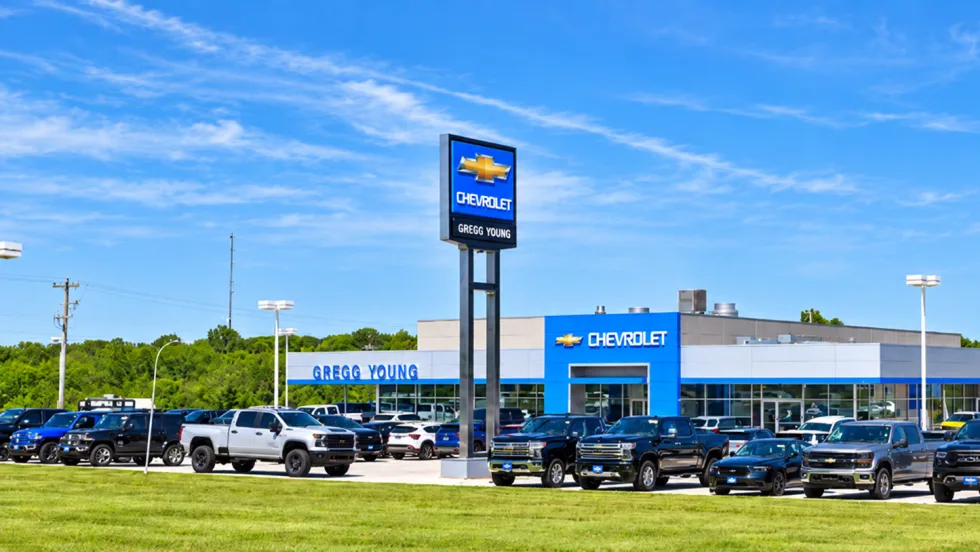
Nebraska Rooftop Changes Hands
The Gregg Young Automotive Group has sold its second dealership to Janssen Auto Group, both in Plattsmouth, Neb.
Read More →
Penske Auto Group Deal a Record
The deal to take the dealership and transportation services company private sets a new pace for industry buy-sell transactions.
Read More →
War Toll a Damper on Used Auto Prices
Cox Automotive found wholesale depreciation to be elevated in September amid high fuel prices and this year's unusual hurricane season.
Read More →
Bridge the Maintenance Gap
With many drivers missing recommended maintenance, service departments offering transparency and efficiency have a better chance of reaching financially strained consumers.
Read More →
California Store Has New Owner
The longtime dealership in the northern part of the state is known for robust fleet sales and has served the state capital for 115 years.
Read More →
BMW Plant Pursues Cleaner Energy
BMW Group Plant Leipzig has utilized hydrogen to help power its production since 2013, but a new pipeline is planned to take it to another level.
Read More →
Auto Affordability Inches Up
The latest Cox Automotive and Moody’s Analytics index shows a slight increase in new-vehicle affordability despite high prices.
Read More →
Ohio Auto Group Under New Ownership
After 79 years with the Schluter family, Mansfield Auto Group has been acquired by Missouri-based Clement Auto Group.
Read More →
RV Group Expands Carolina Footprint
Blue Compass RV Columbia Northeast is the 13th RV dealership owned by Blue Compass in the Carolinas.
Read More →
Agent Acumen
An Agent Summit panel of people who’ve been supporting auto dealers for years gave both timely and timeless advice for those starting out or mulling the prospect.
Read More →