



Study Warns That Free Trade Agreements With Japan Could Impact U.S. Auto Market

The Center for Automotive Research (CAR) produced a study that models Japanese automotive vehicle exports to the United States, and estimates the likely effect of a tariff reduction brought on by a Free Trade Agreement (FTA) between Japan and the United States that would be a characteristic of Japan’s inclusion in the Trans Pacific Partnership (TPP). Japanese vehicle exports to the United States are estimated to increase by 105,000 units or $2.2 billion (an increase of 6.2 percent) due to the elimination of a 2.5 percent tariff. As a result, U.S. vehicle production is estimated to fall by 65,100 units which CAR estimates would result in a loss of 2,600 direct U.S. automotive manufacturing jobs. An additional loss of U.S. supplier jobs is estimated at 9,000 and the loss of spin-off jobs at 14,900.
The study, “The Effects a Free Trade Agreement with Japan will have on the U.S. Auto Industry,” also examines the effect of changing exchange rates on Japanese vehicle exports. CAR’s exchange rate model for Japanese vehicle exports estimates that if the real yen/dollar exchange rate changed from a level of 90 yen/dollar to 100 yen/dollar, it would result in an increase of vehicle exports to the U.S. market of 15.1 percent, and a decrease from 90 yen/dollar to 80 yen/dollar will result in a decrease in exports of -15.1 percent, and in each case, the elimination of the 2.5 percent U.S. vehicle import tariff would increase exports by a further 6.2 percent.
CAR’s estimate of the increase in the number of Japanese vehicle imports is 362,800 in the case of the FTA and a depreciation of the real level of the yen/dollar exchange rate from 90 to 100. CAR’s forecast of production and employment loss in this case of a change in the exchange rate from 90 to 100 yen/dollar and the elimination of the 2.5 percent tariff as a result of a FTA is a loss of about 225,000 units of U.S. vehicle production.
“The combination of an FTA between the U.S. and Japan and a significant depreciation of the yen versus the dollar would have serious effects on production and employment in the U.S. auto industry,” said Sean McAlinden, executive vice president of research and chief economist at CAR.
CAR has significant experience conducting economic impact analyses and has carried out the majority of national level automotive economic contribution studies completed in the United States since 1992.
The report was written by McAlinden, and Yen Chen, a senior economist at CAR. Financial support for this study was provided by Ford Motor Company.
More Industry
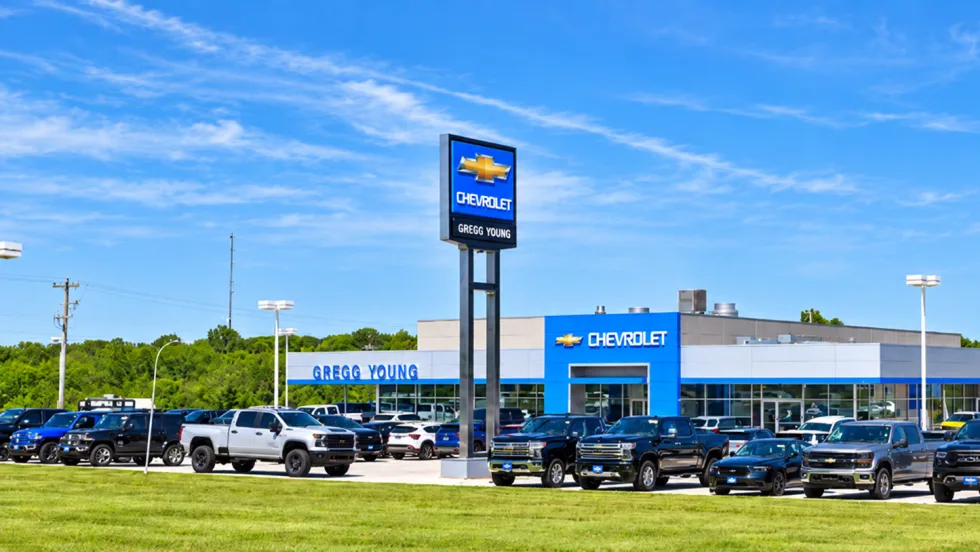
Nebraska Rooftop Changes Hands
The Gregg Young Automotive Group has sold its second dealership to Janssen Auto Group, both in Plattsmouth, Neb.
Read More →
Penske Auto Group Deal a Record
The deal to take the dealership and transportation services company private sets a new pace for industry buy-sell transactions.
Read More →
War Toll a Damper on Used Auto Prices
Cox Automotive found wholesale depreciation to be elevated in September amid high fuel prices and this year's unusual hurricane season.
Read More →
Bridge the Maintenance Gap
With many drivers missing recommended maintenance, service departments offering transparency and efficiency have a better chance of reaching financially strained consumers.
Read More →
California Store Has New Owner
The longtime dealership in the northern part of the state is known for robust fleet sales and has served the state capital for 115 years.
Read More →
BMW Plant Pursues Cleaner Energy
BMW Group Plant Leipzig has utilized hydrogen to help power its production since 2013, but a new pipeline is planned to take it to another level.
Read More →
Auto Affordability Inches Up
The latest Cox Automotive and Moody’s Analytics index shows a slight increase in new-vehicle affordability despite high prices.
Read More →
Ohio Auto Group Under New Ownership
After 79 years with the Schluter family, Mansfield Auto Group has been acquired by Missouri-based Clement Auto Group.
Read More →
RV Group Expands Carolina Footprint
Blue Compass RV Columbia Northeast is the 13th RV dealership owned by Blue Compass in the Carolinas.
Read More →
Agent Acumen
An Agent Summit panel of people who’ve been supporting auto dealers for years gave both timely and timeless advice for those starting out or mulling the prospect.
Read More →