



Study Says U.S. Car Sales to Return to Pre-recession Level

DETROIT — U.S. auto sales should reach 11.7 million new vehicles this year and may return to historic levels of near 17 million over the next two years, fueling more profitability for the more cost-efficient car companies and auto-parts makers, according to a new study reported in The Wall Street Journal. The projection, released by A.T. Kearney Inc., suggests sales could reach 16.8 million in 2012 followed by 17.8 million in 2013 and 18.6 million in 2014 under an "optimistic" forecast. In April, automakers sold vehicles at an annualized pace of 11.2 million. A.T. Kearney's "base-line" forecast calls for 16.1 million sales in 2012, followed by 16.5 million in 2013 and 17.5 million in 2014. It's "pessimistic" projection suggests 12.9 million sales in 2012 followed two consecutive years of 14.6 million. A.T. Kearney's bullish outlook stands in stark contrast to most forecasts, which don't expect U.S. car sales to cross the 16-million level until 2013. George Magliano, director of automotive research for HIS Global Insight, said last month it will be "quite some time" before the market returns to more normal levels. The Center for Automotive Research, in Dearborn, Mich., expects auto sales to hit 14.9 million in 2012. Another car-data firm, Edmunds.com, forecasts 11.5 million sales this year and 14.7 million in 2012. Daniel Cheng, an A.T. Kearney partner, said the firm's outlook is based on pent-up demand coming from consumers who have owned their vehicles an average of 10 years. "Cars last longer but not that long and they have to be replaced," Cheng said. "We don't see any transportation alternatives in the near future so people will have to buy new cars." Statistics also point to a strong correlation between an increase in loan approvals and auto sales, A.T. Kearney said. In the mid-1980s the loan-approval rate topped out at about 90% and U.S. car sales climbed. The current loan-approval rate, about 75 percent, is positioned to climb as car makers and eventually banks return to providing loans to people with weaker credit ratings, the firm said. Automakers and parts suppliers used most of 2008 and 2009 to trim costs by shutting plants, laying off workers and shrinking their break-even points. Many companies, especially suppliers, can now post profits even if annual sales in the U.S. are below 11 million vehicles. Economic uncertainty, however, remains. A collapse of the euro, new terror threats or a trade war all could slow the car-sales recovery, Cheng said.
More Industry

Auto Affordability Inches Up
The latest Cox Automotive and Moody’s Analytics index shows a slight increase in new-vehicle affordability despite high prices.
Read More →
Ohio Auto Group Under New Ownership
After 79 years with the Schluter family, Mansfield Auto Group has been acquired by Missouri-based Clement Auto Group.
Read More →
RV Group Expands Carolina Footprint
Blue Compass RV Columbia Northeast is the 13th RV dealership owned by Blue Compass in the Carolinas.
Read More →
Agent Acumen
An Agent Summit panel of people who’ve been supporting auto dealers for years gave both timely and timeless advice for those starting out or mulling the prospect.
Read More →
Missed Maintenance Creates Opportunity
As families get back on the road and into daily school routines, service drives have an opportunity to capture customers who are behind on recommended vehicle maintenance.
Read More →
Mitsubishi Unveils U.S. Plan
The automaker announced a strategy that includes an expanded lineup and dealership presence, along with more ‘rugged’ and electric models.
Read More →
Selling to Grow
The question of whether you should sell your agency and if so, when, is up to you. But it’s a question worth asking to ensure you keep the business on the right path for yourself, employees and clients.
Read More →
Recalled Vehicles Hit 5-Year High
Though the number of events has fallen so far this year, impacted units are up significantly. Meanwhile, regulators consider consumer notification changes.
Read More →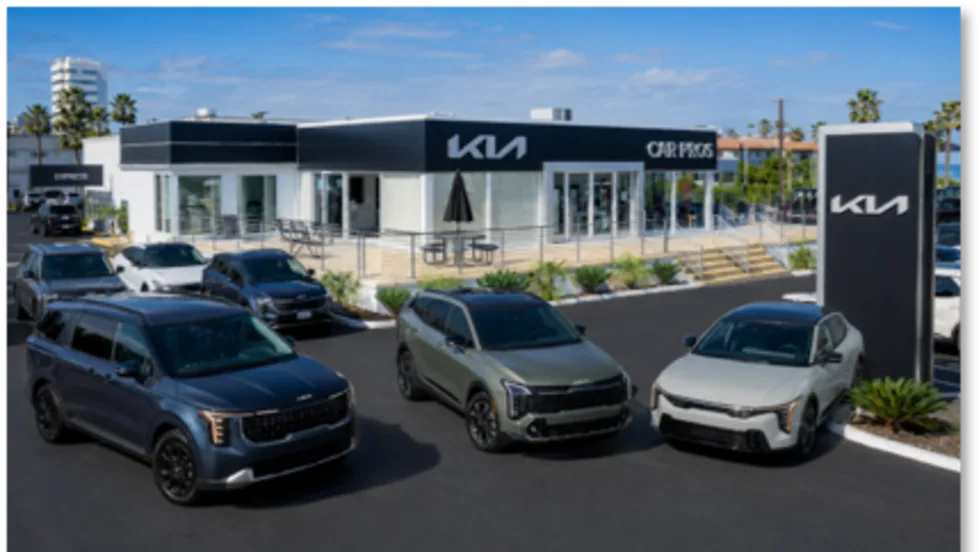
Auto Group Acquires Top-Performing Rooftop
Car Pros sold its Kia Huntington Beach location to Sutherlin Automotive Group, marking the buyer’s third location in Southern California.
Read More →
China as Pacesetter
Automotive leaders huddled on where North America stands in the global picture and how it can strengthen its position against the Asian juggernaut’s surging industry.
Read More →