



State Franchise Laws Benefit Consumers, Economic Analysis Concludes
WASHINGTON, D.C. — The question of whether state franchise laws protect dealerships at the expense of consumers was addressed in a new economic analysis released today by an independent and nonpartisan think tank. The conclusion: state franchise laws are not protectionist, and they produce lower prices for consumers. Conducted by the Phoenix Center for Advanced ... Read More »

WASHINGTON, D.C. — The question of whether state franchise laws protect dealerships at the expense of consumers was addressed in a new economic analysis released today by an independent and nonpartisan think tank. The conclusion: state franchise laws are not protectionist, and they produce lower prices for consumers.
Conducted by the Phoenix Center for Advanced Legal and Economic Public Policy Studies, the analysis sought to answer the question of whether these decades-old laws, which have come under attack in recent years by regulators such as the Federal Trade Commission, still benefit consumers. According to Phoenix Center Senior Fellow Professor T. Randolph Bear and Chief Economist Dr. George S. Ford, the answer remains “Yes.”
“First, the Phoenix Center’s economists demonstrate that state auto franchise laws do not limit competition,” the center stated in its release. “By most expert accounts, there are more than enough dealerships to ensure competition on pricing and servicing, especially for traditionally domestically branded cars. It is also readily acknowledged that new automobiles are sold at scant profit margins, which belies claims of market power.”
The authors said the laws also alter the way consumers buy cars and service their vehicles. “Instead of consumer engaging in one-off transactions with powerful manufacturers, dealerships are in a continual relationship with manufacturers and choose to bundle sales and service in a manner preferred by consumers — but not by manufacturers,” the center noted in its press release. “As a result of this intermediary function played by independent auto dealers, retail car prices are lower for consumers under state auto franchising laws.”
To read the Phoenix Center’s full analysis, click here.
More Industry
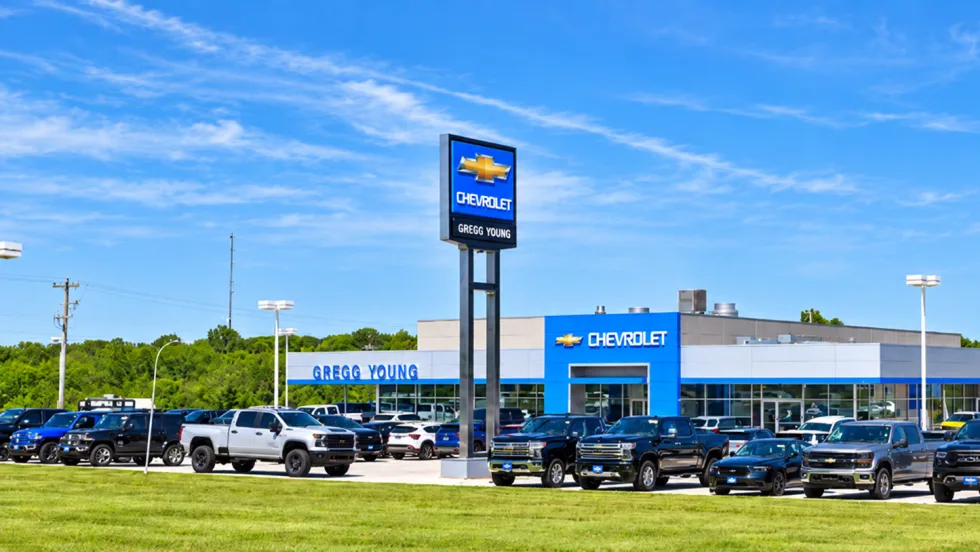
Nebraska Rooftop Changes Hands
The Gregg Young Automotive Group has sold its second dealership to Janssen Auto Group, both in Plattsmouth, Neb.
Read More →
Penske Auto Group Deal a Record
The deal to take the dealership and transportation services company private sets a new pace for industry buy-sell transactions.
Read More →
War Toll a Damper on Used Auto Prices
Cox Automotive found wholesale depreciation to be elevated in September amid high fuel prices and this year's unusual hurricane season.
Read More →
Bridge the Maintenance Gap
With many drivers missing recommended maintenance, service departments offering transparency and efficiency have a better chance of reaching financially strained consumers.
Read More →
California Store Has New Owner
The longtime dealership in the northern part of the state is known for robust fleet sales and has served the state capital for 115 years.
Read More →
BMW Plant Pursues Cleaner Energy
BMW Group Plant Leipzig has utilized hydrogen to help power its production since 2013, but a new pipeline is planned to take it to another level.
Read More →
Auto Affordability Inches Up
The latest Cox Automotive and Moody’s Analytics index shows a slight increase in new-vehicle affordability despite high prices.
Read More →
Ohio Auto Group Under New Ownership
After 79 years with the Schluter family, Mansfield Auto Group has been acquired by Missouri-based Clement Auto Group.
Read More →
RV Group Expands Carolina Footprint
Blue Compass RV Columbia Northeast is the 13th RV dealership owned by Blue Compass in the Carolinas.
Read More →
Agent Acumen
An Agent Summit panel of people who’ve been supporting auto dealers for years gave both timely and timeless advice for those starting out or mulling the prospect.
Read More →