



Midsize Malibu Tops List of Most Recalled GM Cars

Since January, General Motors Co. has issued 29 separate recalls covering 36 different models and 15.8 million vehicles — a total that is likely to rise as the auto maker applies a more rigorous review to customer complaints.
In all those recalls, one family of vehicles stands out for its frequent appearance. And it isn't the Chevrolet Cobalt, a compact last produced in 2010 that has become notorious for its place in a scandal over defective ignition switches.
The greatest number of recalls involves GM's family of midsize cars including the Chevrolet Malibu, Malibu Maxx, Saturn Aura and Pontiac G6. Some 2.4 million cars sold under those nameplates and built between 2004 and 2012 were recalled on May 14 for a faulty electrical controller.
The Cobalt's role in at least 13 deaths in accidents linked to a faulty switch and lock cylinder may keep it among the most reviled of automotive nameplates—the Ford Pinto of its era. But the Malibu family has had more vehicles recalled than any other currently sold GM model. The Cobalt and its siblings such as Saturn Ion make up about 2.19 million of the 15 million recalled vehicles.
GM on Thursday confirmed that senior officials expect additional recalls likely would be disclosed through the summer. GM executives have said they have changed their policies to trigger recalls sooner than in the past and are placing customer complaints above warranty data in their reviews. The company agreed earlier this month to government monitoring of its handling of safety defects as part of a consent decree with the Transportation Department.
So far this year, the recalls' impact on GM's U.S. sales have been limited. Its new-vehicle sales are down 2.3% in the first four months of 2014 compared with a year earlier. Rivals including Ford Motor Co., Toyota Motor Corp. and Honda Motor Co. are down, too. The overall U.S. market has expanded nearly 1.5% in the first four months.
The Malibu was redesigned for 2013 and poor sales of that design led the Detroit auto maker to offer a series of exterior and interior changes in its 2014 model. Through April, Malibu sales are down 4% compared with a year earlier.
"The recalls will have limited impact on GM's sales," Buckingham Research Group's Joe Amaturo said. "To date, there has been no measurable impact in the marketplace, and we believe that will continue." Some dealers have said the recall is a sales opportunity, because it has brought back to their stores customers driving older cars ripe for replacement.
Identifying the most-recalled GM model of the last decade is a murky prospect because of the way the auto industry operates these days. In addition to using components across different models, car makers offer variants of each model, with different trim packages, engines and transmissions. The result is that blanket recalls that cover all vehicles sold under a certain nameplate are more the exception today than the rule.
Take the 2009 Malibu. It has been the subject of five different recalls since it went into production in late 2008. The Malibu was included in this month's big recall of 2.44 million midsize cars, and Malibus from 2004 to 2010 made up just over half the 1.29 million car total. That number includes 176,837 Malibus from the 2009 model year alone.
The May recall included even more 2012 Malibus — 225,863 from that model year were included. But in total the 2012 Malibu has been subject to only three recalls, not five like the 2009 model. GM tied the May 14 recalls to 13 accidents and two injuries.
Some recalls are highly targeted, too. On March 31, GM recalled 1.28 million vehicles for a power steering issue that was detected in seven different cars from the model years 2004 to 2010. Of the total 90,481 were Malibus from the 2008 model year. But GM redesigned the car so that just 3,259 of the 2009-model Malibus were affected.
The very first recall on the 2009 Malibu occurred as its production was newly started. It involved only hybrid versions of the car, and stemmed from a windshield defroster that could become inoperable. The number of vehicles affected: 77.
More Industry
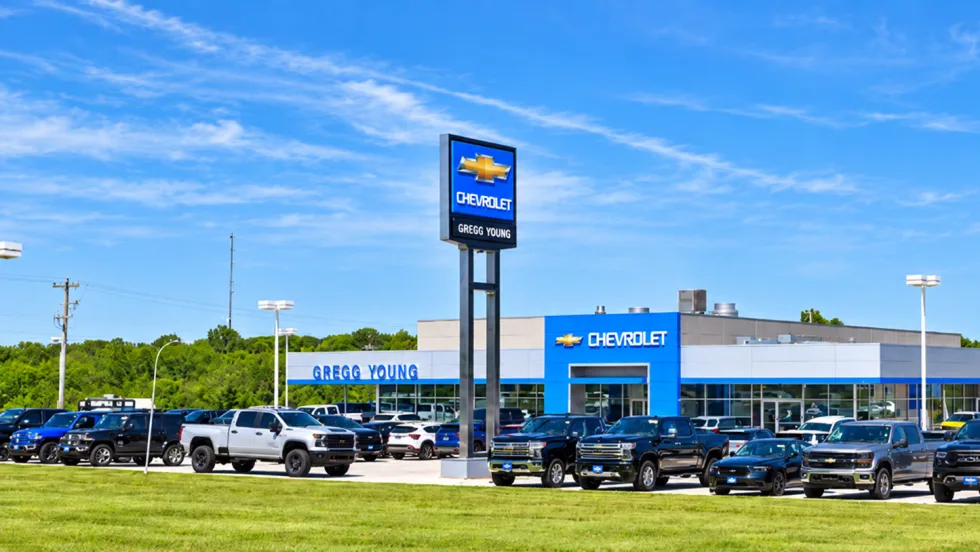
Nebraska Rooftop Changes Hands
The Gregg Young Automotive Group has sold its second dealership to Janssen Auto Group, both in Plattsmouth, Neb.
Read More →
Penske Auto Group Deal a Record
The deal to take the dealership and transportation services company private sets a new pace for industry buy-sell transactions.
Read More →
War Toll a Damper on Used Auto Prices
Cox Automotive found wholesale depreciation to be elevated in September amid high fuel prices and this year's unusual hurricane season.
Read More →
Bridge the Maintenance Gap
With many drivers missing recommended maintenance, service departments offering transparency and efficiency have a better chance of reaching financially strained consumers.
Read More →
California Store Has New Owner
The longtime dealership in the northern part of the state is known for robust fleet sales and has served the state capital for 115 years.
Read More →
BMW Plant Pursues Cleaner Energy
BMW Group Plant Leipzig has utilized hydrogen to help power its production since 2013, but a new pipeline is planned to take it to another level.
Read More →
Auto Affordability Inches Up
The latest Cox Automotive and Moody’s Analytics index shows a slight increase in new-vehicle affordability despite high prices.
Read More →
Ohio Auto Group Under New Ownership
After 79 years with the Schluter family, Mansfield Auto Group has been acquired by Missouri-based Clement Auto Group.
Read More →
RV Group Expands Carolina Footprint
Blue Compass RV Columbia Northeast is the 13th RV dealership owned by Blue Compass in the Carolinas.
Read More →
Agent Acumen
An Agent Summit panel of people who’ve been supporting auto dealers for years gave both timely and timeless advice for those starting out or mulling the prospect.
Read More →